

Machinery
The SwRI Machinery Department is internationally known for its expertise in gas turbine technology, rotordynamics, and design audits.
We have helped develop and operate reliable, safe turbo and reciprocating machinery for more than 50 years. The Machinery Department solves fluid and structural dynamics problems, provides root cause failure analysis expertise, designs and tests machines, offers rapid response world-wide field services, and provides design review and auditing services for manufacturers and users of rotating machinery. SwRI combines custom consultations and extensive field experience with world leading analytical, computational, and test capabilities. SwRI has completed contract work for major oil and gas, power generation, and manufacturing companies.
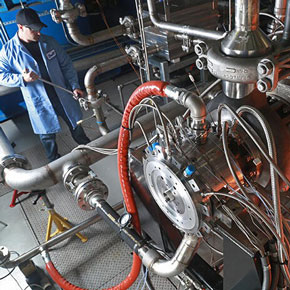
Supercritical Carbon Dioxide R&D
Learn about the 10 MWe pilot plant on the SwRI campus, sCO2-related events and related research initiatives.
To contract with SwRI, please contact the Machinery Services Hotline at +1 210 522 3000.
For more information, contact Tim Allison or call +1 210 522 3561.


