SOUTHWEST RESEARCH INSTITUTE


Microencapsulation and Controlled Release Technologies


Search SwRI


SwRI Home | Print Version


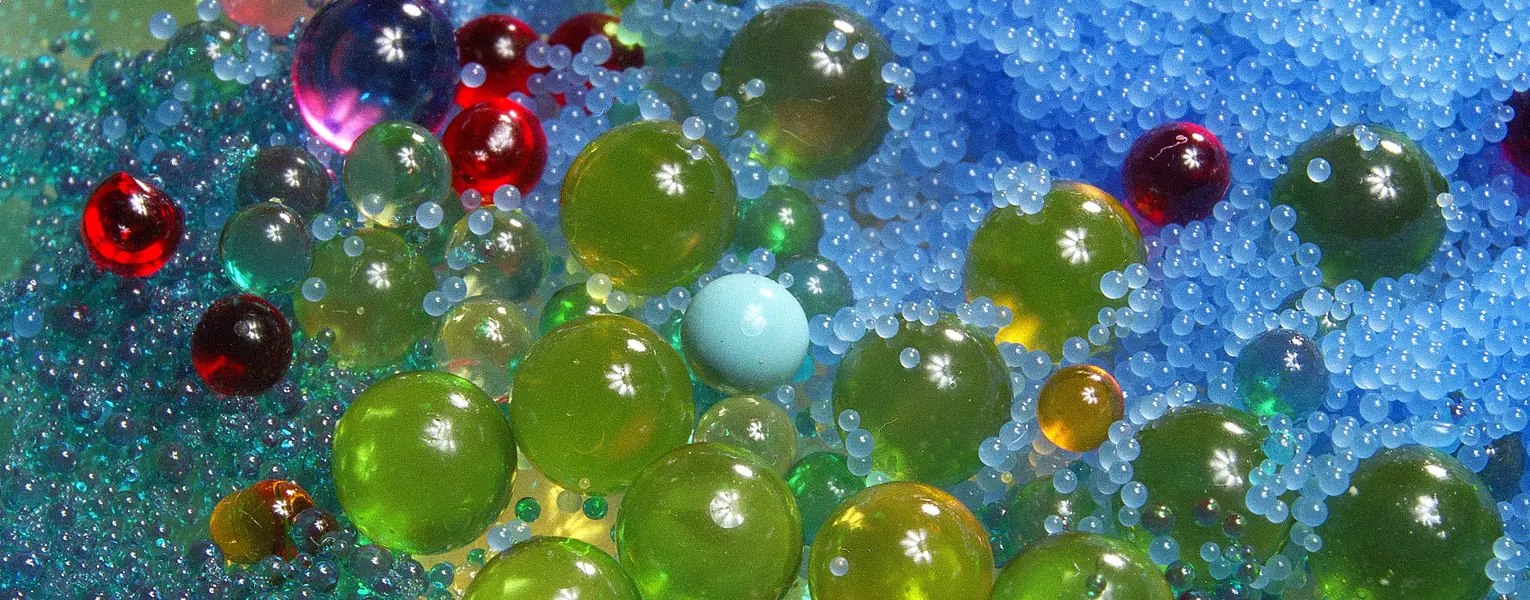
  image of fluid-bed coating process
 

Fluid-bed coating process

Southwest Research Institute (SwRI) has more than 50 years experience in microencapsulation and controlled release. Custom-made microspheres and microcapsules are provided to customers in the food, pharmaceutical, cosmetic, consumer and personal care products, agricultural, veterinary medicine, industrial chemicals, biotechnology, biomedical, and sensor industries.


Microencapsulation Technologies

Physical Methods of Encapsulation

  • Spray drying

  • Spray chilling

  • Rotary disk atomization

  • Fluid bed coating

  • Stationary nozzle coextrusion

  • Centrifugal head coextrusion

  • Submerged nozzle coextrusion

  • Pan coating


image of one of a number of chemical methods used to develop highly stable microcapsules as small as 0.1 µm.

SwRI employs a number of chemical methods to develop highly stable microcapsules as small as 0.1 µm.

Chemical Methods of Encapsulation

  • Phase separation

  • Solvent evaporation

  • Solvent extraction

  • Interfacial polymerization

  • Simple and complex coacervation

  • In-situ polymerization

  • Liposome technology

  • Nanoencapsulation


Examples of Shell Materials

  • Proteins

  • Polysaccharides

  • Starches

  • Waxes

  • Fats

  • Natural and synthetic polymers

  • Resins


Analytical Capabilities

  • Particle size analyzer

  • Optical and electron microscopes

  • Dissolution tester

  • Hardness tester

  • Viscometer

  • D’Nouy ring or Wilhelmy plate tensiometer

  • Fourier transform infrared (FTIR)

  • Nuclear magnetic resonance (NMR) spectroscopy

  • High performance liquid chromatographs (HPLC)

  • Differential scanning calorimeter (DSC)

  • Thermogravimetric analyzer (TGA)

  • Gas chromatograph/mass spectrometer (GC/MS)

  • Ultraviolet-visible spectrophotometer


Custom Microencapsulation Design

  image of consumer products improved by the use of encapsulation including paints, cosmetics, deodorants, detergents, toothpastes, and shampoos
 

Consumer products improved by the use of encapsulation include paints, cosmetics, deodorants, detergents, toothpastes, and shampoos.

  • Broad size range of capsules: 100 nm to 6 mm

  • Broad range of payload: up to 95 percent


Product Applications

Improved Stability/Masking of Active Ingredients

  • Heat

  • Chemical

  • Oxidative

  • Shelf-life stability

  • Odor, color and/or taste masking


Unique Release Mechanisms

  • Controlled, sustained, delayed, targeted release

  • Enteric, thermal, pressure, osmotic, pH-induced, pulsatile release

  • Biodegradable or salt-induced release

  • Oral, injectable, pulmonary, intranasal, implantable drug delivery


Previously Encapsulated Materials

  • Acids

  • Activated carbons

  • Active metals

  • Adhesives

  • Alcohols

  • Aldehydes

  • Amines

  • Amino acids

  • Animal feed ingredients

  • Antibiotics

  • Antibodies

  • Antioxidants

  • Antiseptics

  • Aqueous solutions

  • Bacteria

  • Biocells

  • Bleaches

  • Catalysts

  • Chemiluminescent materials

  • Corrosion inhibitors

  • Deodorants

  • Dyes

  • Enzymes

  • Flame retardants

  • Flavors

  • Food ingredients

  • Fuels

  • Fumigants

  • Fungi

  • Fungicides

  • Hydrocarbons

  • Indicators

  • Inks

  • Inorganic salts

  • Ion-exchange resins

  • Liquid hydrocarbons

  • Lubricant additives

  • Monomers

  • Oils

  • Organometallic compounds

  • Oxidizers

  • Paints

  • Peptides

  • Perfumes

  • Peroxides

  • Pesticides

  • Pharmaceuticals

  • Phase-change materials

  • Phenols

  • Photographic agents

  • Pigments

  • Proteins

  • Radioprotectors

  • Reflective products

  • Resin-curing agents

  • Retinoids

  • Salts

  • Sealants

  • Solvents

  • Sterilants

  • Steroids

  • Sweeteners

  • Vaccine adjuvants

  • Viruses

  • Vitamins

  • Water

image of chart showing U.S. intellectual property trends (by encapsulation processes)

U.S. intellectual property trends (by encapsulation processes)


image of chart showing micro- and nanoencapsulation technology trends

Micro- and nanoencapsulation technology trends


If you are interested in finding out more about SwRI microencapsulation and controlled release capabilities and how we can help you, please fill out and submit the Microencapsulation Requirements form.


For more information about microencapsulation and controlled release technologies and capabilities at SwRI or how you can contract with SwRI, please contact Joseph T. Persyn at jpersyn@swri.org or (210) 522-2691, or James Oxley, Ph.D., at joxley@swri.org or (210) 522-2913.
 

Contact Information

Joseph T. Persyn

Senior Research Scientist

Group Leader

Microencapsulation, Nanomaterials, and Process Engineering

(210) 522 2691

jpersyn@swri.org


James Oxley, Ph.D.

Senior Research Scientist

(210) 522-2913

joxley@swri.org

Related Terminology

microencapsulation

controlled release

custom-made microspheres

custom-made microcapsules

food industry

pharmaceuticals

cosmetics

consumer products

personal care products

agricultural industry

veterinary medicine

industrial chemicals

biotechnology

biomedical

sensor industry

Related Information

Demonstration of Microencapsulation (Flash)

| Microencapsulation, Nanomaterials & Process Engineering Department | Chemistry & Chemical Engineering Division | SwRI Home |

Southwest Research Institute® (SwRI®), headquartered in San Antonio, Texas, is a multidisciplinary, independent, nonprofit, applied engineering and physical sciences research and development organization with 11 technical divisions.

September 19, 2008