Heavy-duty engines in the 6- to 16-liter displacement range are at the core of our engine research and development activities, resulting in many of the technologies in use today on heavy duty engines. Southwest Research Institute (SwRI) has been at the forefront of research using diesel and low-carbon fuels, such as dimethyl ether (DME), alcohols (methanol and ethanol), and gaseous fuels such as natural gas and hydrogen. SwRI also specializes in converting engines from conventional diesel combustion systems to low-carbon fuels.
Heavy Duty Engine Testing Expertise
SwRI offers a wide range of heavy-duty engine development and testing services, including design and prototype work through calibration, certification and durability testing.
Heavy-duty Engine design.
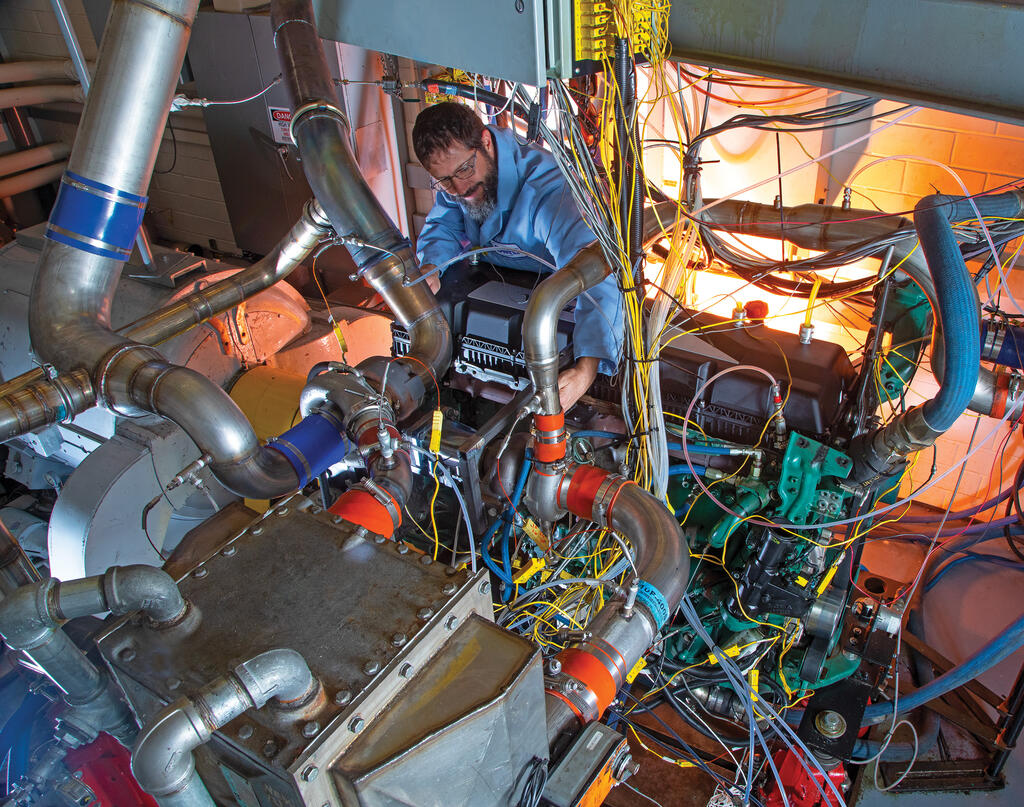
Transient dynamometer engine testing.
- Combustion System Development — SwRI utilizes advanced modeling tools to develop combustion systems optimized for high efficiency and low emissions. SwRI has also pioneered several artificial intelligence (AI) and machine learning (ML) techniques for automated feature design.
- Design — SwRI’s hardware design services enable clean sheet engine designs and modifications to meet power, efficiency and emissions goals. These include virtual engineering and analysis, prototype machining and casting as well as integration with your production processes.
- Calibration — Today’s engines require continuous monitoring of many sensors and simultaneous control of many actuators to operate. SwRI offers an open-engine controller to enable rapid integration of new technologies as well as expertise in working with existing OEM solutions.
- Engine Testing — Once an engine is designed, built, and calibrated, SwRI offers testing services to support a full range of durability and 1065-compliant certification testing for on and off-highway engines. SwRI also offers advanced inspection techniques to quantify engine wear, failure mode analysis, and oil analysis to develop a holistic understanding of engine durability.
Capabilities
SwRI’s testing facilities offer 60 test cells, capable of supporting engines across a wide power range. One project may utilize one or more testing resources. An example of a development project may include modeling to develop several combustion system designs, manufacture and testing of the best variants in a single cylinder engine, followed by expanded testing in a full multi-cylinder engine.
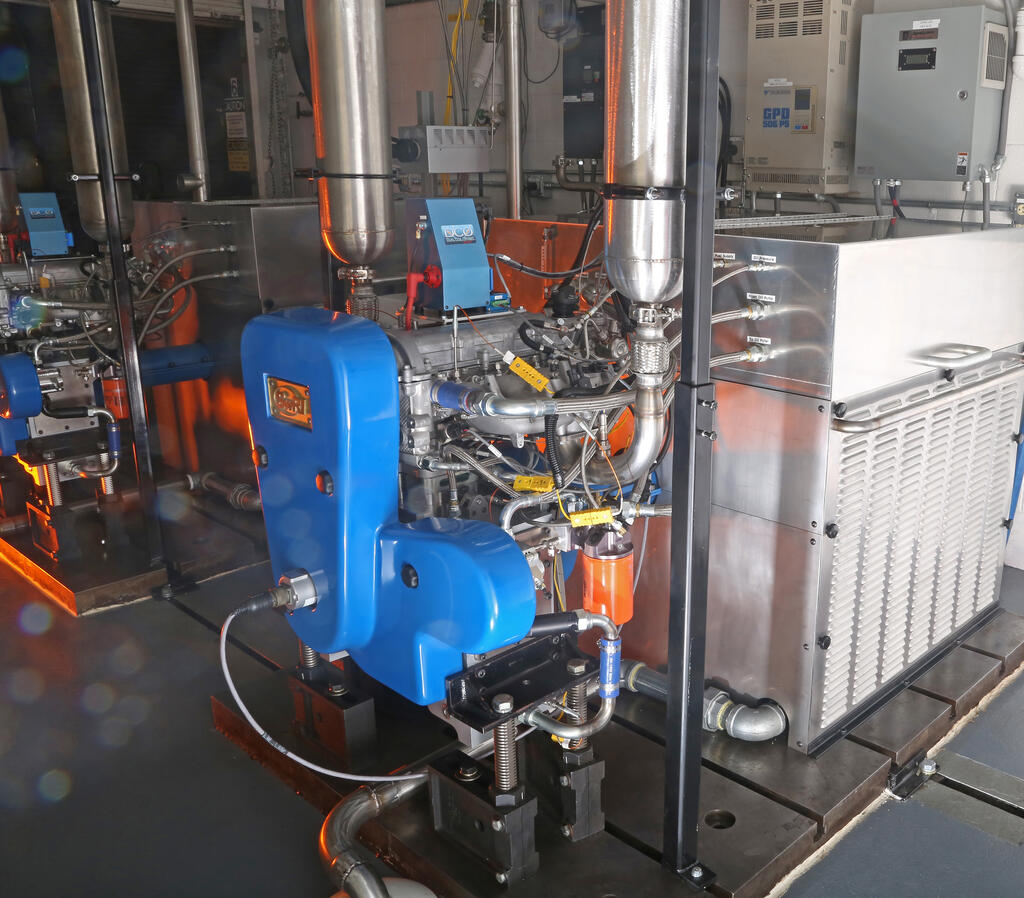
Single-cylinder research engine.
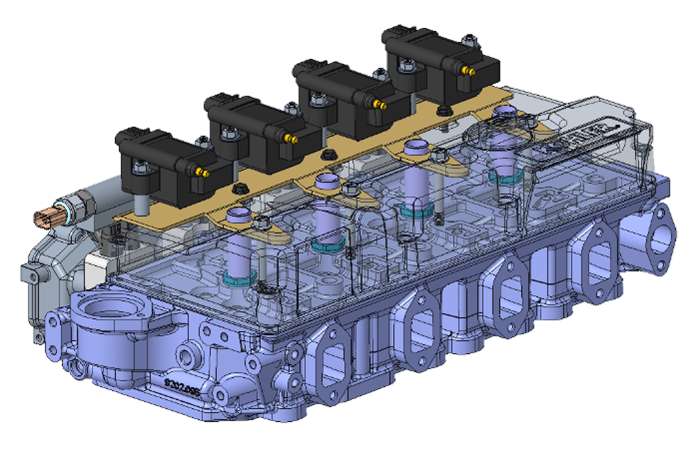
- Single-Cylinder Research Engines — SwRI has developed flexible single cylinder engines, commonly used to screen combustion system concepts before they are scaled up to multi-cylinder designs. The flexible nature of single-cylinder engines enables engines ranging from 0.5 L per cylinder up to 2.2 L per cylinder. These engines are offered for sale and delivery to external facilities. SwRI also owns several that are available for customization to match your application.
- Multi-Cylinder Engines — The final proof of performance is demonstrated in multi-cylinder engine testing. Depending on the program requirements, testing can be conducted over a short duration for performance validation and/or certification, or extended duration for durability testing. In either case, SwRI can support testing needs. Additionally, SwRI offers specially outfitted test cells to replicate extreme environments, such as high-altitude and cold-air testing.
Why Partner with SwRI?
We deliver exceptional client service backed by decades of experience in engine design, calibration and testing. Our multidisciplinary experts span technical divisions and engineering disciplines, enabling us to support a wide range of project needs.
Whether it’s a standard application or a one-off, highly specialized test, we offer flexible, client-focused solutions tailored to each project’s unique requirements. Our highly skilled engineering and technical staff support are ready to support your hardware and development programs across all Technology Readiness Levels (TRL), from early-stage concepts to full-scale validation.
Related Services