
Chemists use nuclear magnetic resonance (NMR) spectroscopy to design and test everything from life-saving drugs to consumer products. Deployed in organic chemistry analysis for over 80 years, NMR helps study organic compound structures, or molecules containing carbon. NMR analysis provides high-resolution data to identify reactions, impurities and other characteristics, which makes NMR an ideal instrument for quantifying and characterizing carbon-based chemical products.
NMR Lab Testing & Research Services
Image
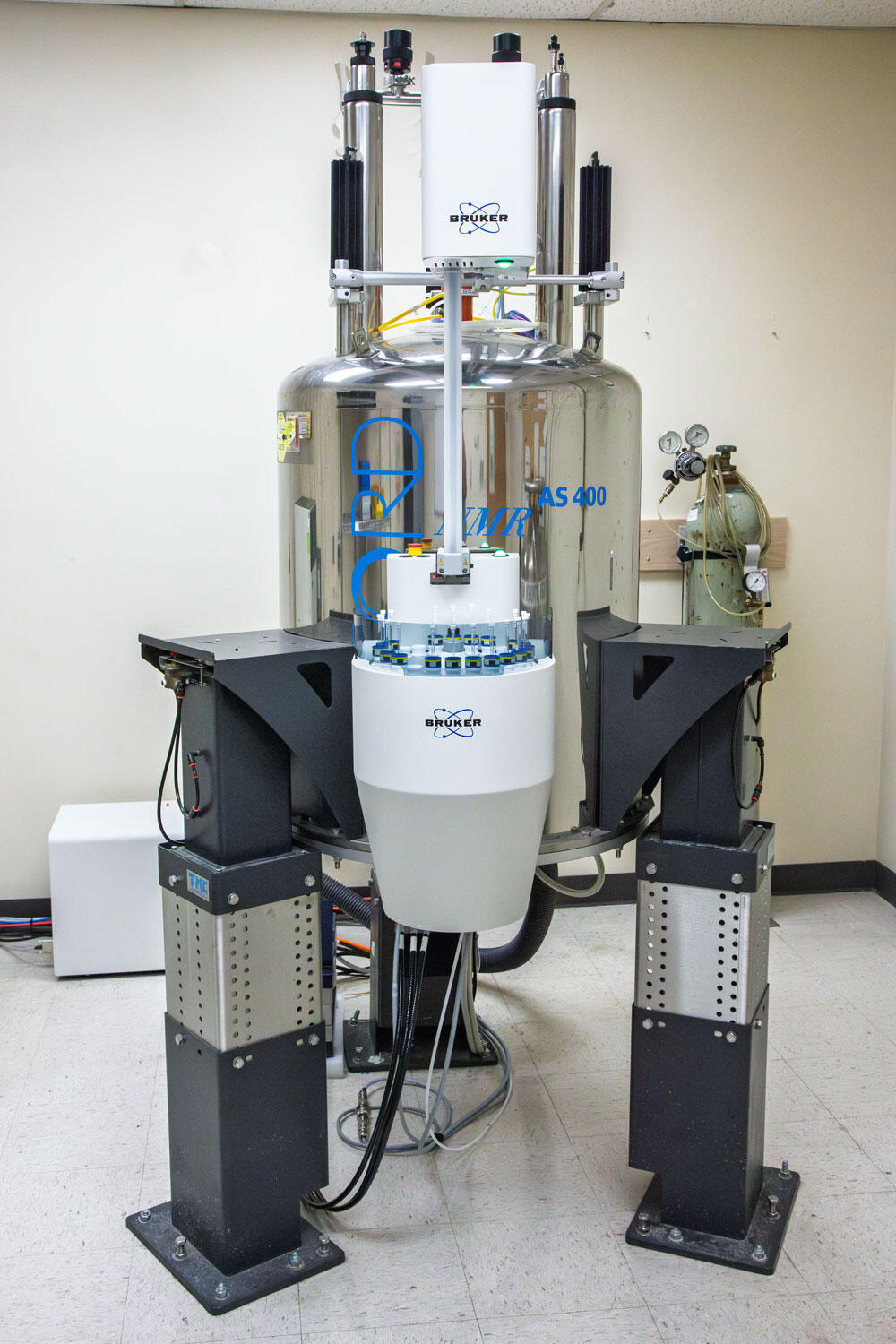
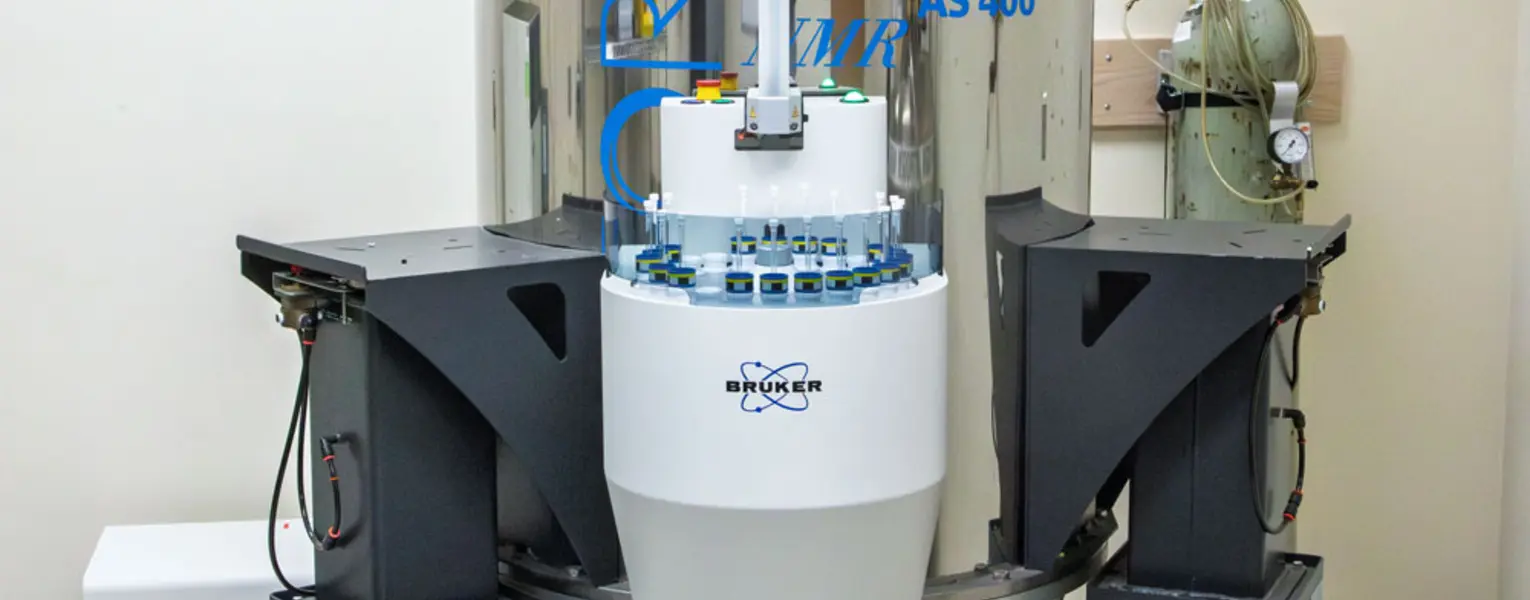
SwRI performs NMR analysis, HPLC-NMR, qNMR and other NMR spectroscopy studies with a Bruker Avance NEO 400 MHz NMR spectrometer.
The Nuclear Magnetic Resonance Laboratory at Southwest Research Institute features a 400 MHz NMR spectrometer for a variety of organic chemistry R&D applications serving multiple industries. SwRI’s NMR laboratory test services provide accurate and reliable data analysis on compound structures to help inform research and development in pharmaceutical development, materials science, structural engineering and other industries and technical applications.
Organic Chemistry & Pharmaceuticals
SwRI uses NMR in drug development for a variety of chemical analyses such as protein structure verification, API materials release, reaction monitoring and development of analytical methods for early phase drug development, including:
- CGMP Manufacturing
- Analytical Pharmaceutical Services
- Pharmaceutical Development
- Pharmaceutical Formulation Development
- CMC Chemistry Manufacturing & Control Services
- Drug Discovery Research
Quantitative NMR (qNMR) Applications
SwRI performs quantitative analysis with NMR spectroscopy, which provides high-resolution data on concentration of chemical species. We also couple qNMR with high-performance liquid chromatography (HPLC) and other techniques for powerful analysis of material mixtures.
Materials, Fluids & Catalyst Analysis
NMR offers a non-destructive methodology for the evaluation of materials used for a variety of industry applications. Applications may include: