

Encapsulation is a multi-disciplinary technology requiring expertise from a variety of scientific fields of study. Southwest Research Institute’s encapsulation staff have advanced degrees and experience in polymer science, chemistry, chemical engineering, biochemistry, molecular biology and materials science. This broad spectrum of expertise provides clients creative, multidisciplinary solutions for their innovative projects.
Equipment & Facilities
Image
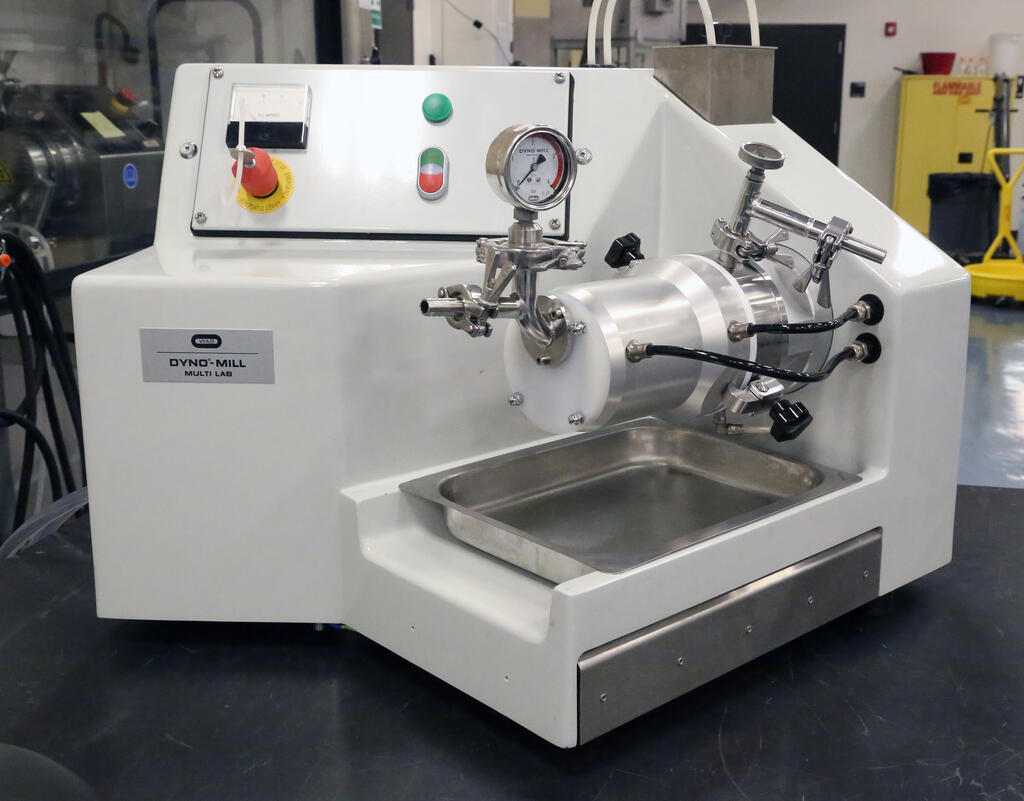
Homogenizer used in micro- and nanoencapsulation in polymers, liposomes and oils.
SwRI has a variety of additional equipment and facilities to support encapsulation research and development. We also host client-supplied equipment to support a project.
Milling Process
- Bead milling/media milling
- Ball milling
- Jet milling
- Pin milling
- Hammer milling (cryogenic)
Homogenization/Mixing
Image
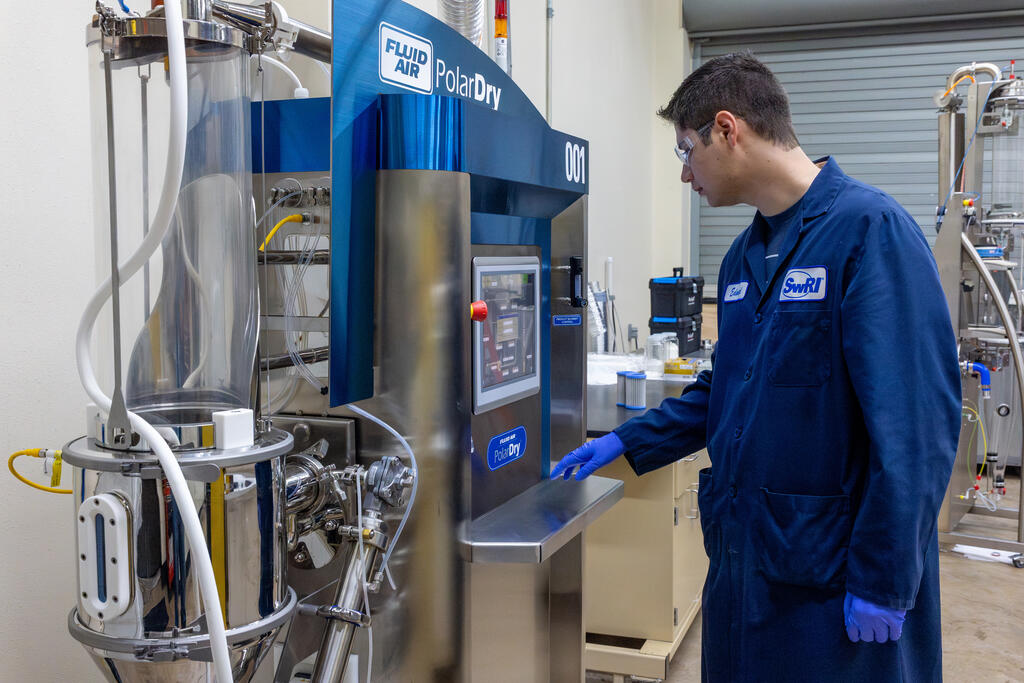
Electrostatic spray dryer.
- High-pressure homogenization
- Rotor-stator homogenization
- V-blenders
- Speed mixers
Facilities
- 40-foot atomization tower
- 15-foot atomization freezer
- Multiple customizable spaces
- Potent material handling laboratories
- Biological laboratories (BSL-2 with options for BSL-3)
- Controlled substance handling
- CGMP (Current Good Manufacturing Practices) labs and production facilities
Analytical Methodologies
Image
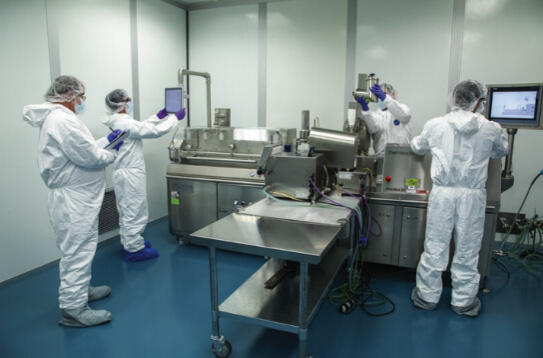
Clean room facility at SwRI.
We host a variety of analytical methods to characterize particles and encapsulated ingredients to routinely determine:
- Particle size
- Payload
- Content uniformity and stability
- Active ingredient release profiles and activity
- Stability testing
Particle Size and Morphology
Image
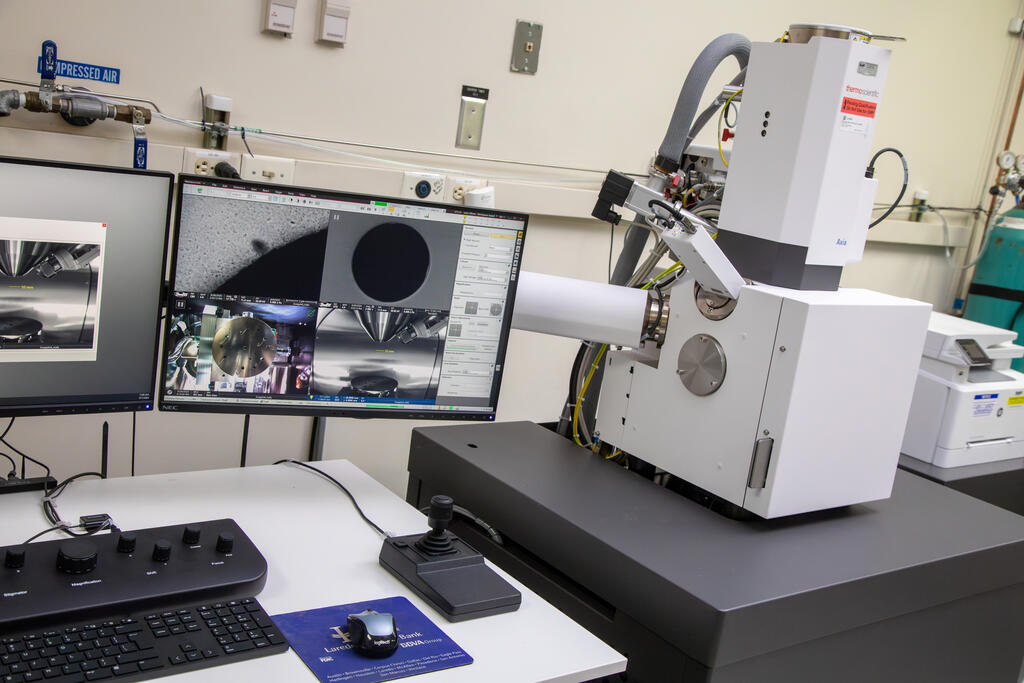
Energy dispersive X-ray spectroscopy (EDS) with scanning electron microscope (SEM).
- Sizing down to 0.3 nm
- Laser diffraction
- Dynamic light scattering
- Zeta-potential analysis
- Dispersion analyzer
- Variable pressure
- EDS – energy-dispersive Xray spectroscopy
- Optical microscopy (multiple, fluorescence)
- AFM (atomic force microscopy)
- SEM (scanning electron microscopy)
Thermal Analysis
- DSC (Differential scanning calorimetry)
- TGA (Thermal gravimetric analysis)
Rheology
- Low-viscosity fluids, gelation and curing profiles, reinforced solid mechanical properties
- Large dynamic shear range, sub-ambient to >600°C temperature range
Payload/Chemical Analysis
- HPLC (high-performance liquid chromatography)
- GC (gas chromatography)
- GC/MS (gas chromatography/mass spectrometry)
- LC/MS (liquid chromatography/mass spectrometry)
- UPLC (ultra‑performance liquid chromatography)
- FT-IR (Fourier transform infrared spectroscopy) with ATR (attenuated total reflectance)
- NMR (nuclear magnetic resonance)
- UV-visible spectroscopy
- Additional information: Chemical Analysis Services
Additional Services
- Release assays
- Dissolution equipment?
- Stability chambers/testing
- Custom assay development
For additional information, please contact James Oxley at +1 210 522 2913 and Joseph Persyn at +1 210 522 2691.