
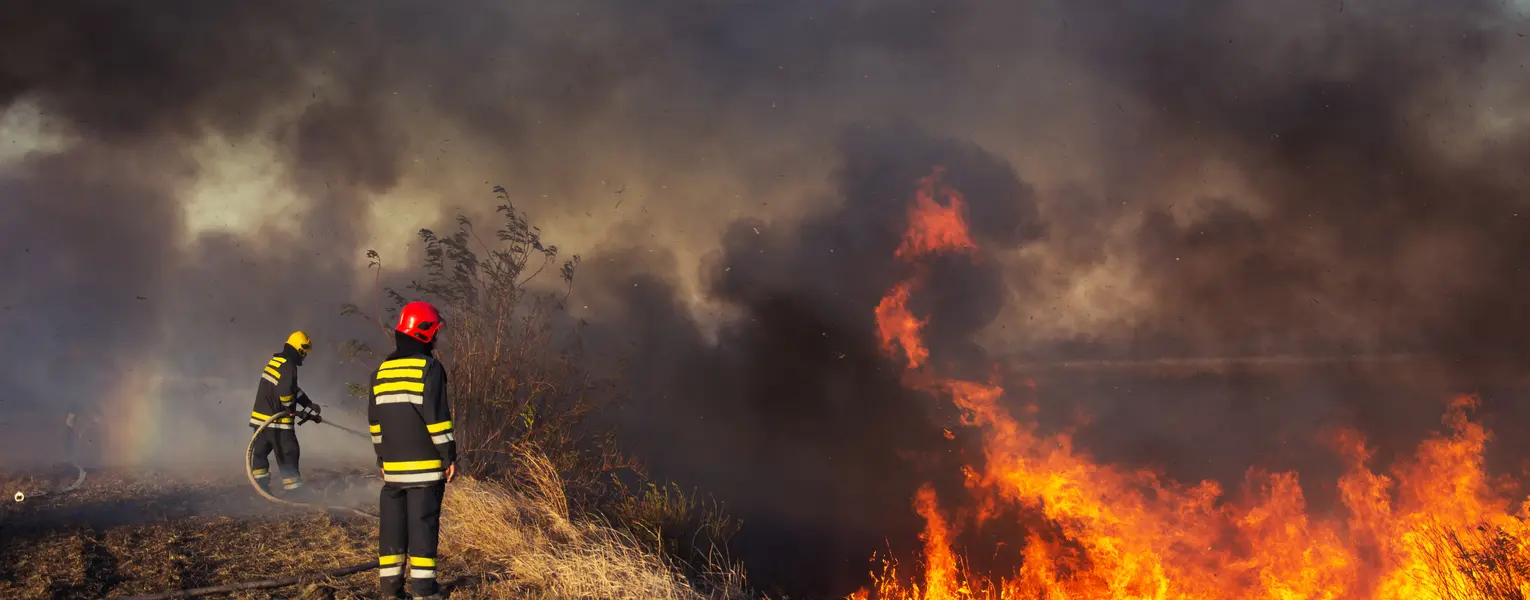
The growing frequency and intensity of wildfires, especially in areas designated as Wildfire Urban Interface (WUI) zones, pose significant challenges for communities and governments. WUI zones are suburban or urban areas that border open or vegetative land. Numerous deadly and destructive wildfires have occurred in the United States, Chile, Greece and Spain over the last decade.
To better understand risks associated with wildland fires, Southwest Research Institute (SwRI) develops complex models to characterize the environmental, atmospheric and hydrologic conditions conducive to wildland fires in specific geological regions. SwRI’s fire simulation expertise spans computational fluid dynamics (CFD), model verification and validation, hydrology, geoscience, remote sensing and other scientific disciplines.
In addition to computational research, SwRI operates one of the world’s largest fire research facilities spanning 40,000 square feet. Our experts draw upon decades of multidisciplinary applied research across scientific domains to study, test, validate and advance fire technology.
Advanced Fire Dynamics & Remote Sensing
SwRI developed a satellite-based observation framework that combines various data sets with fire modeling simulations to support first responders with early wildfire predictions that can support informed decisions about where to allocate resources. The advanced fire modeling system incorporates next-generation technologies that factor variables such as conditions on the ground and fire dynamics. Instead of a binary red flag warning system, SwRI’s Early Warning Decision Support framework offers a more nuanced view of fire risks by integrating satellite images, hydrological conditions, the health of vegetation and historical fire data.
The simple yet innovative approach offers actionable early-warning index functionality to support firefighters with data to carry out fire prevention measures such as controlled burns and targeted mitigation of wildfires when they occur. The system connects multiple conditions to wildfire risks and offers dynamic querying of historical data. Regions with limited data, or that are vulnerable to wildfires would most benefit from the tool.
| Hydrological Data | Meteorological Data | Satellite Images |
|---|---|---|
| Soil moisture measurements | Wind patterns | Global coverage |
| Water-related variables | Temperature readings | Historical fire data |
| Vegetation water content | Weather conditions | Other environmental variables |
Image
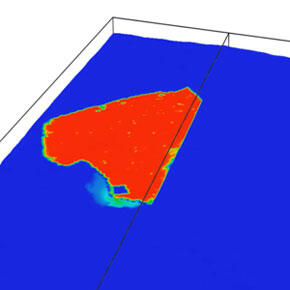
New Early-Warning Wildfire Prediction Models
SwRI develops dynamic framework that combines various datasets and remote sensing for wildland fire prediction.
WUI Testing Solutions
WUI fires can quickly spread from wildlands to engulf nearby homes and communities. According to the National Association of Foresters, 60,000 communities in the United States are in WUI zones. Fire safety organizations are working to establish fire resistance standards for utility poles.
SwRI has numerous indoor laboratories, along with a remote outdoor testing space able to simulate wildland fire conditions and assist with understanding the survivability of full-scale utility poles.
Wildfire Test Standards
Along with a variety of custom testing options, SwRI conducts standard tests to ensure materials used for construction, such as home facades, decking and roofing, can meet established requirements.
| Standard Tests | Description |
|---|---|
| ASTM E108/UL 790 | Fire tests of roof coverings |
| ASTM E84 / UL 723 | Surface burning characteristics of building materials |
| ASTM E119/NFPA 251 | Fire resistance properties of construction materials and assemblies |
| ASTM E2768 | Extended duration surface burning characteristics of building materials |
| California Building Code Chapter 7A; CA SFM 12-7A-1-5 | Materials and Construction Methods for Exterior Wildfire Exposure: Exterior wall siding, sheathing, windows, horizontal projection underside (soffit), decking, ignition resistant material. |
Case Studies
- SwRI develops prediction method for spalling in bridges exposed to fire
- Framework for real-time command and control use to more effectively combat wildfires
For questions about the WUI toolkit, please contact Debashis Basu at +1 210 522 8333 or Dimitrios Stampoulis at +1 210 522 2991.