
The Planetary Science Research Department at Southwest Research Institute supports various space missions and research initiatives. Learn about our staff below or visit the following links to learn about our research programs:
Lab Studies Group
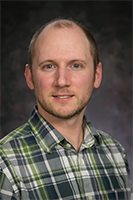 |
Michael Poston (Lead Scientist/Acting Group Leader)Dr. Poston enjoys designing investigations and interfacing between engineering and science on NASA flight projects. Poston’s training is as an experimental chemist with a focus on understanding the surfaces of solar system bodies (especially water on the Moon, Ceres, and asteroids) from the molecular to meter scale, including in situ resource utilization (ISRU) applications. Poston has over a decade of experience building, maintaining, and conducting experiments with a variety of cryogenic ultra-high vacuum systems and instrumentation. |
|
Research Thrusts
|
|
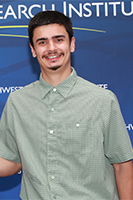 |
Ben Teolis (Principal Scientist)Dr. Teolis is a physicist, experimentalist, planetary scientist, and expert in planetary atmospheres and magnetospheres, and surface radiation processes on the frozen worlds of the outer solar system. As a Cassini spacecraft scientist for over a decade, he has published an extensive body of work on the Saturn system, its moons, and magnetosphere, and is today a co-investigator on Europa Clipper, which will investigate surface and atmospheric composition, and search for possible plume-eruptions and habitable conditions. |
|
Research Thrusts
|
|
Danielle Wyrick (Staff Scientist)Dr. Wyrick is a planetary geologist, specializing in structural and tectonic processes on terrestrial planets, moons and asteroids. Her work is facilitated by utilizing scaled physical analog experiments to model complex geological processes. She manages the SwRI Physical Analog Modeling laboratory, a state-of-the-art facility designed to emulate a variety of tectonic and magmatic deformation styles in order to provide realistic fault system kinematics. |
|
|
Research Thrusts
|
|
 |
Danna Qasim (Senior Research Scientist)Dr. Qasim utilizes experiments and astronomical observations/missions to study the (ice) chemistry that occurs from interstellar clouds and comets to our moons and planets. She also researches the connection between astrochemistry and astrobiology using multidisciplinary laboratory techniques. She is a member of the JWST Early Release Science Ice Age Team and other JWST efforts, in which she develops cryogenic ultrahigh vacuum apparatuses tailored to answer the most pressing questions from this grand facility. |
|
Research Thrusts
|
|
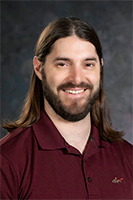 |
Akbar Whizin (Lead Scientist)Dr. Whizin is a planetary scientist who specializes in the fundamental properties of dust and regolith in protoplanetary and microgravity environments, as well as experimental studies of planetary surfaces and applications to In Situ Resource Utilization/space mining. His research interests include Near-Earth Asteroids, the lunar polar volatile environment, extraction and processing of space resources into fuel, hypervelocity impact studies into airless surfaces, low-velocity collisions and accretion, as well as numerical simulations of small silicate particles and rings. |
|
Research Thrusts
|
In situ Techniques Group
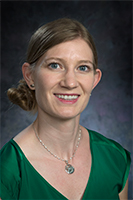 |
Kelly Miller (Lead Scientist/Acting Group Lead)Dr. Miller researches volatile cosmochemistry, especially with applications to planetary origins and habitability. She enjoys synthesizing ideas from different sub-disciplines, and has a broad range of past research experience. Current project areas include compositional analysis of chondritic samples, geochemistry of icy satellite interiors via modeling and experimentation, origin and evolution of Saturn's rings via analysis of flight data, and spaceflight mass spectrometry. Dr. Miller is the Calibration Lead for the Europa Clipper MASPEX instrument. |
|
Research Thrusts
|
|
 |
Ryan Blase (Lead Scientist)Dr. Blase has extensive experience in separation science, mass spectrometry, and the coupling of these techniques. Presently, he is working on development of micro-electro-mechanical system (MEMS) gas chromatographs for future landed missions as stand-alone devices or coupled to a mass spectrometer. He also works on time-of-flight mass spectrometry and has experience in radiation transport modeling in the space environment for evaluation of total ionizing dose and radiation background noise for charged particle detectors. |
|
Research Thrusts
|
|
|
Image
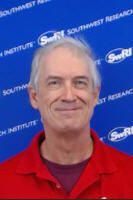
|
Rudy Frahm (Technical Advisor)Dr. Frahm is currently a NASA interdisciplinary scientist on the HERMES experiment attached to the Lunar Gateway tasked with assessment of plasma instrument distortion due to spacecraft interference. Current research areas involve plasma interactions with Mars and Venus as a Co-I on the ASPERA experiments from the ESA Mars and Venus Express spacecraft. |
|
Research Thrusts
|
|
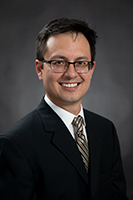 |
Chris Glein (Principal Scientist)Dr. Glein is one of the leading geochemists working on the outer solar system. His research interests are centered primarily on the formation, evolution, and habitability of icy ocean worlds. He uses geochemical tools, such as thermodynamic modeling, hydrothermal experiments, or just balanced chemical reactions in some cases, to help understand what observed molecules and isotopes can tell us about conditions and processes on and within faraway worlds. |
|
Research Thrusts
|
Remote Sensing Observers (RSO)
 |
Rohini Giles (Lead Scientist)Dr. Giles' research focuses on remote sensing observations of planetary atmospheres, from the ultraviolet to the infrared. This has included radiative transfer modeling of the atmospheres of Jupiter and Venus, long-term monitoring of Io's atmospheric density and studying the variability of Jupiter's ultraviolet auroras. She is a member of the instrument teams for IRTF-TEXES, Juno-UVS, JUICE-UVS and Europa-UVS. |
|
Research Thrusts
|
|
 |
Cesare Grava (Principal Scientist)Dr. Grava is an astronomer specializing in planetary science. He studies tenuous atmospheres (exospheres) of Solar System bodies (Io, the Moon, Mercury, and the Uranian satellites) using a combination of simulations (Monte Carlo modeling of transport of volatiles) and spectroscopic observations, both from the ground, in the Visible, and from spacecraft, in the ultraviolet. |
|
Research Thrusts
|
|
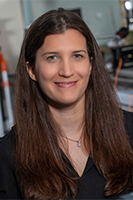 |
Pippa Molyneux (Principal Scientist)Dr. Molyneux is a planetary scientist focusing on ultraviolet remote sensing of icy moons. She has led several Hubble Space Telescope programs to observe the atmospheres and surfaces of Jupiter's Galilean moons and recently used the Juno-UVS instrument study Ganymede's surface composition. She is also experienced in the design and development of UV instrumentation, contributing to the integration and testing of the UV spectrographs on ESA's JUICE mission and NASA's Europa Clipper mission. |
|
Research Thrusts
|
|
 |
Anicia Arredondo (Research Scientist)Dr. Arredondo is a postdoctoral researcher investigating the origin and distribution of water in the solar system. She uses ground- and space-based telescopes to obtain mid-infrared spectroscopy of asteroids, near-Earth objects, and the Moon. Dr. Arredondo is a member of the investigation team for the DART mission and is particularly interested in planetary defense. |
|
Research Thrusts
|
|
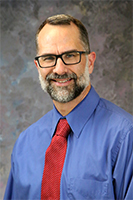 |
Thomas Greathouse (Staff Scientist)Dr. Greathouse is lead of the Juno UVS instrument and Deputy PI for the Lunar Reconnaissance Orbiter LAMP instrument. He is Project Scientist for the UVS instruments on the ESA/NASA JUICE mission and NASA's Europa Clipper mission, as well as lead planetary scientist supporting ground-based observations with the TEXES instrument at the NASA IRTF Telescope. Studies by Dr. Greathouse have focused on planetary atmospheres and magnetospheric/atmospheric interactions on planets and moons. |
|
Research Thrusts
|
|
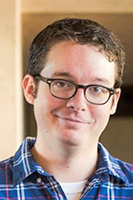 |
Joshua Kammer (Lead Scientist)Dr. Kammer is a planetary scientist specializing in the study of tenuous atmospheres and the retrieval of atmospheric composition using solar and stellar occultation observations in the far- and extreme-ultraviolet. His interests include the effects of hydrocarbon photochemistry on the evolution of planetary atmospheres of all sizes, from Titan and Pluto to Jupiter and Saturn. He works on NASA missions including Juno-UVS, LRO-LAMP, and Europa-UVS. |
|
Research Thrusts
|
|
 |
Tracy Becker (Lead Scientist/Acting Group Lead)Dr. Becker is a planetary scientist specializing in ultraviolet (UV) observations of planetary bodies. She has led multiple Hubble Space Telescope programs to study asteroids, rings, and icy satellites in the UV. Her research also focuses on infrared and radar observations of asteroids. Dr. Becker serves in leadership positions for UV instruments on NASA missions including Europa Clipper and New Horizons. |
|
Research Thrusts
|
|
|
Image
|
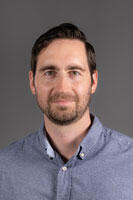
Benjamin Byron (Research Scientist)Dr. Byron is a planetary scientist who uses remote sensing observations to interpret the composition and physical properties of airless bodies in the solar system. He utilizes ultraviolet through radar wavelength observations from lunar spacecraft such as the Lunar Reconnaissance Orbiter (LRO) to investigate space weathering and understand the material properties of the lunar surface. He also performs thermal modeling of heat propagation in lunar and asteroid rocks and regolith to interpret the thermophysical properties (e.g., rock abundance, thermal inertia, and density) of airless body surfaces. Dr. Byron is a Co-Investigator on the LRO Lyman Alpha Mapping Project (LAMP) and LRO Diviner Lunar Radiometer teams and a Participating Scientist on the Lucy mission team. |
|
Research Thrusts
|
Planetary Science Section
 |
Kurt D. Retherford (Institute Scientist)Dr. Retherford is a planetary scientist specializing in space-based UV investigations of planetary atmospheres and surfaces. Areas of expertise include lunar volatiles, the aurorae, airglow, and habitability of the Galilean satellites, instrument development (e.g., Raman spectrograph, UV detectors), and lab UV experiments. He is Principal Investigator (PI) of Ultraviolet Spectrographs on Europa Clipper (Europa-UVS), ESA’s JUICE mission (JUICE-UVS), and Lunar Reconnaissance Orbiter (LRO-LAMP), and of Hubble Space Telescope and other programs. |
|
Research Thrusts
|
|
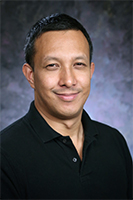 |
Ujjwal Raut (Program Manager - R&D/Planetary Science Section Lead)Dr. Raut specializes in engineering laboratory scale replicas of planetary environments and spearheading innovative experiments within CLASSE to deliver insights on key processes that shape planetary surfaces. His multi-faceted research has unraveled the enigma behind Charon’s colorful landscape and is shedding light on the nuanced ultraviolet albedo of icy satellites in the Outer Solar System. Dr. Raut is a Co-Investigator with the LAMP instrument onboard NASA’s Lunar Reconnaissance Orbiter and Europa Clipper mission through Europa-UVS. |
|
Research Thrusts
|
|
|
Image

|
Vanessa Hebert (Staff Administrative Coordinator)Mrs. Hebert entered the field of administrative support in 1997. She has experience in the Automotive Construction Engineering industry before coming to Southwest Research Institute in 2007. She began her career in the contracts Data Group (Project Record Sheets system and Forms Manager), transferred to Division 15 Space, Science and Engineering Division, then Quality Assurance and Environmental Safety (IQS) and returned to Division 15. She has supported numerous proposal efforts and has supported the MMS, TRACERS, GLIMR, MASPEX, and Europa-UVS missions to name a few. |
 |
De Anna Melendez (Principal Administrative Coordinator)Mrs. Melendez has over 30 years of clerical and administrative experience combined in Space Science, Human Services, Environmental and the Mental Health industry. She came to SwRI in 2013 and currently supports the planetary section in the Space Sector by providing advanced administrative support. She holds an associate’s degree in human services and a state license. |