


Global energy disruptions, climate change and the rise of artificial intelligence computing are driving individuals, governments and industries to embrace energy resiliency efforts. On the world stage, this translates into heavier reliance on renewable energy sources as well as fast-tracked development of new industrial processes and nuclear technologies. As global energy prices rose in 2026, the share of electricity generated from renewables, such as wind, solar and nuclear, also grew.
The pursuit of energy resilience will help ensure humanity can continue to meet its basic needs, through innovation and exploration to meet rising global demands. With the burgeoning development of AI and the data centers that power them, humanity may experience technological innovations that compare in scale to the introduction of agriculture or the Industrial Revolution. Although thousands of years stretched between the invention of the wheel and steam-powered machines, humans throughout history have always adapted and implemented new technologies to satisfy their need for water, food and shelter as well as with their grandest desires for travel and exploration.
At Southwest Research Institute, multidisciplinary teams of scientists and chemical engineers support research and development of the full complement of energy sources and the supporting technologies. Engineers are developing the machinery, components and infrastructure needed to harness advanced electrical production and storage as well as solar, wind, geothermal, hydroelectric and nuclear power. Beyond engineering, process development and scale-up, SwRI also conducts research to tackle technical barriers for a variety of energy technologies, ranging from biofuels, biomass, synthetic aviation fuel (SAF), renewable diesel, green hydrogen, ammonia and other chemicals.
As an independent third-party R&D organization, when SwRI demonstrates that a process can consistently meet yield, uptime and product quality targets under realistic conditions, the technology gains credibility and becomes more attractive for commercial development and deployment. SwRI generates high-quality engineering data to underpin realistic commercial designs to bridge the space between promising concept and commercial reality, a gap often referred to as the “valley of death” in the innovation arena.
SwRI’s independence also amplifies our impact. Stakeholders such as fuel producers, airlines, refiners, regulators and investors rely on objective assessments of emerging technologies. Our engineers evaluate competing processes, verify performance claims and conduct techno-economic and lifecycle analyses. This neutral perspective not tied to a single vendor or proprietary product helps identify the most promising pathways, avoids costly missteps and guides public and private R&D resources toward technologies with real potential to deliver resilient energy solutions.
SwRI specializes in thoughtful, targeted research to create enabling technologies that make development processes less risky. This methodology actively shapes a more robust energy system capable of withstanding and adapting to economic, environmental and geopolitical pressures in the U.S. and worldwide.
This mindful coordination of multiple energy streams, fuel types and energy systems will allow critical facilities to continue operating reliably as the grid diversifies to meet increased and fluctuating demands. SwRI is engineering energy resiliency for the next age of human history and ingenuity.
Advancing Gen IV Nuclear Reactors
By Michael Hartmann
After decades of slow or incremental growth, the development of fourth-generation (Gen IV) nuclear reactors and small modular reactor concepts is now rapidly accelerating. These competitive technologies will enhance safety, reduce waste and improve fuel utilization.
SwRI’s extensive knowledge of pilot-plant design, fabrication and operations, along with its diverse scientific knowledge across the energy spectrum — from traditional to renewable and nuclear power generation — informs a holistic and multidisciplinary approach. SwRI supports existing and emerging nuclear technology, as well as the critical infrastructure development and robust supply chains required for its adoption.
Compared to traditional nuclear reactors, most modern designs require a higher enrichment of uranium to increase power density, reduce refueling frequency and support innovative cooling and core designs. These materials can be post-processed into different form factors such as encapsulated spheres, metal alloys, ceramic oxides, molten salts and carbides.
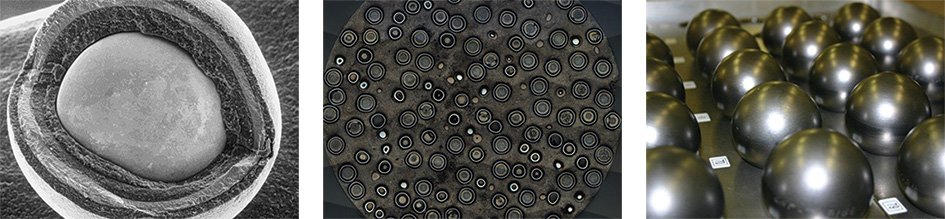
TRISO particles (left) can be compacted (middle) into various form factors to meet different reactor specifications, including pebble designs, such as these billiard-ball-shaped spheres (right).
SwRI advances process design and manufacturing to meet demands for fuels such as TRISO (tri-structural isotropic), a multilayer kernel of uranium, carbon and oxygen to supply Gen IV reactors. TRISO fuel is engineered with layers of protection and is meltdown-proof due to its physics and material makeup.

Michael Hartmann manages SwRI’s Carbon Capture and Utilization Process Development Section, with a specialty in developing pilot-scale technologies for industrial decarbonization with an emphasis on operations, scale-up and novel process engineering.
Each TRISO particle is 750-900 micrometers in diameter, resembling a grain of sand, and is essentially its own containment system to reduce overall reactor size and cost over conventional nuclear facilities that require concrete containment structures. To produce TRISO, SwRI is targeting a Sol-Gel process that dissolves enriched uranium in a strong acid to create the correct uranium molar concentration. A nozzle disperses tiny droplets suspended in oil to create gel microspheres, which are washed, dried and heated to form solid microspheres.
A fluidized-bed chemical-vapor deposition process heated to temperatures in excess of 1,600° Celsius can deposit layers on the TRISO molecule. After subsequent post-processing steps, the particles can be formed into various configurations.
Safety is paramount to any reactor design; having an intrinsically safe fuel helps reduce risks. Pyrolytic carbon and silicon carbide layers allow TRISO to withstand extreme temperatures upward of 1,600° C. In the event of cracking or melting, the fuel will cool itself without human intervention.
As the global nuclear sector pivots toward advanced Gen IV reactors, small modular reactors and hybrid energy systems will support decarbonization and energy security. Success will hinge on innovative reactor physics and reliable access to advanced fuels, qualified materials, manufacturing capabilities and robust supply chains that support large-scale deployment. By leveraging decades of experience in pilot plant design, extreme-environment process development and multidisciplinary engineering, SwRI is helping to turn these promising nuclear concepts into practical deployable systems capable of delivering safe, flexible, low‑carbon energy for the long term.
For more information, visit Nuclear Fuel Cycle Evaluations or Process Engineering & Fuels.
From Fuel Concept to Commercial Reality
By Hsiang Yee Hoekstra and Jate Cox
Turning unconventional sources into fuels for conventional use can be challenging. With its focus on applied research and integration, SwRI turns alternative fuel techniques and technologies into operable processes. In thermochemical conversion, especially gasification and pyrolysis, the Institute designs and operates pilot-scale systems that can run on real-world feedstocks instead of clean ideal laboratory samples. Biomass, municipal solid waste and industrial residues as alternative renewable feedstocks to make fuels are inherently variable and often contaminated. SwRI engineers develop feedstock conditioning strategies, adjust reactor designs and tune operating conditions to handle variability and still produce specification fuels and chemicals. The performance data generated at pilot scales reflect the realities of commercial operation and form a sound basis for scale-up and techno-economic analysis.
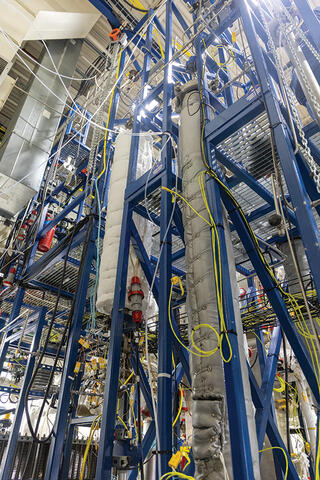
SwRI helps clients develop laboratory- and pilot-scale plants to refine processes and advance renewable energy, power generation and chemical processing technologies.
SwRI’s expertise in catalytic upgrading and refining technologies to support alternative fuels includes Fischer-Tropsch synthesis, hydrotreating and hydrocracking. The Fischer-Tropsch process converts synthesis gas or syngas — a mix of carbon monoxide and hydrogen — into liquid hydrocarbons and waxes. Hydrocracking is an exothermic process that breaks down long, heavy hydrocarbon chains and waxes into shorter, lighter liquid fractions. Hydrotreating cleans and stabilizes hydrocarbon streams using a hydrogen-addition process to generate the many liquid fuels we use today.
The Institute builds and operates high-pressure, high-temperature pilot units to refine biocrudes, bio-oils, pyrolysis oils and syngas into renewable diesel, SAF and synthetic gasoline components. Running these units with realistic purity levels and continuous operations allows SwRI to evaluate catalyst performance under conditions that closely resemble commercial plants. When catalysts indicate deactivation, fouling or unwanted side reactions, chemists and materials scientists evaluate interactions and develop mitigation strategies. SwRI also works with catalyst suppliers and clients to modify formulations and operating parameters. The iterative, data-driven refinement extends catalyst life, improves yields and lowers operational risk — all key elements for economic viability and reliable fuel output.
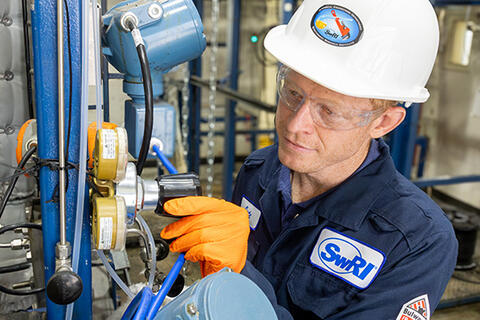
SwRI’s chemical engineering staff design, construct and operate high-pressure, high-temperature pilot units to refine biocrudes, bio-oils, pyrolysis oils and syngas into renewable diesel, synthetic aviation fuel and synthetic gasoline components.
Many alternative fuel technologies work well in isolation: gasifiers produce syngas, fermenters produce alcohols and reactors upgrade intermediates. Challenges arise when these steps are combined into a continuous process that must be controlled safely and efficiently. SwRI engineers design integrated flowsheets, specify equipment and develop control strategies to address heat management, mass transfer limitations and dynamic behavior across the entire system. When pilot plants reveal bottlenecks such as insufficient heat recovery, difficult separations or unstable reactor behavior, SwRI diagnoses the causes and implements design changes. This systems-level approach converts promising reaction chemistry into viable end-to-end production processes.
SwRI also closes the gap between new fuels and the stringent performance and safety requirements of users. For example, the aviation sector demands extensive data before approving new SAFs. SwRI provides detailed fuel property measurements, emissions characterization and engine and turbine performance testing to support certification. The Institute evaluates combustion behavior, material compatibility, deposit formation and long-term performance, helping developers demonstrate that alternative fuels meet or exceed existing standards. Similar work is carried out for diesel and gasoline applications, giving refiners, fleet operators and regulators a clear understanding of how new fuels behave in conventional engines and distribution systems.
For more information, visit Conceptual Design Package.
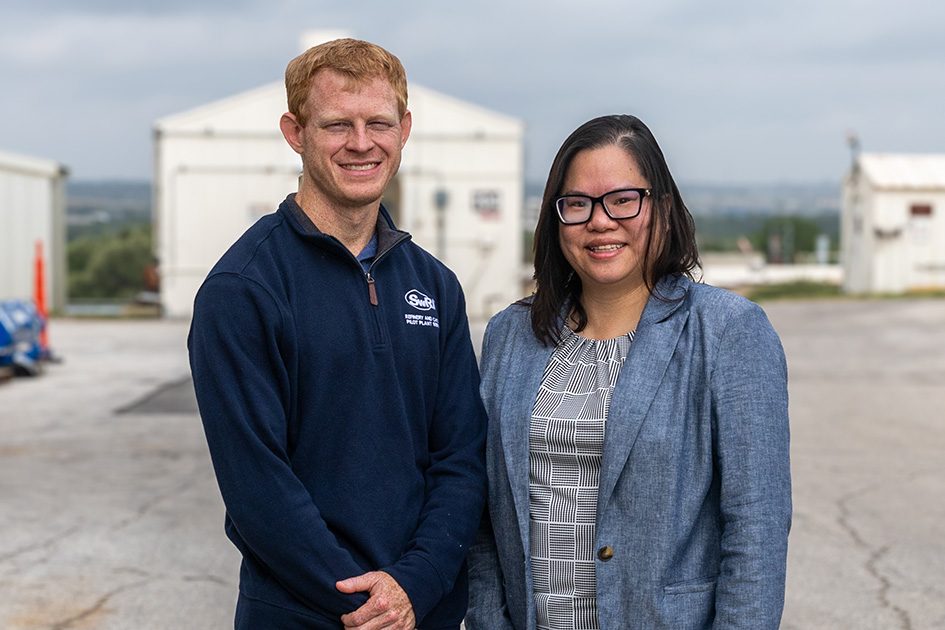
Jate Cox is a senior research engineer specializing in refinery and catalyst pilot plant services in the Chemistry and Chemical Engineering Division. Hsiang Yee Hoekstra leads the Refinery and Catalyst Pilot Plant Services Section, offering experience developing and scaling up chemical processes to generate renewable fuels and chemicals.
Long-duration Storage for Reliability
By Joshua Schmitt
Long-duration energy storage (LDES) plays a key role in ensuring energy resilience. As the name suggests, this technology stores energy during times of high abundance or low cost and returns it for use with some expected losses. These losses are typically calculated as the round-trip efficiency (RTE) that represents the total energy delivered relative to energy input.
Another key metric is duration, the amount of time it takes to discharge the stored energy at full power output, which is typically measured in hours. The LDES storage-release cycle is typically 10 or more hours of duration, the value needed for daily cycling. Energy storage adds to energy resiliency by alleviating spikes in supply or demand, keeping grid operation stable and preventing blackouts.
The United States military has recently increased its resiliency requirements with requests for proposals to install new LDES technologies with at least 14 days (336 hours) of storage duration to achieve 99.9% annual system uptime. This necessitates fewer than 9 hours of outages per year. Lithium-ion batteries are a common storage technology with high RTE in excess of 80%, but they typically max out at 4 hours of duration. Scaling the size of lithium-ion batteries for longer durations is possible at increased costs and shorter service lives, perhaps only lasting 15 years, depending on how they’re used.
The safety and durability of these systems are crucial. SwRI conducts abuse-testing on battery packs to ensure safe operations and minimize fire risks. Engineers develop methods to detect defects and isolate issues in the batteries to extend the life of a system.
Thermal, mechanical and chemical energy LDES systems may provide a solution for the long-duration energy storage quagmire. Thermal LDES stores energy as heat and returns it to support industrial processes or for conversion to electricity. Thermal LDES can store heat in rocks, molten salts and water, among other suitable substances. SwRI developed a heat pump thermal system at the kilowatt scale for the DOE and is working with a commercial collaborator pioneering electrified thermal storage in bricks for industry. This system can provide hot air at temperatures over 1,500° C, greater than any other electrified systems and rivaling the capability of fuels.
Mechanical LDES often refers to compressing gas for storage in underground caverns, which then drives a turbine to produce power. Alternative versions use the dramatic density swings of supercritical carbon dioxide to store and release energy. Chemical LDES includes producing hydrogen, ammonia or other fuels from electricity for use in fuel cells or engines. These technologies can achieve long durations for seasonal grid resiliency, but their RTE is typically 60% or less. SwRI is working with industry, conducting techno-economic and system optimization studies to position these technologies competitively for grid reliability.
For more information, visit Turbomachinery Design & Testing.
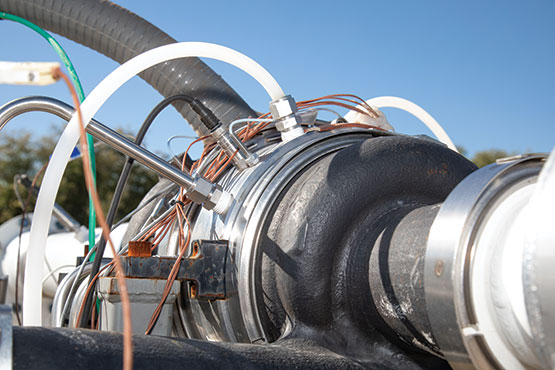
The “buy low, sell high” finance maxim is an apt metaphor to explain thermal long-duration energy storage. The system works by capturing excess electricity during times of abundance and lower cost. The stored energy is converted into heat, which can be converted back into electricity during periods of waning supply associated with higher prices.

Assistant Program Manager Josh Schmitt focuses on energy storage and industrial decarbonization research, exploring heat thermal storage, oxy-combustion plants, cryogenic carbon capture and electrified heat production in SwRI’s Mechanical Engineering Division.
Out with the Old, In with the New
By Ryan Williams
Internal combustion (IC) engines are often portrayed as “old” technology, while electric and fuel cell vehicles represent the “new.” Yet for heavy-duty, high-power or extended-duty-cycle applications such as long-haul trucking, it’s becoming clear that IC engines will remain the primary workhorse for decades. Deeply embedded in global infrastructure and supply chains, IC engines already meet demanding requirements for durability, refueling speed and cost.
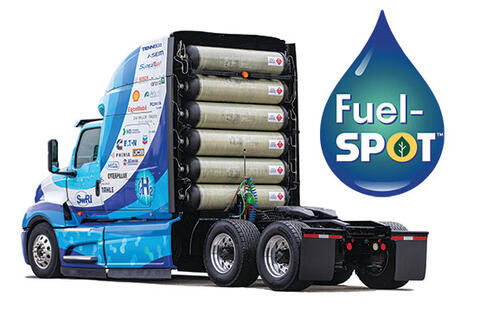
Using sensors to detect fuel properties, SwRI’s FuelSpot technology adjusts engine control parameters in real time to optimize performance and emissions for different fuel types.
The question is not whether engines disappear from the transportation energy landscape but how best to adapt and utilize them. The recent SwRI-led H2-ICE consortium demonstrated how to adapt a conventional engine platform to run on a new fuel with relatively modest vehicle changes. By reoptimizing combustion, air handling and control strategies, hydrogen engines can achieve reduced carbon emission objectives while preserving much of the existing hardware. In parallel, other research teams at SwRI are advancing battery, fuel cell and hybrid systems to coexist and complement the “new” engine offerings.
Building out entirely new manufacturing facilities and infrastructure for new fuels or powertrain concepts is neither economical nor feasible, at least in the interim. By reusing as much existing infrastructure as possible, the automotive and mobility sectors can ensure a resilient transition. One recent SwRI internal research and development program demonstrated a high-efficiency spark-ignited combustion concept that uses a “diesel-like” flat cylinder head. This architecture allows a gasoline-type ignition system to be packaged into an engine layout more commonly associated with diesel, making it possible to produce both engines on the same manufacturing line. The result is a pathway to higher efficiency and new fuels without discarding decades of technological investment.
Finally, energy resiliency for mobility will require greater fuel flexibility. Even when two fuels use the same basic combustion process, differences in energy content and chemical makeup can change power output and emissions. Ideally, you would develop a tailored calibration for each fuel and only operate the engine on that fuel — something that is impossible at scale.
Closing this gap requires engines that can sense and adapt. SwRI’s FuelSpot™ concept uses sensors to detect when fuel properties change within an engine and adjusts control parameters in real time to optimize performance and emissions for the new fuel. This kind of “smart” fuel adaptation is a key enabling technology for a resilient, fuel-diverse future — one where a company’s fleet or its industrial equipment can remain in operation despite changing fuel specifications and supply-chain disruptions caused by global events.
For more information, visit ICE Powertrain Research & Development.
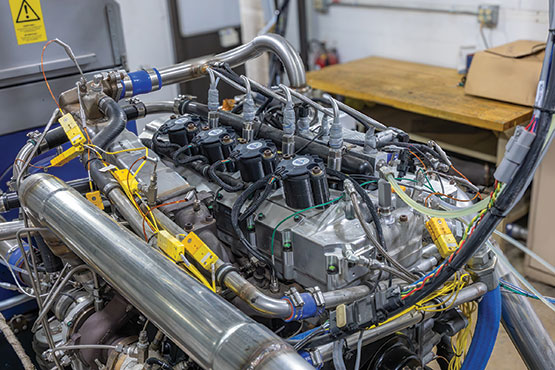
Internal combustion (IC) engines provide the power required for heavy-duty, high-power or extended-duty-cycle applications including long-haul trucking. SwRI supports IC engine research to adapt and optimize for tomorrow’s fuels while taking advantage of existing global infrastructure and supply chains.

Ryan Williams manages SwRI’s Engine Systems Research & Innovation Section and served as the program manager for the H2-ICE consortium, a joint SwRI-industry project that modified a Class 8 heavy-duty truck to run on hydrogen fuel.
Hybrid Energy Storage
By Richard Fu, Ph.D.
Battery energy storage systems (BESS) are an essential component of modern microgrids, providing almost instantaneous power to address fluctuations in renewable energy to meet electricity demands. But batteries are most effective for short-duration energy storage. Hydrogen energy storage complements batteries by extending energy storage from hours to days or even seasons.
During periods of surplus production, an electrolyzer splits water into hydrogen and oxygen using excess electrical power, particularly from renewable energy from peak solar or wind resources. The resulting hydrogen is contained in physical or chemical forms depending on scale and application and fed back into a fuel cell or combustion turbine to generate electricity and heat during times of peak demand.
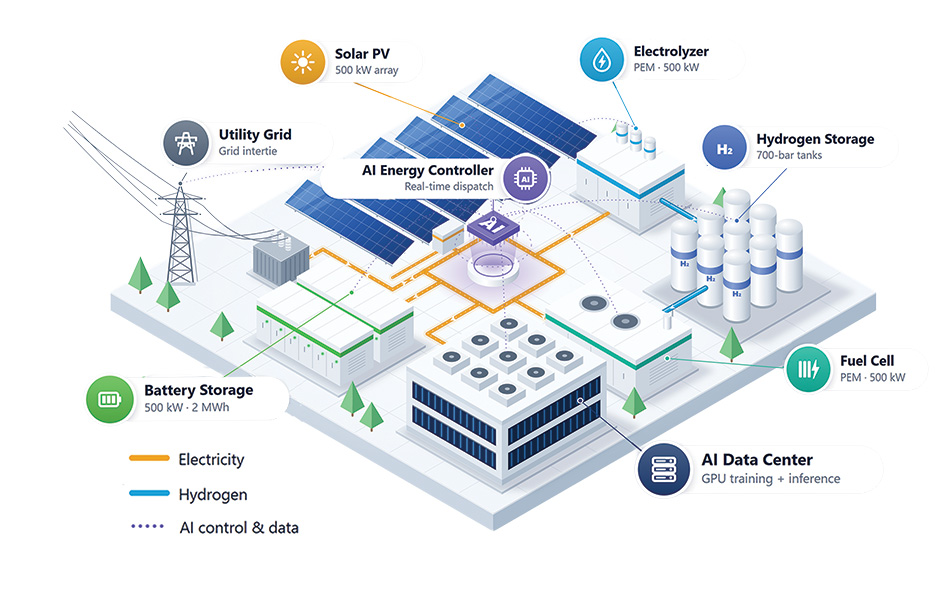
SwRI is developing a hybrid microgrid controller to coordinate solar photovoltaic, battery energy storage, hydrogen production through electrolyzers, hydrogen storage, fuel cell power generation and grid interaction to balance short- and long-duration energy needs and support resilient operation of AI data centers and other critical infrastructure.
Together, batteries and hydrogen combine fast response with long-duration energy capacity, enabling resilient behind-the-meter microgrids that can support critical facilities such as AI data centers, hospitals, military installations and industrial campuses. This addresses demand during prolonged grid outages or periods of low renewable generation while strengthening the use of diverse domestic energy resources.
Researchers at SwRI, in collaboration with Southern Methodist University (SMU), are developing an AI-driven hybrid microgrid controller that intelligently coordinates battery and hydrogen energy storage to improve grid resiliency and enable long-duration energy storage. The project is funded through the Seed Projects Aligning Research, Knowledge and Skills (SPARKS) program, a joint initiative between SwRI and SMU that supports collaborative research with strong potential for future federal and industry funding.

Dr. Richard Fu is a research engineer in SwRI’s Powertrain Engineering Division. He has extensive experience in hydrogen and fuel cell technologies, supporting the development and deployment of clean, high-efficiency energy systems.
The project focuses on developing a physics-informed AI controller capable of coordinating energy flows among photovoltaic generation, battery storage, hydrogen production, hydrogen storage and fuel cell power generation. Unlike conventional rule-based energy management systems, which use pre-defined conditions, the controller uses reinforcement learning. This system continuously optimizes operations while accounting for equipment operating limits, battery degradation, hydrogen system dynamics and changing electrical loads. By learning from both historical and simulated operating data, the controller will intelligently determine how to balance fast-response battery storage with long-duration hydrogen storage under a wide range of operating conditions.
To accelerate development, the team is creating a hybrid digital twin environment that combines real hardware with high-fidelity digital twin simulations. SwRI will validate the controller using its existing grid-connected photovoltaic and BESS assets, while hydrogen technologies — including electrolyzers, fuel cells and solid-state metal hydride hydrogen storage — will be represented initially through simulation models. This approach allows researchers to evaluate controller performance under realistic operating conditions before advancing to future hardware demonstrations, reducing technical risk while accelerating technology development. The research establishes a foundation for large-scale demonstrations of intelligent microgrids that can improve renewable energy utilization, reduce stress on the electric grid and enhance the resilience of critical infrastructure.
For more information, visit Energy Storage Systems.