


Click below to jump to an article of interest.
SwRI Joins Hydropower Testing Network
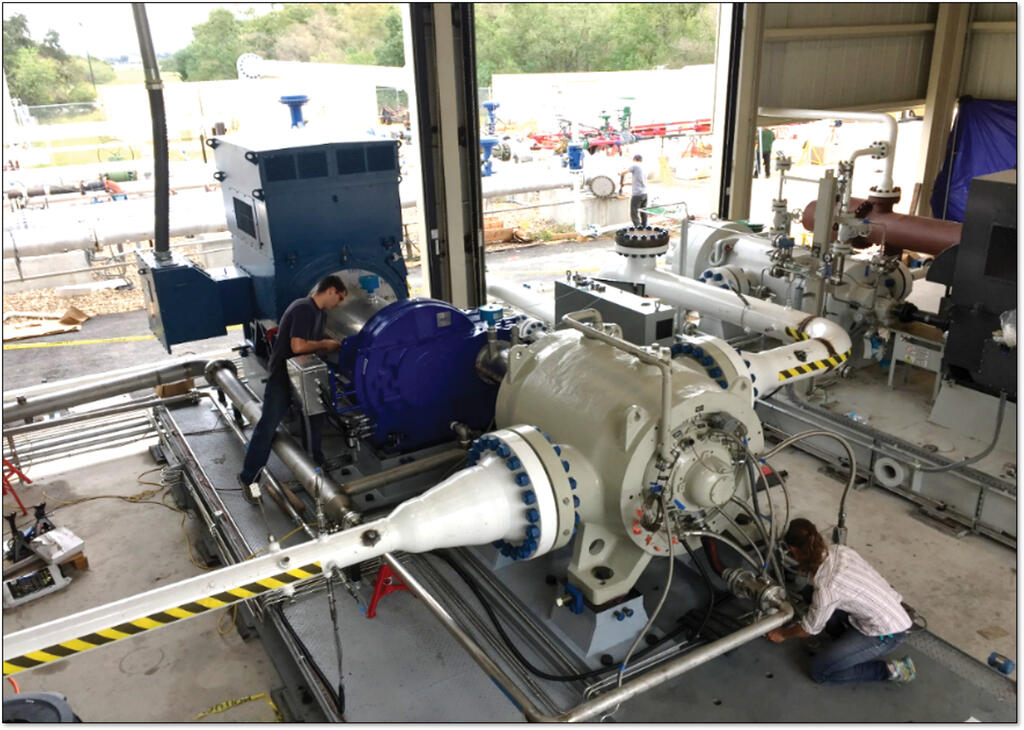
SwRI supports hydropower machinery testing at up to 3 MWe and variable speeds exceeding 20,000 rpm, using instrumentation to assess shaft, bearing and rotordynamic performance.
The U.S. Department of Energy has selected SwRI to join its Hydropower Testing Network (HyTN), which helps industry develop and demonstrate new technologies.
Hydropower is a renewable energy resource that uses the natural flow or fall of moving water to generate electricity and power machinery. The HyTN links hydropower developers with testing facilities and experts across the country. These organizations now can benefit from SwRI’s wide range of technical services to help develop and improve hydropower technologies.
“Hydropower is where clean energy, grid reliability and long-lasting infrastructure come together,” said Jacqueline Manders, a program manager in SwRI’s Fluids Engineering Department. “Our teams blend advanced modeling, full-scale testing and real-world field services to tackle some of the toughest challenges in the industry. Now, as a HyTN provider, we’re ready to use that expertise and our facilities to help move the future of hydropower forward.”
As a HyTN testing capability provider, SwRI’s hydropower capabilities include:
- Customized, high-fidelity testing of hydropower components
- Mechanical spin testing on hydropower turbines
- Comprehensive materials testing and characterization
- Advanced computational fluid dynamics (CFD) modeling and simulation
- CFD analyses tailored to simulate complex flow in hydropower turbines
- Turbine mechanical design studies
- Roadmapping, energy analysis and technoeconomic evaluations
- Root-cause failure analysis
- Hydropower digital twin creation and analysis
The testing, modeling and analysis capabilities selected by the DOE HyTN program leverage the core competencies and extensive test infrastructure across SwRI’s Fluids Engineering, Machinery and Materials Engineering departments.
For more information, visit Fluids Engineering, Materials Engineering, or Machinery.
Landsat 10 Spacecraft Support

IMAGE COURTESY NASA
SwRI is developing electronics and flight software for the next-generation NASA/USGS Landsat 10 satellite, which will improve Earth observation data generated by the current Landsat satellites shown.
SwRI is developing electronics and flight software for the NASA/ U.S. Geological Survey (USGS) Landsat 10 satellite scheduled to launch in 2031 to collect new and improved Earth observation data. The mission is a continuation of NASA’s and USGS’ partnership on the ongoing Landsat program, which has launched nine satellites since 1972 and provided over 10 million images of the Earth’s surface.
“Landsat 10’s technological innovation differs from previous missions in terms of the amount of image data collected,” said Patrick Phelan, who oversees SwRI’s role in the project. “Landsat 10 will process ~1.8 gigabits of data each second.”
Landsat 10 data will be unmatched in precision and quality, supporting a vast array of science applications and providing important insights about water quality, quantity and use, as well as agricultural production, soil conservation and forest management.
SwRI serves as a subcontractor to Raytheon, an RTX business, which is developing the Landsat Instrument Suite (LandIS), including the multispectral imager for Landsat 10. SwRI will provide electronics and software that allow LandIS to capture image data and compress it before transmission back to Earth.
SwRI is also developing control technology to regulate the instrument’s temperature and to position the camera’s mirrors, which direct and focus light to help LandIS capture wide, detailed images of Earth. The Institute is developing operational and interface simulators that mimic the behavior of the spaceborne payload to rehearse scientific campaigns on the ground.
“This new technology will continue Landsat’s legacy of Earth observations,” Phelan said. “We are leveraging our work on previous NASA and private space industry projects to accomplish our goals.”
For more information, visit Space Systems.
Discrepancies in AI Crater Catalogs
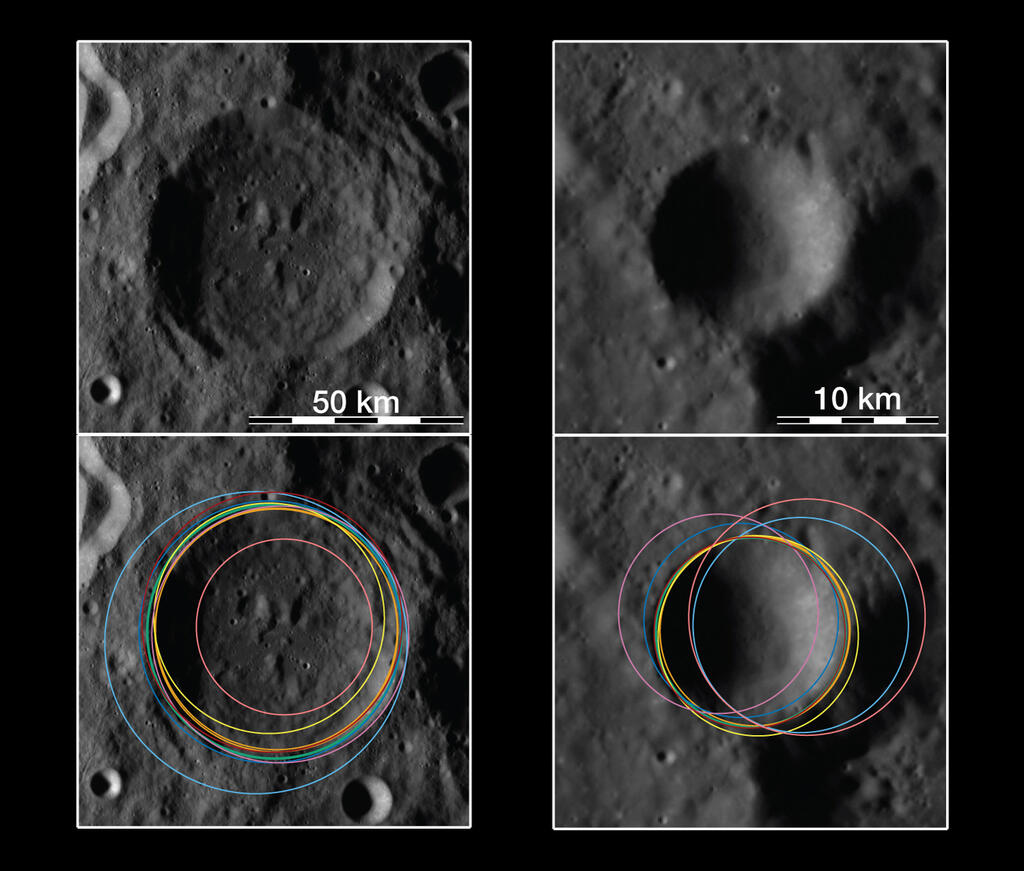
A new SwRI-led study compared AI-generated lunar crater catalogs, finding their performance metrics drop sharply when compared to human-built resources. These examples map the results from the different catalogs, including the human-derived data in green, showing inaccuracies in size and location associated with automated systems — flaws that could skew scientific studies.
An SwRI-led study compared eight AI-generated lunar crater catalogs, discovering that many of their published performance metrics drop sharply when the databases are evaluated using the same scientific standards humans are held to. Crater catalogs provide a comprehensive record of impact craters on planetary surfaces. They log the precise location, dimensions and physical characteristics of impact structures to help scientists understand the geological history of the solar system and its components.
Impact craters are the dominant geologic feature on the Moon and many other solid worlds. Scientists count craters to estimate the ages of planetary surfaces. Because small asteroids strike at a roughly steady rate, surfaces with more craters are older than those with fewer.
Automated crater detection — using artificial intelligence and machine learning — could save researchers years of painstaking manual work and help tackle problems otherwise impossible to address in a lifetime.
“AI has enormous potential to help with repetitive, time-consuming scientific tasks, especially gathering some of our data,” said Dr. Stuart J. Robbins of SwRI’s Solar System Science and Exploration Division in Boulder, Colorado, and lead author of the study. “But our analysis shows that researchers should not assume an AI-generated crater catalog is ready for scientific use solely based on its published metrics.”
Robbins and co-author Dr. Rachael H. Hoover, also of SwRI, evaluated each database against a large, manually compiled lunar crater catalog that took Robbins years to construct. The team found that performance depends strongly on how a crater “match” is defined.
“A crater catalog is not just a random list of circles,” Robbins said. “If a crater is shifted, duplicated or improperly sized, that can affect the science that depends on those metrics.”
For more information, visit Planetary Science.
NASA’S Juno Takes the Subsurface Temperature of Jupiter's Fiery Moon
NASA’s Juno mission has made the first direct measurements of the temperature below the surface of Jupiter’s moon Io, which reveal significant heating in the upper few feet of the most volcanically active world in the solar system.

IMAGE COURTESY NASA/JPL-CALTECH/SwRI/ASI/INAF/JIRAM
These findings, derived from data collected by Juno’s Microwave Radiometer (MWR) during two close flybys, were published July 22 in the Journal of Geophysical Research: Planets. SwRI’s Dr. Scott Bolton, co-author of the paper and Juno’s principal investigator, invented and designed the MWR to investigate Jupiter’s atmosphere below the cloud tops. The novel instrument has also proven invaluable for studying Jupiter’s ice-covered and volcanic moons as well.
New data from MWR also show that the majority of Io’s surface is remarkably smooth at large scales and more similar in density to volcanic ash or pumice than to solid rock. These results break new observational ground for both fiery and icy worlds beyond our planet.
“The Juno microwave radiometer directly observed Io’s heat output by looking below the surface,” Bolton said. “The discovery that we could see below the surface of a rocky moon was a surprise with potentially important implications for the study of Earth’s volcanoes.”
The mission’s extended phase provided the opportunity to observe three of the gas giant’s Galilean moons, Ganymede, Europa and Io. The Juno radiometer uses six microwave antennas acting as a single instrument capable of simultaneously detecting microwaves at a wide range of wavelengths.
“The novel aspect of the instrument is that each wavelength explores a different depth to characterize the deep atmospheres of giant planets or the subsurface crusts of icy and rocky bodies,” Bolton said. “At Ganymede and Europa, we probed tens of miles into their ice shells. At Io, the MWR measured thermal emissions at depths ranging from a few inches down to tens of feet.”
For more information, visit Planetary Science.
SwRI Patents Energy-Efficient EZ Flow
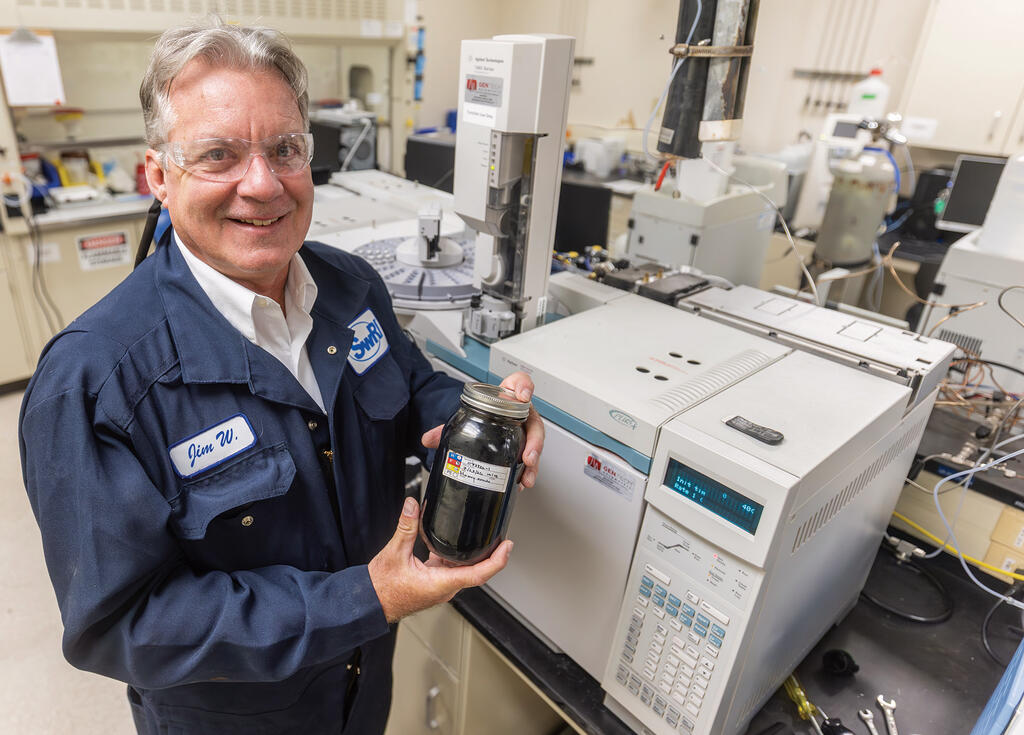
SwRI recently received a patent for its EZ Flow™ technology, which reduces the viscosity of heavy crude oil by 60% or more. Developed through internal research funding, EZ Flow could help address a significant barrier for utilizing heavy crude oil in North America.
In the simplest terms, viscosity measures a fluid’s resistance to flow. It indicates how thick or thin a fluid is and how easily it moves under an applied force. Viscosity is affected by temperature, pressure, composition and impurities.
“When first developing EZ Flow, our goal was to make transport of heavy crude oil possible through existing pipelines,” said Principal Scientist James Wood. “Traditionally, moving heavy crude oil required cost-prohibitive chemical treatments, the addition of large volumes of diluent and/or heating. EZ Flow addresses those challenges.”
EZ Flow is a two-part process that starts with a proprietary low-concentration chemical additive followed by controlled hydrodynamic cavitation, a mixing process that uses a rotor to produce microscopic bubbles. Shockwaves produced when the bubbles collapse heat and mix the additive into the heavy crude oil, reducing its viscosity for extended periods of time. This process does not change the chemical composition of the heavy crude oil, and the chemical components added do not affect downstream processing.
SwRI scientists have found the process offers at least six months of reduced viscosity. However, Wood says more testing is needed to understand the effectiveness of EZ Flow at lower ambient temperatures.
“EZ Flow is designed to bring down the costs associated with transporting heavy crude oil, which could ease supply chain shocks caused by global shifts in energy markets,” Wood said. “We are excited to bring this technology to our clients through licensing or technology transfer.”
For more information, visit Treating Heavy Crude Oil for Transport.
SwRI, Collaborators Research a Lunar Initiative
SwRI, Astroport Space Technologies Inc. and the WEX Foundation have signed a memorandum of understanding (MOU) to explore the possibility of an independent National Lunar Research Center (NLRC) on SwRI grounds. The NLRC would focus on accelerating the research and development efforts needed to advance lunar surface infrastructure technologies, demonstrate assisted and autonomous lunar construction capabilities and prepare a specialized workforce to fulfill NASA’s Ignition and Moon-to-Mars objectives.
The proposed initiative would leverage approximately 180 acres of SwRI-owned property adjacent to its main campus in San Antonio. The site would be used to simulate the geography of the Moon’s de Gerlache Ridge as well as the footprint of NASA’s Artemis Moon Base. The NLRC would complement other small- and mid-scale facilities to provide a comprehensive ecosystem for research, development, testing and evaluation of equipment and processes designed to support a sustained presence on the lunar surface.
“SwRI is committed to solving the most difficult technical challenges in space exploration,” said Adam L. Hamilton, P.E., president and CEO of SwRI. “The NLRC would provide a full-scale analog site that could be used to prepare for construction and operation of a Moon base.”
The initiative leverages the unique local resources available to launch the next generation of space occupation and exploration programs.
“Our lunar civil engineering work for NASA has established a clear engineering baseline for construction on the Moon,” said Sam Ximenes, founder and CEO of Astroport Space Technologies. “The NLRC would provide the infrastructure needed to rehearse these complex operations at scale, validating site preparation and infrastructure tools on Earth for safety and endurance before they are committed to a lunar manifest.”
For more information, visit Planetary Science.

IMAGE COURTESY ASTROPORT/TANGRAM3DS
To support NASA’s Moon-to-Mars objectives, SwRI is working with local organizations to explore the possibility of hosting a site for simulating the geography of the Moon and the footprint of a moon base on its San Antonio campus.
Lucy Mission Studies Wobbling Peanut Asteroid
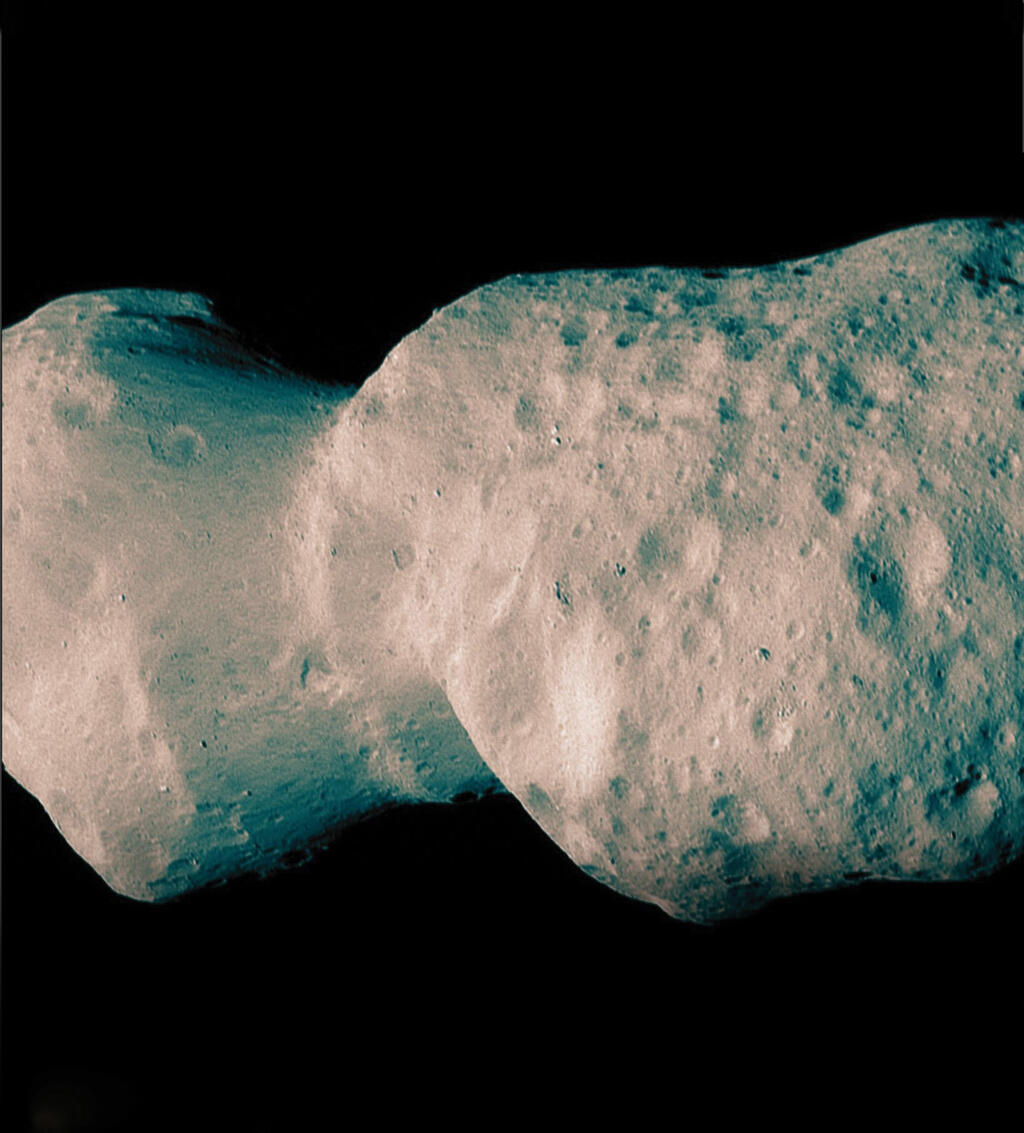
IMAGE COURTESY LUCY/NASA/GODDARD/ SwRI/
JOHNS HOPKINS APL/NOIRLAB
During its April 20, 2025, encounter with the main belt asteroid Donaldjohanson, NASA’s Lucy spacecraft discovered iron-rich clays on the surface of the asteroid, evidence of the presence of water on its parent asteroid in the distant past.
SwRI scientists studying the inner main belt asteroid Donaldjohanson have found that its rotation wobbles. Rather than rolling through space in a steady pattern, Donaldjohanson turns on two axes, rotating end-over-end once every 10.5 Earth days and wobbling around its horizontal axis once every 26.5 days.
“This is just one of many surprising things learned since NASA’s Lucy spacecraft flew by Donaldjohanson on April 20, 2025,” said SwRI’s Dr. Simone Marchi, deputy principal investigator of the Lucy mission and the study’s lead author. “Lucy images confirmed its elongated shape, initially suggested by Earth-based telescope observations. The flyby revealed that the small asteroid, half a mile in diameter, resembles a peanut, with a two-lobed structure connected by a narrower neck.”
The spacecraft also detected iron-rich clay minerals, formed long ago in the presence of liquid water. These findings indicate that the asteroid likely formed from fragments of a larger, carbon- and water-rich asteroid that broke apart 155 million years ago, following a collision in the main asteroid belt, a region between Mars and Jupiter.
Lucy’s encounter with Donaldjohanson is considered a test run for its primary mission to explore the Trojan asteroids, two swarms of ancient objects that lead and trail Jupiter as it orbits the Sun.
“This encounter gave us an opportunity to test our instruments and our procedures to make sure we are ready when we get to Jupiter’s Trojans,” Marchi said. “Once we start learning more about the Trojans — a completely different population of objects — our understanding of solar system formation is likely to be challenged.”
To watch a visualization of Donaldjohanson’s wobbly orbit, visit: https://www.youtube.com/watch?v=Qi4f8xwRiKI.
For more information, visit Planetary Science.
Mini-Moons May Explain Meteorite Composition
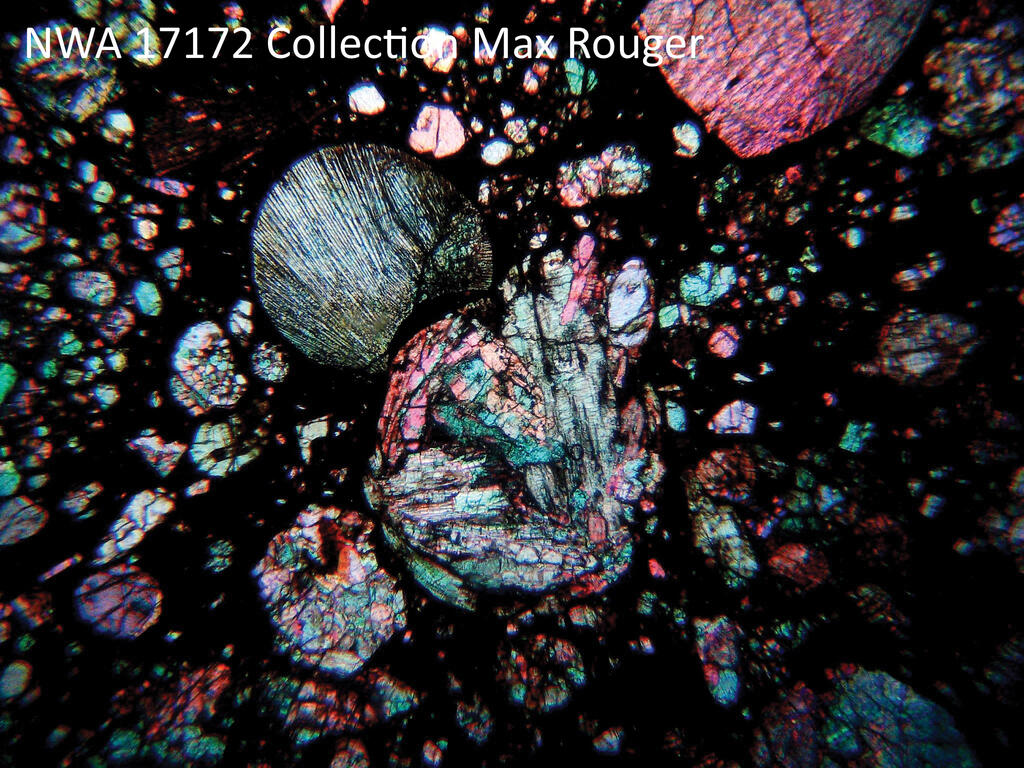
IMAGE COURTESY MAX ROUGER CC BY-SA 4.0
An SwRI-led study connected the evolution of millimeter-sized, spherical mineral grains known as chondrules, shown here in a polarized light micrograph, to the meteorites found on Earth.
A new SwRI-led study proposes a solution to a long-standing puzzle in planetary science — what caused the concentration, assembly and preservation of millimeter-sized, spherical mineral grains within the parent bodies of the most common meteorites?
Chondritic asteroids are ancient bodies that orbit the Sun, while a chondrite meteorite is a rocky fragment that falls to Earth. Both contain primitive materials. Chondrite meteorites are largely made of chondrules — tiny, once-molten droplets of rock — embedded in a fine-grained matrix.
“While several mechanisms may have created the chondrules themselves, I have always been surprised by how homogeneous the chondritic asteroids seem to be,” said SwRI’s Hal Levison, first author of a new paper outlining this research. “We were looking for a process that corrals these small droplets into asteroid-sized bodies.”
The new research indicates that the answer may lie in the chaotic final stages of terrestrial planet formation, when planetary embryos — Moon- to Mars-sized bodies — frequently collide. Using numerical simulations, the team investigated giant impact scenarios between planetary embryos that generate sheets of molten and solid ejecta. Some of these materials remain gravitationally bound and settle into a dense, rotating debris disk around the impacted embryo.
“This circum-embryo disk orbits a growing protoplanetary embryo, accumulating into larger bodies and forming asteroid-sized satellites,” Levison said. “The resulting asteroid-sized satellites are composed almost entirely of material from the original impact.”
Crucially, the study finds that some of these satellites can be dynamically liberated from their orbits around the planetary embryo and placed into independent orbits around the Sun. These escaped satellites then become the parent bodies of chondritic asteroids — the source of the chondrite meteorites found on Earth.
For more information, visit Planetary Science.
CYGNSS Spacecraft Model on Display at Smithsonian
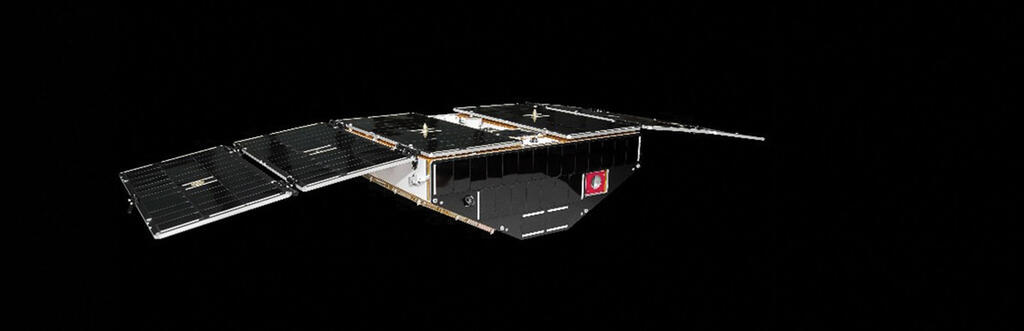
The Smithsonian’s National Air and Space Museum in Washington now includes a model of an SwRI-built Cyclone Global Navigation Satellite System (CYGNSS) microsatellite. The model is a part of a permanent exhibit at the museum showing the evolution of spacecraft over several decades. SwRI designed, built and continues to operate the constellation of CYGNSS microsatellites.
“CYGNSS’s eight satellites were the first built by SwRI, and seeing the breadth of the mission’s impact has been very rewarding,” said Susan Pope, executive director of SwRI’s Space Science Division, who also served as CYGNSS’s deputy project manager from 2013 to 2016.
Launched in 2016, the CYGNSS constellation’s mission is to improve tropical storm and hurricane forecasting. Each of the CYGNSS microsatellites is roughly the size of a piece of carry-on luggage and designed to make frequent measurements of ocean surface winds and to monitor the location, intensity, size and development of tropical cyclones.
“CYGNSS is a big part of the small satellite revolution, and I always say we’re small but mighty,” said Jillian Redfern, CYGNSS project manager in SwRI’s Solar System Science and Exploration Division in Boulder, Colorado. “It was remarkable to start seeing CYGNSS data used in so many scientific studies, including tracking locust migrations in Africa, microplastics in oceans, and wildfires. We’re very proud of how productive these little satellites have proven to be in the last decade.”
SwRI assembled the display model from leftover spare parts from the original CYGNSS mission and engineering model components. The model represents the external structural skeleton of the microsatellite.
“CYGNSS was a milestone for SwRI and for the space industry,” said William Wells, CYGNSS project systems engineer. “It paved the way for small satellites to have a larger presence in our industry, and it led to a wide range of interesting science in the past 10 years.”
For more information, visit Spacecraft Subsystem Assembly and Testing.
Impact Flash Revelations
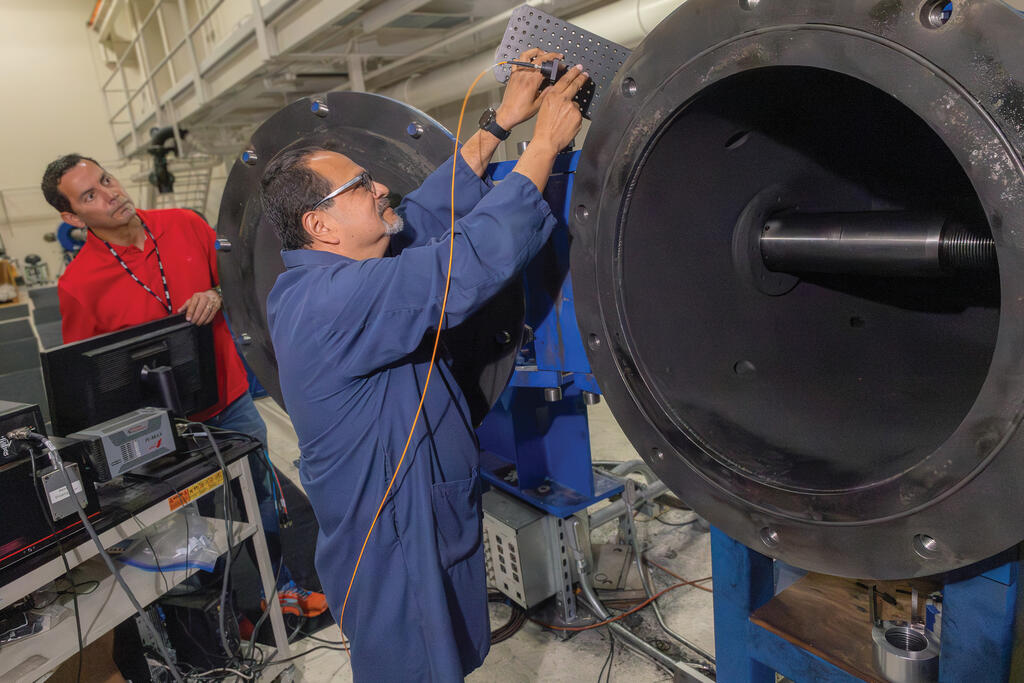
SwRI’s Dr. Pablo Bueno and Ben Uresti use the Institute’s large two-stage light-gas gun to create hypervelocity impacts representative of missile defense intercepts and meteor impacts to study the spectra of light revealed in the resulting flashes.
SwRI is studying flashes generated by high-speed impacts to better understand the materials involved in the collisions. Advances in this area could support missile defense, making it possible to determine the composition of an intercepted missile and its payload. The work could also help scientists identify the origins of meteorites or asteroids, based on their composition.
“When a meteorite strikes the surface of a moon or planet, the energy of the impact creates a flash emitting so much energy that the chemical signatures of its constituent materials are visible at different wavelengths,” said Dr. Pablo Bueno, a lead engineer in SwRI’s Mechanical Engineering Division.
Bueno and Senior Research Engineer Roberto Enriquez-Vargas recently completed an internally funded project that developed and refined methods for using high-speed spectroscopy to analyze the light emitted during hypervelocity impacts. These impact flashes last a few microseconds, which requires capturing spectral data quickly and precisely.
The team used SwRI’s two-stage light-gas gun to create hypervelocity impacts representative of missile strikes or asteroid impacts. Typically used in ballistics studies, the 72-foot-long gun system generates velocities up to 15,660 miles per hour.
Because these impacts and resulting flashes are so fleeting, Bueno and Enriquez-Vargas developed a laser-based triggering system to precisely detect the instant an impact occurs, accurately measuring impact timing within 100 nanoseconds, or one 10-millionth of a second.
SwRI scientists studied the flash for the distinct spectra the materials emitted under the intense heat and pressure created by the impact, allowing the team to identify materials present. This project was funded through SwRI’s Internal Research and Development Program.
For more information, visit Blast & Impact.