


Click below to jump to an article of interest.
Mysterious Atmosphere of 'Rosetta Stone' Exoplanet
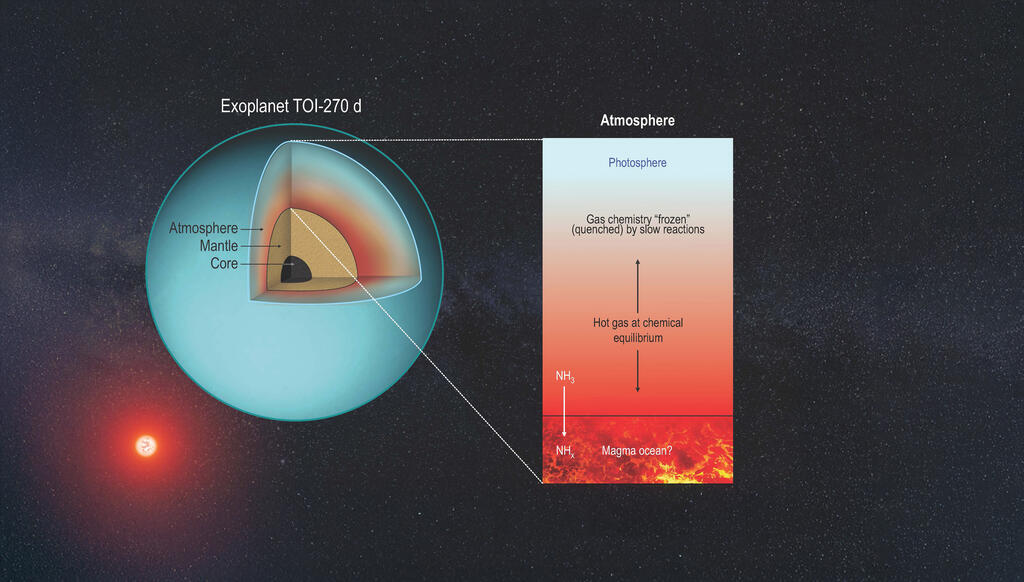
An SwRI-led study modeled the chemistry of TOI-270 d, a nearby exoplanet between Earth and Neptune in size, finding evidence that it is a giant rocky world (super-Earth) surrounded by a deep, hot atmosphere. NASA’s James Webb Space Telescope (JWST) detected gases emanating from a region of the atmosphere over 1,000 degrees Fahrenheit — hotter than the surface of Venus. The model illustrates a potential magma ocean removing ammonia (NH3) from the atmosphere. Hot gases then undergo an equilibration process and are lofted into the planet’s photosphere where JWST can detect them.
An SwRI-led study modeled the chemistry of TOI-270 d, an exoplanet between Earth and Neptune in size, finding evidence that it could be a giant rocky planet shrouded in a thick, hot atmosphere. TOI-270 d is only 73 light years from Earth and could serve as a “Rosetta Stone” for understanding an entire class of new planets.
Exoplanets orbit stars outside of our solar system. Sub-Neptunes refer to planets between the size of our solar system’s largest rocky planet, Earth, and the smallest gas giant, Neptune.
“The nature of sub-Neptunes is one of the hottest topics in exoplanetary science,” said SwRI’s Dr. Christopher Glein, first author of a paper published in the Astrophysical Journal. “These sub-Neptunes are the most abundant size range of planets in the galaxy, yet none exist in our solar system. They are exotic. Temperate sub-Neptunes are of even higher interest because some could be habitable.”
Scientists have proposed that sub-Neptune exoplanets orbiting in the habitable zone, where liquid water can exist on the surfaces of planets, could be massive ocean worlds with thin hydrogen-rich atmospheres, referred to as “hycean” (hydrogen-ocean) worlds. For example, planet K2-18 b was thought to be a hycean world. However, recent James Webb Space Telescope (JWST) data from TOI-270 d shows that a simpler model based on a giant (super-Earth) rocky interior shrouded by a thick, hot atmosphere can explain the data better.
“The search for habitable worlds continues. The JWST data on TOI-270 d collected by Björn Benneke and his team are revolutionary,” Glein said. “I was shocked by the level of detail they extracted from such a small exoplanet’s atmosphere, which provides an incredible opportunity to learn the story of a totally alien planet. With molecules like carbon dioxide, methane and water detected, we could start doing some geochemistry to learn how this unusual world formed.”
NASA’s JWST detected gases that indicate temperatures over 1,000 degrees Fahrenheit — hotter than the surface of Venus. The new geochemical model illustrates how gases undergo an equilibration process at these temperatures and are then lofted upward where JWST can detect them.
“While it is a bit disappointing to find that TOI-270 d is unlikely to be habitable, this planet still offers a fantastic opportunity to explore alternative paths of planetary origins and evolution,” Glein said. “We are learning much more about the crazy configurations of planets that nature comes up with.”
For example, scientists have been perplexed about the lack of ammonia in the atmospheres of temperate sub-Neptunes. Previous models suggested that ammonia should be produced in thick, hot atmospheres rich in hydrogen gas. This new work presents an integrated perspective to explain how ammonia is depleted through combinations of planetary processes, including the high-temperature production of nitrogen gas and the dissolution of ammonia into a super-heated ocean of molten rock at the surface of the planet.
“I see a lot of parallels between planetary science and biology,” Glein said. “A core set of building blocks and rules for interactions result in an explosion of diverse forms.”
For more information, visit Planetary Science.
New Burner Reduces Methane Emissions
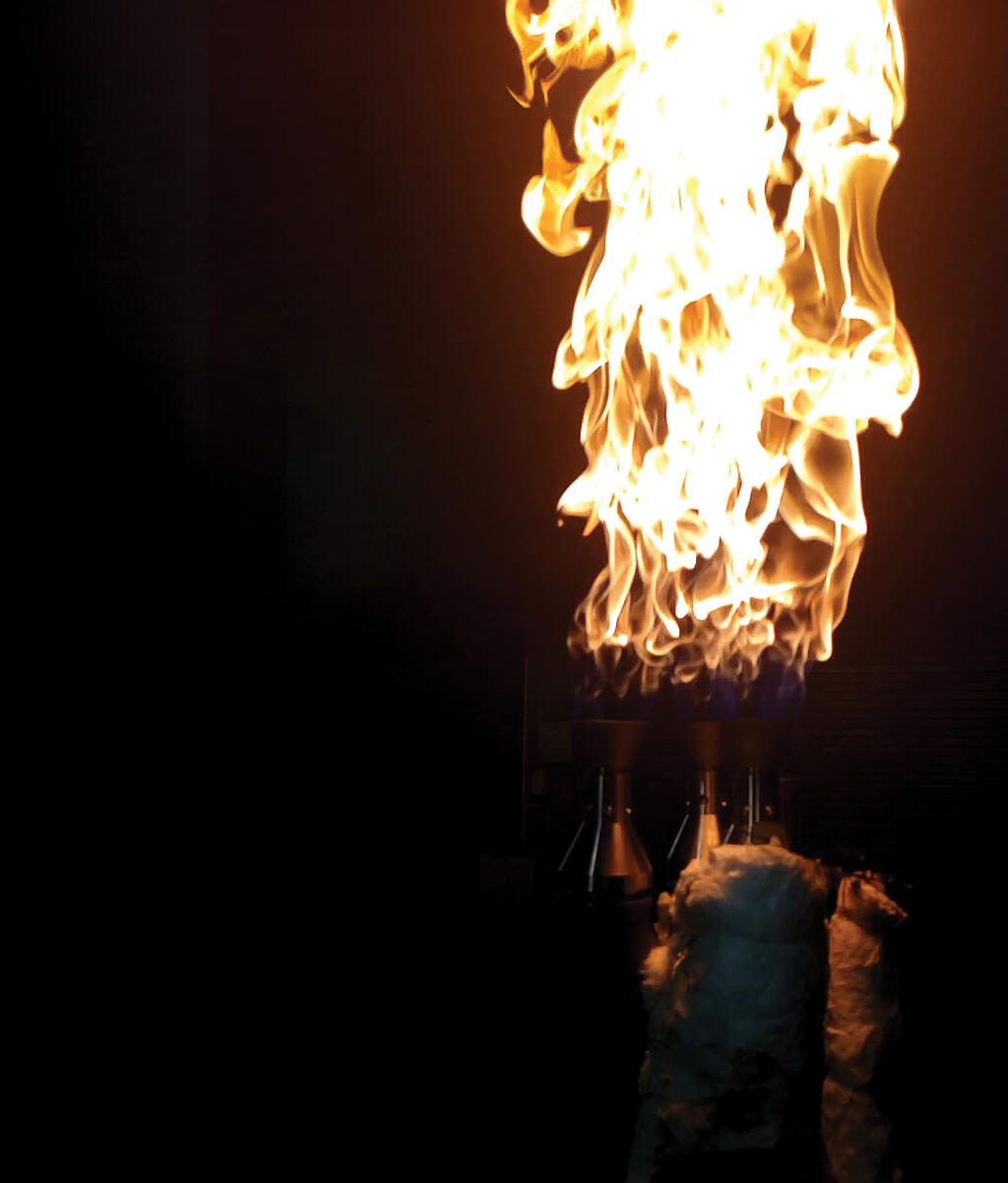
SwRI and University of Michigan researchers developed and tested an advanced methane flare burner developed using additive manufacturing and machine learning. A new study found that the new design eliminated 98% of methane vented during oil production.
A new study by researchers at SwRI and the University of Michigan (U-M) shows that a new advanced methane flare burner created with additive manufacturing and machine learning eliminates 98% of methane during oil production. U-M researchers designed the burner that SwRI tested.
Oil production may require excess methane gas to be burned off using flare stacks. However, wind blowing across conventional open flame burners reduces their effectiveness, releasing 40% or more of methane into the atmosphere. Over a hundred years, methane has 28 times greater global warming potential than carbon dioxide and is 84 times more potent on a 20-year timescale. Flaring reduces overall global warming potential, but ineffective flaring diminishes the benefits of this strategy.
SwRI collaborated with U-M engineers to leverage machine learning, computational fluid dynamics and additive manufacturing to create and test a burner with high methane destruction efficiency and combustion stability despite the challenging field conditions.
“We tested the burner at an indoor facility at SwRI, where we could control the crosswind and measure burner efficiency under different conditions,” said SwRI Principal Engineer Alex Schluneker, one of the paper’s co-authors. “Even the slightest amount of crosswind significantly reduced the effectiveness of most burners. We found that the structure and motions of the fins inside the burner were essential for maintaining efficiency. The U-M team engineered it to significantly improve performance.”
The burner’s complex nozzle base splits the flow of methane in three directions. The impeller design guides the gas toward the flame. This novel design evenly mixes the air and methane while allowing time for the combustion before crosswinds can affect it. This design is key to the burner’s efficiency.
For more information, visit Metering Research Facility or Fire Testing.
First UV Data from NASA’s Europa Clipper
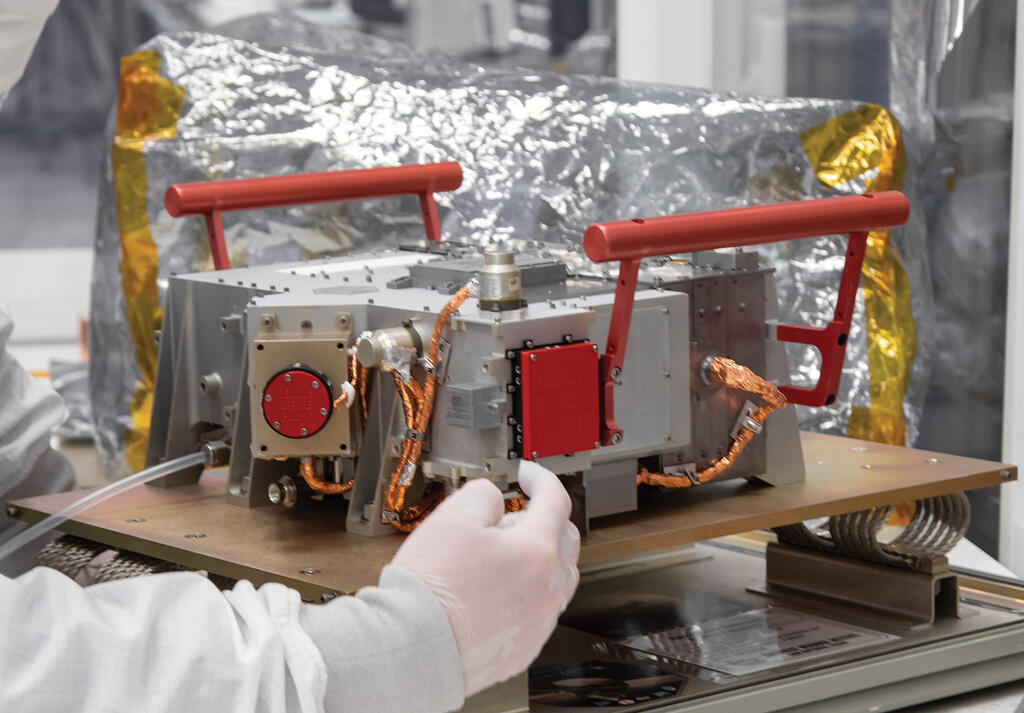
The SwRI-led Ultraviolet Spectrograph (UVS), pictured right, aboard NASA’s Europa Clipper spacecraft has successfully completed its initial commissioning and collected UV data following the October 14, 2024, launch. Scheduled to arrive in the Jovian system in 2030, the spacecraft will orbit Jupiter and ultimately perform repeated close flybys of the icy moon Europa. Previous observations show strong evidence for a subsurface ocean of liquid water that could host conditions favorable for life.
Europa-UVS is one of nine science instruments in the mission payload, including another SwRI-led and -developed instrument, the MAss Spectrometer for Planetary EXploration (MASPEX). The UVS instrument collects ultraviolet light to create images to help determine the composition of Europa’s atmospheric gases and surface materials.
“SwRI scientists started this process in January from NASA’s Jet Propulsion Laboratory; however, we had to evacuate due to the fires in southern California,” said SwRI Institute Scientist Dr. Kurt Retherford, principal investigator (PI) of Europa-UVS. “We had to wait until May to open the instrument’s aperture door and collect UV light from space for the first time. We observed a part of the sky, verifying that the instrument is performing well.”
Weighing just over 40 pounds (19 kg) and drawing only 7.9 watts of power, UVS is smaller than a microwave oven, yet this powerful instrument will determine the relative concentrations of various elements and molecules in the atmosphere of Europa once in the Jovian system. A similar instrument launched in 2023 aboard ESA’s Jupiter Icy Moons Explorer spacecraft, which will be studying several of Jupiter’s icy moons, gases from the volcanic moon Io, and Jupiter itself. Having two UVS instruments in the Jupiter system at one time offers complementary science.
In addition to performing atmospheric studies, Europa-UVS will also search for evidence of potential plumes erupting from within Europa.
For more information, visit Planetary Science.
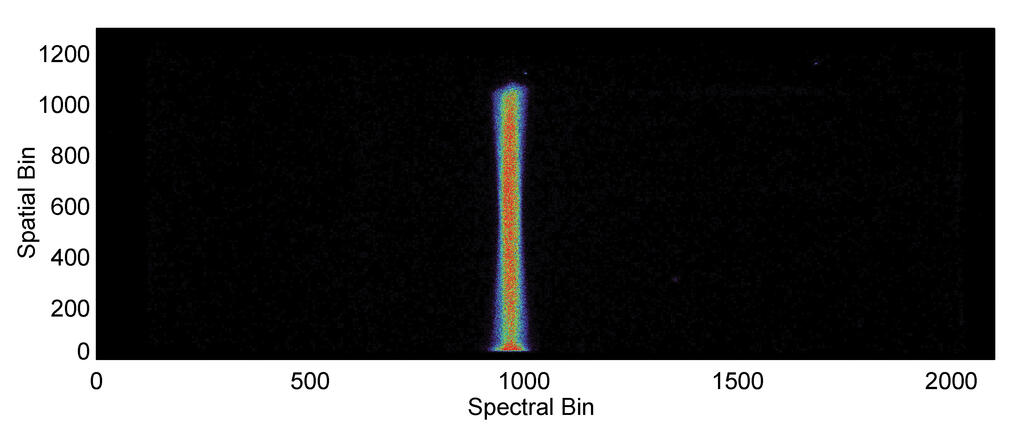
This “first-light” image from the Europa-UVS instrument shows data at far-ultraviolet wavelengths. Light from hydrogen atoms in the solar system is the source of the red line in the middle of the image, and this sky-background measurement confirms Europa-UVS is working well.
BEAMoCap™ Launched to Support Film, Gaming Applications
SwRI has launched a new markerless motion capture system that simplifies how film and gaming studios capture human movement for 3D animations. SwRI’s Biomechanical Evaluation and Animation Motion Capture (BEAMoCap™) tool converts video into realistic 3D animations without the conventional marker suits worn by actors.
BEAMoCap won a 2025 Technology Innovation Award from the National Association of Broadcasters (NAB).
“This mocap system captures and translates actor movements into digital animations with unmatched accuracy, ensuring a higher level of detail and realism in animated characters,” said Jonathan Esquivel, a computer scientist in SwRI’s Intelligent Systems Division who led software development. “This benefit is paramount for creatives striving to design lifelike experiences and seeking to push the boundaries of animated storytelling.”
Conventional motion capture, or mocap, requires actors and athletes to wear body suits with dozens of infrared markers, a costly and laborious process. BEAMoCap is a vision-based solution that eliminates the need for marker suits by using artificial intelligence and machine vision algorithms to predict kinematic motions across dozens of joints and related body parts.
BEAMoCap optimizes technology previously developed by SwRI for sports science and human performance. It fuses the precise joint prediction models developed for biomechanical analysis with skeletal rigging used to create animated characters.
Movements captured using conventional mocap techniques require significant correction and cleanup. BEAMoCap gives animators more accurate movement based on kinematic modeling designed by SwRI’s biomechanical engineers. Researchers also developed a data cleaning solution to minimize artifacts while requiring less modification than raw data from typical marker systems.
“The key benefit of BEAMoCap for the animation community lies in its ability to drastically reduce the production timeline,” Esquivel said. “Game developers and film animators can achieve more dynamic and responsive character animations, allowing for faster turnaround times and greater creative flexibility.”
BEAMoCap leverages SwRI’s Engine for Automatic Biomechanical Evaluation (ENABLE™), a system used by professional and collegiate sports programs to analyze biomechanics and optimize physical performance. BEAMoCap integrates the ENABLE algorithms into a motion capture-to-animation workflow, creating a procedure to record motion and process output. Steps include importing motion data, configuring digital actors and attaching motion to their joints. To remove barriers to adoption, BEAMoCap is compatible with MotionBuilder, Autodesk Filebox and other animation formats for easy integration into existing workflows.
The team has several ongoing research projects to enhance BEAMoCap and related technology.
To learn more, watch a video demonstration or visit Markerless Motion Capture Laboratory.
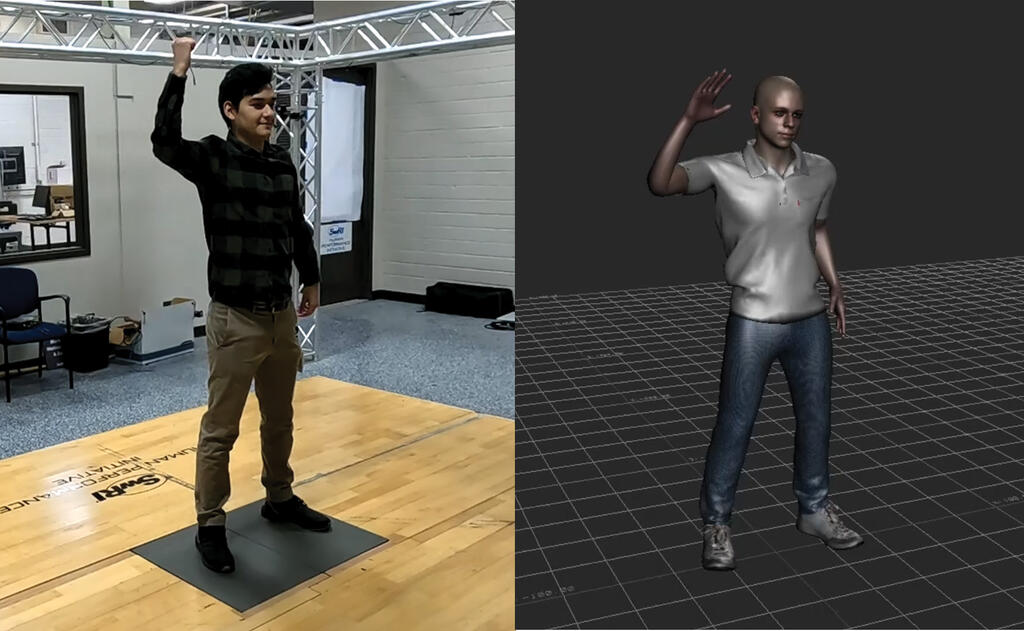
This single frame pose compares a real actor with his digital counterpart in SwRI’s Biomechanical Evaluation and Animation Motion Capture (BEAMoCap™) system. The markerless motion capture tool converts video into realistic 3D animations without requiring the conventional marker suits worn by actors.
Studying Microbial Life in Alaska’s Arctic Sand Dunes
SwRI has received a three-year, $3 million grant from NASA to identify and characterize life and its biosignatures in partially frozen sand dunes in interior arctic Alaska, where conditions are similar to dune fields on early Mars and Saturn’s moon Titan.

The Assessing Regional Reflectors of Astrobiology in Kobuk dunes for Interplanetary Science project team includes researchers from Brigham Young University and the University of California, Davis. The team is seeking insight into how microbial life may thrive in extreme environments on other worlds by understanding the limits on and constraints affecting life in similar planetary analog environments on Earth.
“Basaltic and gypsum sand dunes on Mars and hydrocarbon sand dunes on Titan experience freezing temperatures. Understanding how frozen sands in Earth’s Arctic interact with and support microbial life can help us learn how to search for life in similar frozen conditions elsewhere in the solar system,” said SwRI Staff Scientist Dr. Cynthia Dinwiddie, the principal investigator of the project.
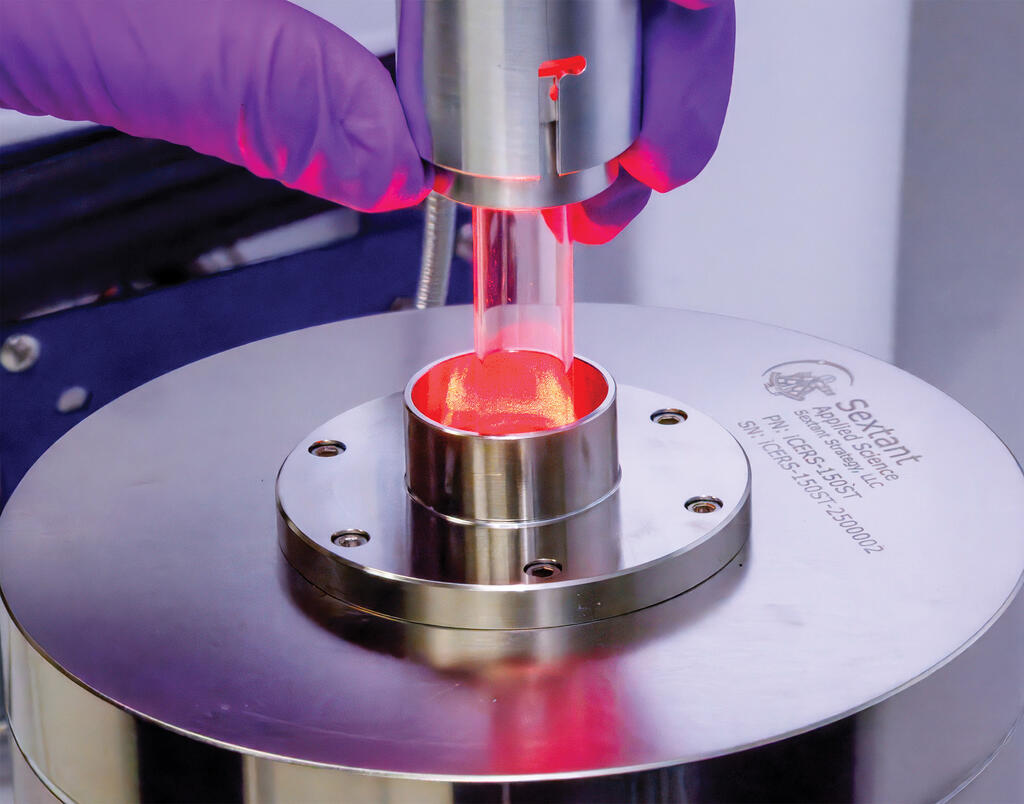
SwRI’s Charity Lander-Phillips developed a portable Raman spectroscopy instrument to examine the mineralogy of sand dune samples to identify organic compounds present.
The researchers are sampling the Great Kobuk Sand Dunes in Alaska’s Kobuk Valley National Park to understand the lifeforms living in nutrient-poor sand dunes subject to extreme conditions typical of the Arctic. The dune field’s 25 square miles of sand freeze and thaw annually at their surface and may include a core of dry permafrost — sand with little or no moisture that remains frozen during the warm season.
“We’ve seen water perched in the near surface of the tallest dunes in Kobuk Valley,” Dinwiddie said. Perched water occurs when an impermeable layer traps water above it, creating a separate reservoir perched above the regional groundwater aquifer.
“While we don’t know much about lifeforms thriving deep inside frozen sand dunes, perched liquid water located high in these dunes that does not seasonally freeze provides a potential oasis for life in an arctic desert and could help us make useful inferences elsewhere,” Dinwiddie said. “Life finds a way, even in seemingly inhospitable places.”
For more information, visit Earth Science.
SwRI Produces First Map of the Galaxy
NASA’s New Horizons spacecraft has assembled extensive observations of Lyman-alpha emissions, creating the first-ever map of the galaxy in this ultraviolet wavelength. This new view of the galactic region surrounding our solar system is described in a new study authored by the SwRI-led New Horizons team.
“Understanding the Lyman-alpha background helps shed light on nearby galactic structures and processes,” said SwRI’s Dr. Randy Gladstone, the study’s lead investigator and first author of the publication.
“This research suggests that hot interstellar gas bubbles — like the one surrounding our solar system — may actually be regions of enhanced hydrogen gas emissions at the wavelength called Lyman-alpha.”
Lyman-alpha is a specific wavelength of ultraviolet light emitted and scattered by hydrogen atoms. It is especially useful to astronomers studying distant stars, galaxies and the interstellar medium, as it can help detect the composition, temperature and movement of these distant objects.
During its initial journey to Pluto, New Horizons collected baseline data about Lyman-alpha emissions using the Alice instrument. This SwRI-developed ultraviolet spectrograph is a tool astronomers use to split light into its various colors. Alice specializes in the far-ultraviolet wavelength.
Once the spacecraft’s primary objectives at Pluto were completed, scientists used Alice to make broader and more frequent surveys of Lyman-alpha emissions as New Horizons traveled away from the Sun. These surveys included an extensive set of scans in 2023 that mapped roughly 83% of the sky.
To isolate emissions from the galaxy, the New Horizons team modeled scattered solar Lyman-alpha emissions and subtracted them from the spectrograph’s data. The results indicate a roughly uniform background Lyman-alpha sky brightness 10 times stronger than expected from previous estimates.
For more information, visit Planetary Science.
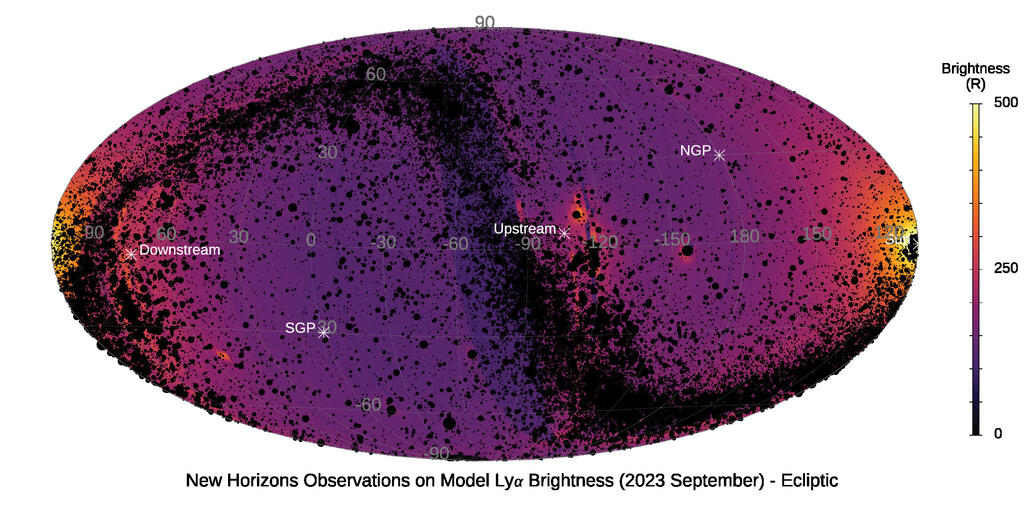
The SwRI-led New Horizons mission observed Lyman-alpha emissions, creating the first-ever map of the galaxy in the Lyman-alpha wavelength. This SwRI-developed Alice spectrograph map depicts the relatively uniform brightness of the Lyman-alpha background with black dots representing approximately 90,000 known UV-bright stars in our galaxy.
Unexpected Electron Energies in Region Connecting Jupiter & Io
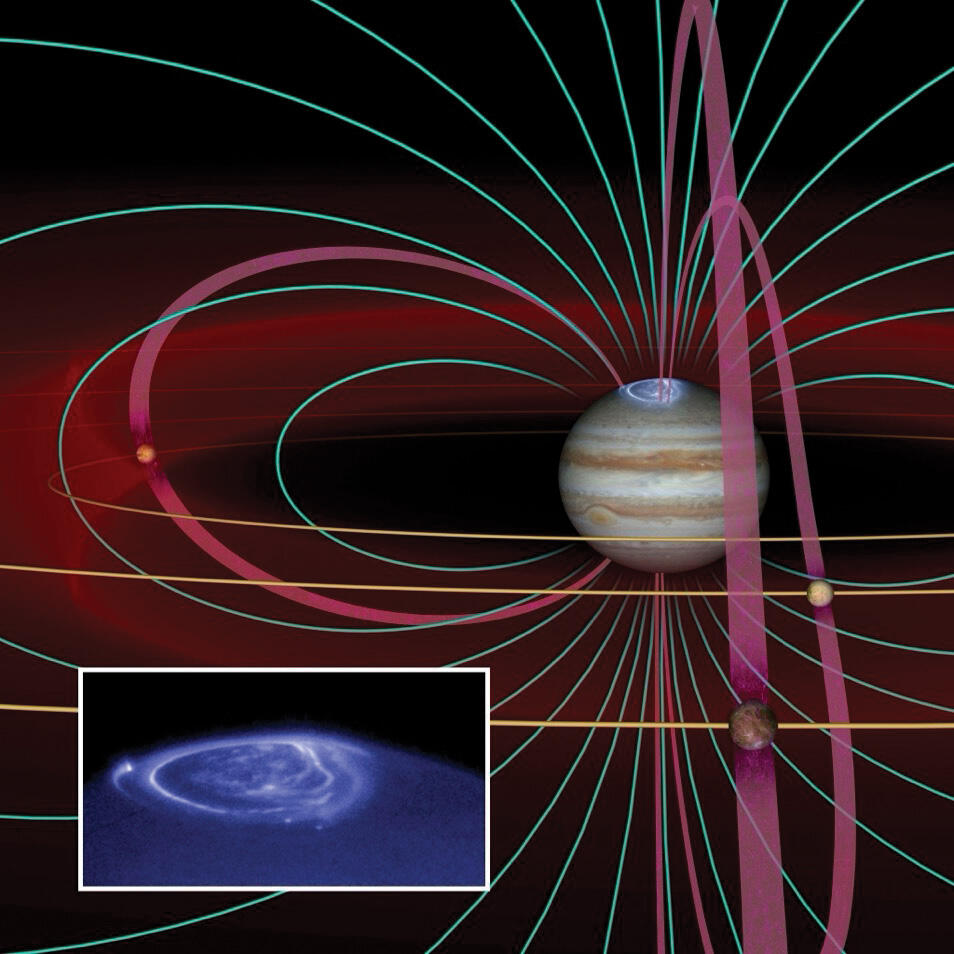
Jupiter’s moon Io (left corner of image) is connected to Jupiter (upper right of image) through the planet’s magnetic field. Juno’s close flyby of Io revealed electrons with varying properties in the region connecting these two solar system bodies.
Using data collected by NASA’s Juno spacecraft as it flew past Jupiter’s highly volcanic moon Io in late 2023 and again in early 2024, an SwRI-led team identified electrons with energies enhanced by processes in the region connecting the moon to Jupiter’s ionosphere, called an Alfvén wing. A paper published in Geophysical Research Letters emphasizes how these electrons, and their variation within that region, shape the plasma environment around Io.
“These electrons gain energy from the interaction between Io and Jupiter’s magnetic field,” said Dr. Robert Ebert, lead author of the paper. “These energized electrons then interact with Io’s atmosphere and surface, ionizing and exciting atoms and molecules and even creating aurora.”
In the 1990s, NASA’s Galileo mission discovered the presence of intense electron beams within the Alfvén wing and other regions near Io. These electrons can travel along the local magnetic field and interact with Io’s atmosphere. New results from Juno indicate that the electron properties within Io’s Alfvén wing are not uniform. The number of electrons in these beams are largest at the boundaries of the wing and weaker inside, suggesting that their interaction with Io might also vary across the moon.
Juno’s extended mission includes explorations of some of its many moons. This study focuses on plasma observations from the SwRI-led Jovian Auroral Distributions Experiment (JADE) as Juno flew by Io on Dec. 30, 2023, and Feb. 3, 2024.
“It is amazing to see that JADE was able to make new, high-resolution measurements in this region of Jupiter’s harsh radiation environment,” said Dr. Frederic Allegrini, JADE instrument lead and second author of the paper. “Any instrument or spacecraft would stop functioning after a short exposure time if it were to stay there rather than fly through it.”
The Juno mission is led by SwRI Associate Vice President Dr. Scott Bolton.
For more information, visit Planetary Science.
Rapid Response to Critical Aircraft Issue
SwRI collaborated with the U.S. Air Force to ensure fleet safety after a large crack was unexpectedly found near the cockpit of a T-38 Talon. A new study describes how SwRI’s risk and damage tolerance analyses helped determine a more effective inspection schedule, allowing the Air Force to find cracks before they grow to a dangerous size.
For several decades, SwRI has supported the USAF to extend the life of aircraft that have exceeded their original design life. The Institute has been working to sustain the T-38, first introduced in 1961, for more than 40 years. This activity includes using SwRI-developed models to predict crack growth to determine optimal inspection and maintenance schedules. The USAF also uses finite element models to help predict the potential crack locations of the aircraft.
“Typically, our role involves predicting structural life and providing analysis to help determine an inspection or repair schedule,” said SwRI Lead Engineer Laura Hunt. “In the spring of 2017, when a crew chief found a large, unexpected crack in a longeron, a key structural component along the aircraft’s fuselage, we were equipped for a rapid response.”
With this discovery, the entire T-38 fleet was grounded for visual inspections, which were completed within four days. SwRI assisted in performing risk, damage tolerance and failure analyses.
While the crack appeared in a location that models did not predict, SwRI responded swiftly, minimizing downtime and maintaining safety, largely due to prior experience with the T-38 and other aging aircraft.
“A new problem was identified and the entire team supporting the T-38 reacted quickly to ensure fleet safety and return to service in a matter of days,” said David Wieland, who oversees SwRI’s Aerospace Structures Section.
For more information, visit Aircraft Structural Integrity Program (ASIP).

SwRI Develops Process to Produce Graphene from CO2
Chemical engineers at SwRI produced gram quantities of graphene and other carbonaceous materials by bubbling carbon dioxide through a bed of liquefied alkali earth metals. Graphene, a carbon allotrope, is used for everything from biomedical devices to sensors and electronics. The internally funded project advances the lab-scale conversion of CO2 into graphene, which is both valuable and useful for a variety of applications.
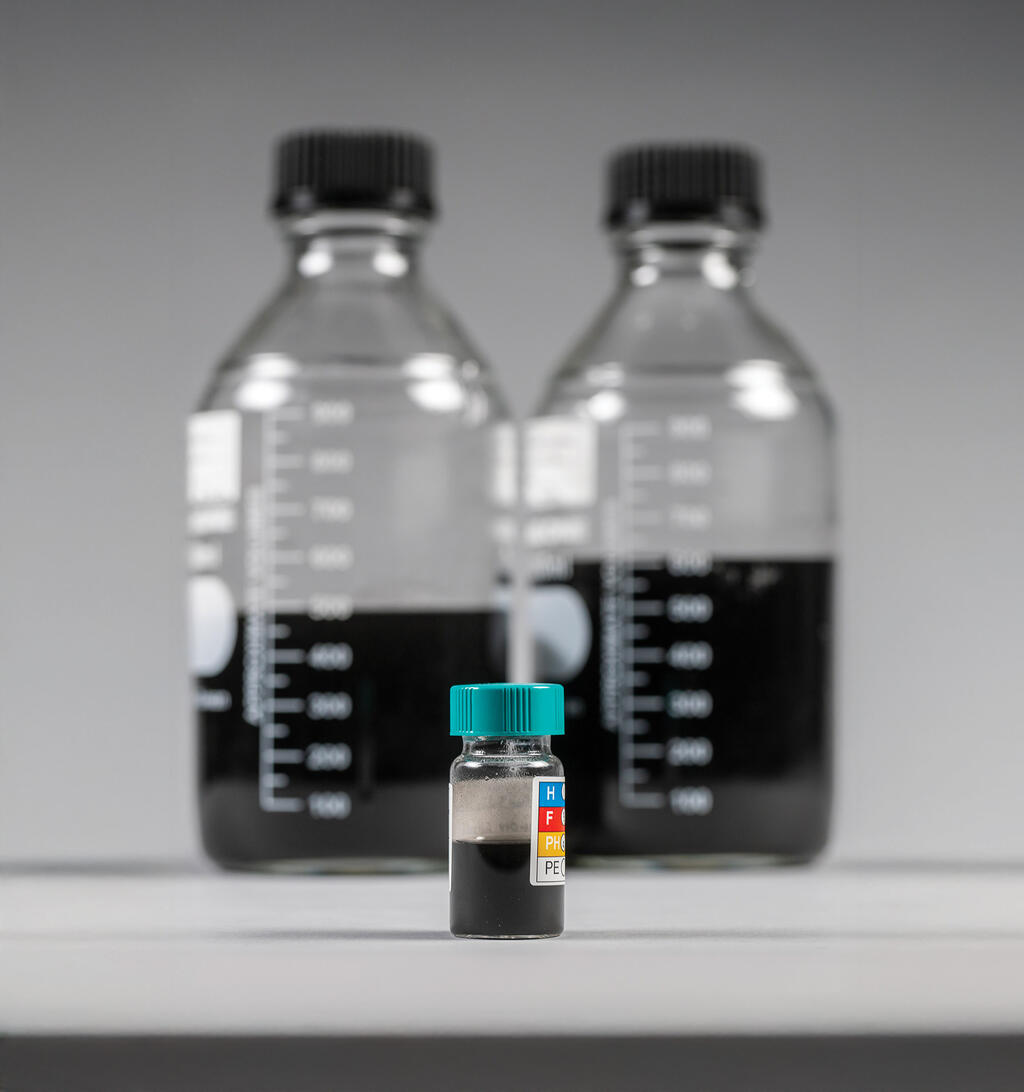
Using internal research funding, SwRI chemical engineers at developed a multistep process to produce graphene, a valuable carbon allotrope, from carbon dioxide. The graphene, shown suspended in a fluid, is useful for a variety of applications.
Graphite, which is often incorrectly conflated with pencil lead, has multiple layers of graphene. Composed of carbon atoms arranged in a honeycomb-like lattice, graphene is stronger than diamonds, highly flexible, conductive and one of the lightest materials available. Its unique properties make it useful for coatings, lubricants, batteries and many more applications.
“With almost unlimited potential uses for graphene, it’s understandable why the market continues to grow year-over-year,” said Miles Salas, the project lead. “We’re advancing this technology to support industrial clients looking for ways to create value-added products from their industrial CO2 waste.”
In the first phase of the project, SwRI scientists and engineers used a chemical reactor the size of a mini-fridge to conduct a lab-scale experiment to gather data, test the graphene yield and identify the best reaction conditions.
“Redefining CO2 as a feedstock instead of a pollutant or sequestered product is key to increasing carbon capture projects around the globe,” said Michael Hartmann, manager of SwRI’s Carbon Capture and Utilization Process Development Section. “We are exploring graphene and other targeted CO2 utilization markets with a focus on scalability and commercialization pathways through lab-to-pilot demonstration projects.”
During phase two, engineers will create a small-scale pilot plant to further refine the process. For every 200 grams of alkali earth metal, which is inexpensive and abundant, the team can produce roughly 6 grams of graphene-containing material.
For more information, visit Chemistry & Chemical Engineering.
New Treatments for Emerging Pathogens
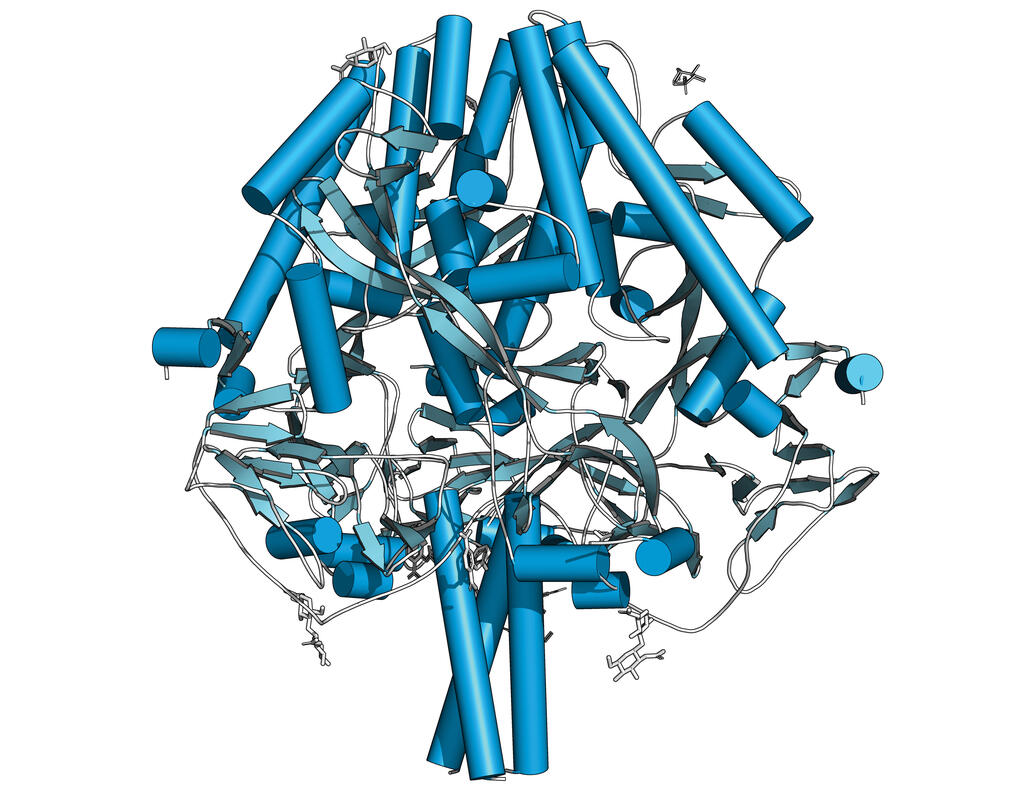
SwRI’s Rhodium™ software used this “blueprint” of the measles fusion protein structure to evaluate treatments for viral hemorrhagic fevers such as Nipah and Hendra, which are part of the same family of viruses and share a similar structure.
A team of San Antonio-based biomedical researchers trained a machine learning algorithm to identify more than two dozen viable treatments for diseases caused by zoonotic pathogens that can jump from animal hosts to infect humans. Scientists from SwRI, The University of Texas at San Antonio (UTSA) and Texas Biomedical Research Institute (Texas Biomed) used SwRI-developed Rhodium™ software to study bat-borne Nipah and Hendra henipaviruses, which are endemic to some parts of the world and cause potentially lethal infections in humans.
Through the collaboration, researchers mapped the protein structure of the measles virus, which is in the same family of viruses as henipaviruses. With measles as a blueprint, Rhodium virtually screened and ranked compounds for corresponding structures and binding effectiveness. Out of 40 million compounds, Rhodium identified 30 potentially viable viral inhibitors for Nipah and Hendra. Although the research focused on antiviral treatments for henipaviruses, any broad-spectrum therapeutic that’s developed could potentially treat related viruses, including measles.
“The results suggest that machine learning can rapidly identify antiviral candidates for highly pathogenic viruses that are difficult to study due to space limitations and biosafety constraints,” said Dr. Jonathan Bohmann, a staff scientist at SwRI, who presented these findings at the Hendra@30 Henipavirus International Conference in Melbourne, Australia. “Our algorithms allow us to make the best use of resources to deliver a ‘short list’ of potential treatments for further testing.”
This Department of Defense research is funded by the Peer-Reviewed Medical Research Program, under the Congressionally Directed Medical Research Programs, and opens the door to finding treatments for Nipah and Hendra. According to the World Health Organization, 40-75% of people infected with these diseases die.
“Henipaviruses are lethal pathogens,” said Bohmann. “They’re endemic to animal populations in Asia and Australia, but spillover events to livestock and humans occur regularly on a seasonal basis, which is concerning due to the pandemic potential.”
For more information, visit Rhodium Molecular Docking Software and Structure-based Drug Design.
Sun Emits Heavy Concentration of Rare Helium Isotope

SwRI scientists located the solar source of the heaviest concentration of a rare helium isotope ever observed. In this Solar Dynamics Observatory extreme ultraviolet image, the blue arrow marks a small bright point located at the edge of a coronal hole (outlined in red) that was the source of the phenomenon.
The NASA/ESA Solar Orbiter recently recorded the heaviest concentration of a rare helium isotope (3He) emitted from the Sun. An SwRI-led team sought the source of this unusual occurrence to better understand what drives solar energetic particles (SEPs), high-energy, accelerated particles including protons, electrons and heavy ions.
“This rare isotope, which is lighter than the more common 4He by just one neutron, is scarce in our solar system — found at a ratio of about one 3He ion per 2,500 4He ions,” said SwRI’s Dr. Radoslav Bucik, lead author of a paper describing this phenomenon. “However, solar jets appear to preferentially accelerate 3He to high speeds or energies, likely due to its unique charge-to-mass ratio.”
Bucik said the mechanism behind this acceleration remains unknown, but it can typically boost 3He abundance by up to 10,000 times its usual concentration in the Sun’s atmosphere — an effect unparalleled in any other known astrophysical setting. Incredibly, in this case Solar Orbiter recorded a 200,000-fold enhancement of 3He. In addition to its great abundance, the 3He was accelerated to significantly higher speeds than heavier elements.
The SwRI team pinpointed the origin of the 3He emissions. NASA’s Solar Dynamics Observatory provided high-resolution images of a small solar jet at the edge of a coronal hole — a region where magnetic field lines open into interplanetary space. Despite its tiny size, the jet was clearly linked to the SEP event, Bucik said.
Additionally, this event stands out as one of the rare cases where ion enhancements do not follow the usual pattern. Typically, events like these exhibit greater abundances of heavy ions such as iron. But in this case, iron emissions did not increase, and carbon, nitrogen, silicon and sulfur emission were significantly higher than expected. Scientists have observed only 19 similar events in the past 25 years, highlighting the rare and puzzling nature of this phenomenon.
While the Parker Solar Probe was in a favorable location, it was too far away to detect the event, Bucik notes.
For more information, visit Heliophysics.
Predicting Life of AM Components
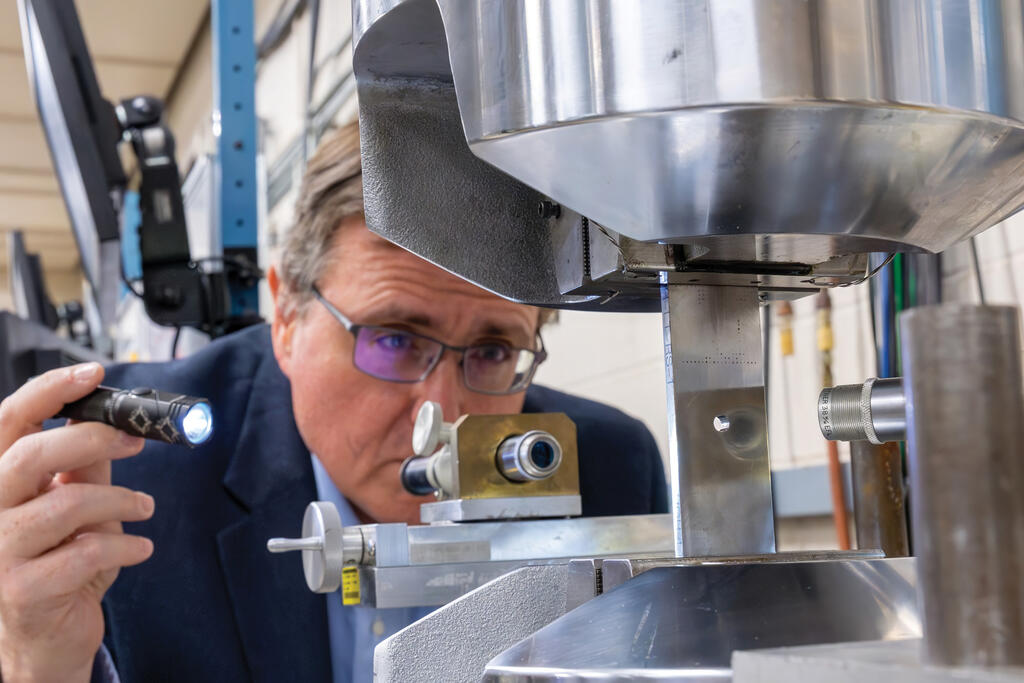
To predict the structural life of individual components made with additive manufacturing, SwRI Lead Engineer Dr. James Sobotka uses fatigue testing to evaluate AM components.
SwRI has received a two-year, $3.2 million contract from the Defense Advanced Research Projects Agency (DARPA) to predict the structural life of components made using additive manufacturing (AM). Researchers will update the SwRI-developed DARWIN® software to support this work. DARWIN is a fracture mechanics and reliability assessment software tool that analyzes metallic structural components to support damage-tolerant design.
Machines build AM parts by incrementally adding metal via sophisticated computer controls. AM processes create components with intricate design qualities that support parts consolidation. Using AM parts appeals to a wide range of users, including the aerospace, medical and manufacturing industries. However, metals produced by AM processes show more variability than conventional wrought alloys due to the formation of anomalies in AM alloys. These issues have slowed the adoption of AM parts, particularly in industries with tight quality controls.
SwRI’s project, known as OPAL or “One Part And Life,” was selected by DARPA’s Structures Uniquely Resolved to Guarantee Endurance program. This initiative seeks to rethink current part qualifications in AM and explore a new approach to predict the life of AM parts at production.
“Our key goal is to determine a predictable lifespan for each part produced by using AM,” said SwRI Lead Engineer Dr. James Sobotka, who oversees the project. “This approach has never really been attempted before.”
“For the first time ever, advanced technology provides an opportunity to monitor manufactured parts and analyze the data effectively,” Sobotka said.
Using sophisticated sensors, the OPAL team will track the manufacturing process, collecting temperature, light spectrum and other data. New tools will process the data and create 3D maps of the microstructure and defects in every part. Then DARWIN software will ingest these maps to provide a risk-informed life estimate.
For more information, visit Additive Manufacturing.