

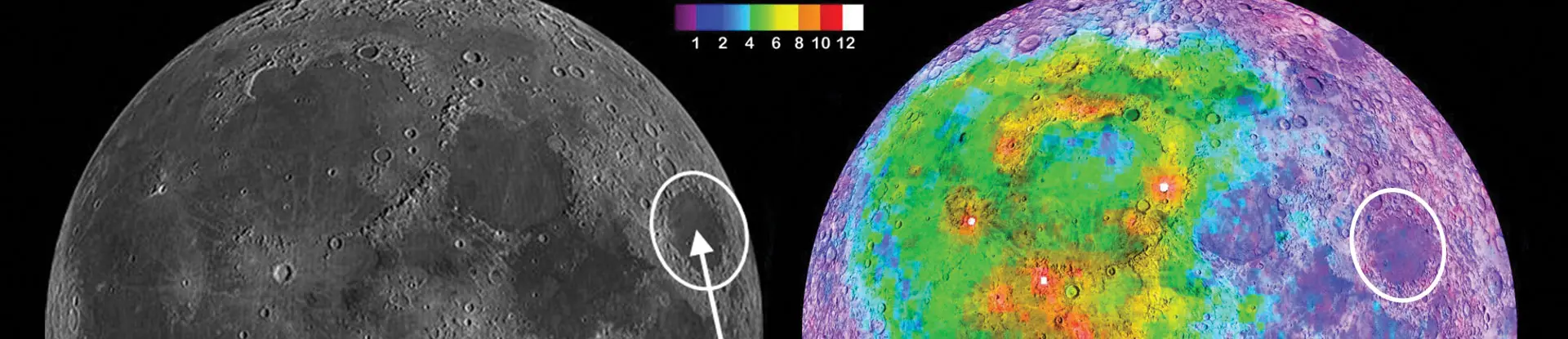
On March 2, hours after the SwRI-led Lunar Magnetotelluric Sounder (LMS) touched down on the Moon’s surface aboard Firefly Aerospace’s Blue Ghost 1 lander, it activated its five sensors to study the Moon’s interior. The LMS instrument is the first SwRI instrument to land on the Moon and the first extraterrestrial application of magnetotellurics.
“For more than 50 years, scientists have used magnetotellurics on Earth for a wide variety of purposes, including to find oil, water, geothermal and mineral resources as well as to understand geologic processes such as the growth of continents,” said Dr. Robert Grimm, principal investigator of LMS and a program director in SwRI’s Solar System Science and Exploration Division. “Four sensors deployed more than 60 feet away from the Blue Ghost lander at 90-degree angles — across an area about half the size of a football field — to characterize the lunar subsurface.”
Magnetotellurics use natural variations in surface electric and magnetic fields to calculate how easily electricity flows in subsurface materials, providing insight into their composition and structure. LMS allows scientists to characterize the interior of the Moon to depths up to 1,000 miles or two-thirds of the lunar radius. The measurements will shed light on the material differentiation and thermal history of our Moon, a cornerstone to understanding the evolution of solid worlds.
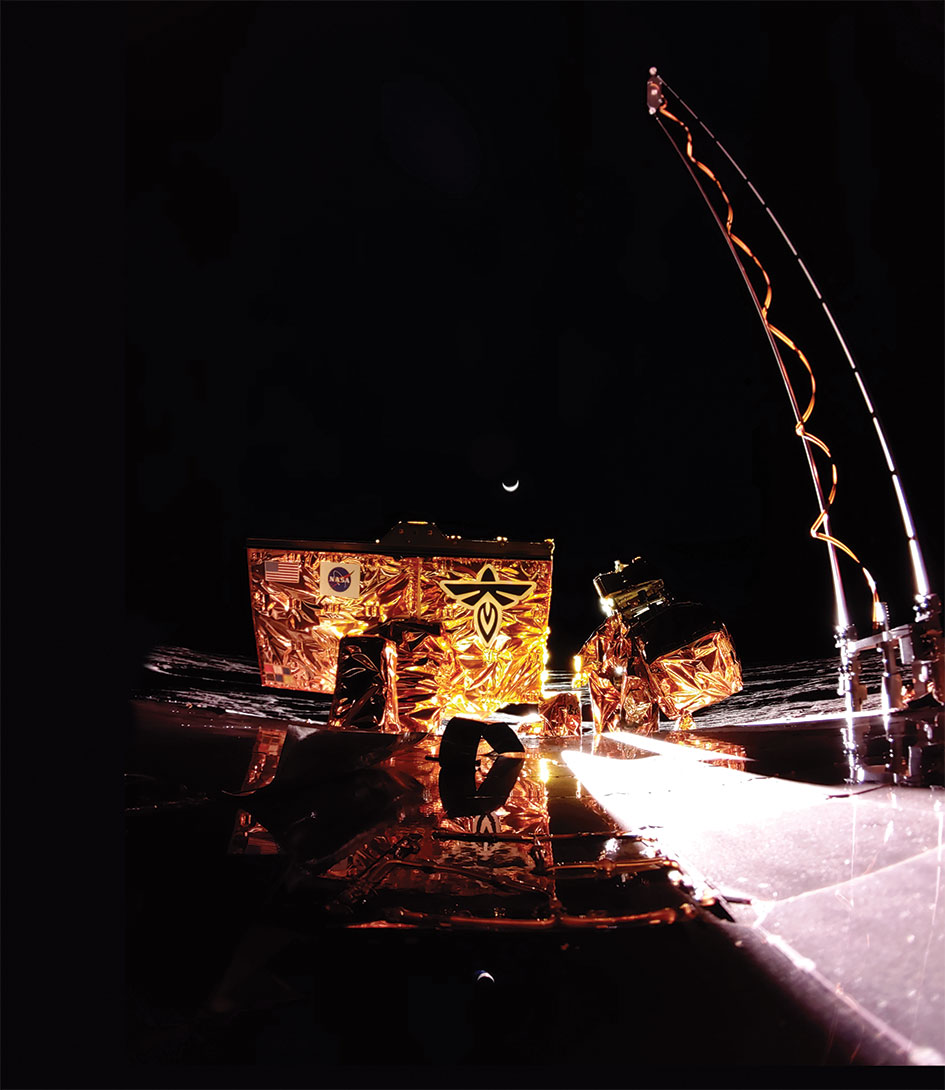
To characterize the lunar subsurface, the LMS magnetometer, provided by Goddard, deployed via an extendable mast (right) to reduce interference and collect signals from LMS electrodes, provided by Heliospace Corp. LMS ejected cables with electrodes at right angles to cover an area about half the size of a football field, measuring voltages across opposite pairs of electrodes, much like the probes of a conventional voltmeter.
Through NASA’s Commercial Lunar Payload Services (CLPS) initiative, LMS was delivered to the surface of the Moon as part of a 14-day lunar lander mission to study the Moon’s subsurface in a previously unexplored location. Mare Crisium is an ancient, 340-mile-diameter impact basin that subsequently filled with lava, creating a dark spot visible to the naked eye on the Moon.
“Mare Crisium stands apart from the large connected areas of dark lava to the west where most of the Apollo missions landed,” Grimm said. “These vast, linked lava plains are now thought to be compositionally and structurally anomalous with respect to the rest of the Moon. From this separate vantage point, LMS may provide the first geophysical measurements representative of most of the Moon.”
NASA’s CLPS initiative funded the delivery of the LMS payload to the lunar surface. SwRI designed the instrument, built the electronics box and leads the science investigation. NASA’s Goddard Space Flight Center in Greenbelt, Maryland, provided the LMS magnetometer to measure the magnetic fields, and Heliospace Corp. provided the magnetometer mast and four electrodes used to measure the electrical fields.
Under the CLPS model, NASA is investing in commercial delivery services to the Moon to enable industry growth and support long-term lunar exploration. As a primary customer for CLPS deliveries, NASA is one of many customers on future flights. NASA’s Marshall Space Flight Center in Huntsville, Alabama, manages the development of seven of the 10 CLPS payloads carried on Firefly’s Blue Ghost lunar lander.
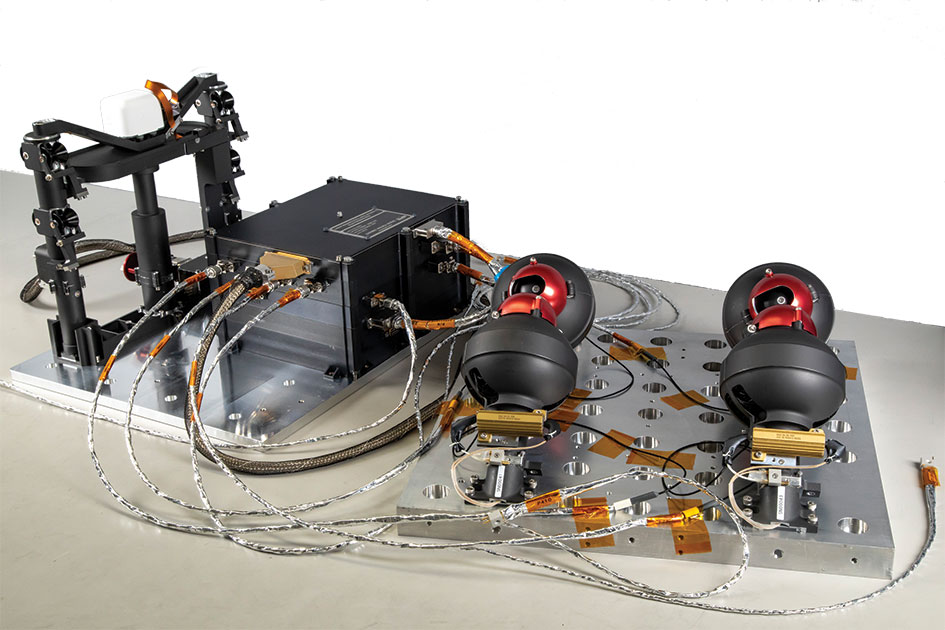
SwRI led the development of LMS, which includes five subsystems that, together with connecting cables, weigh about 14 pounds and consume about 11 watts of power. LMS was deployed in the Mare Crisium impact basin to characterize the subsurface of the Moon.
For more information, visit Planetary Science.