
Health & Biomedical
About the Header
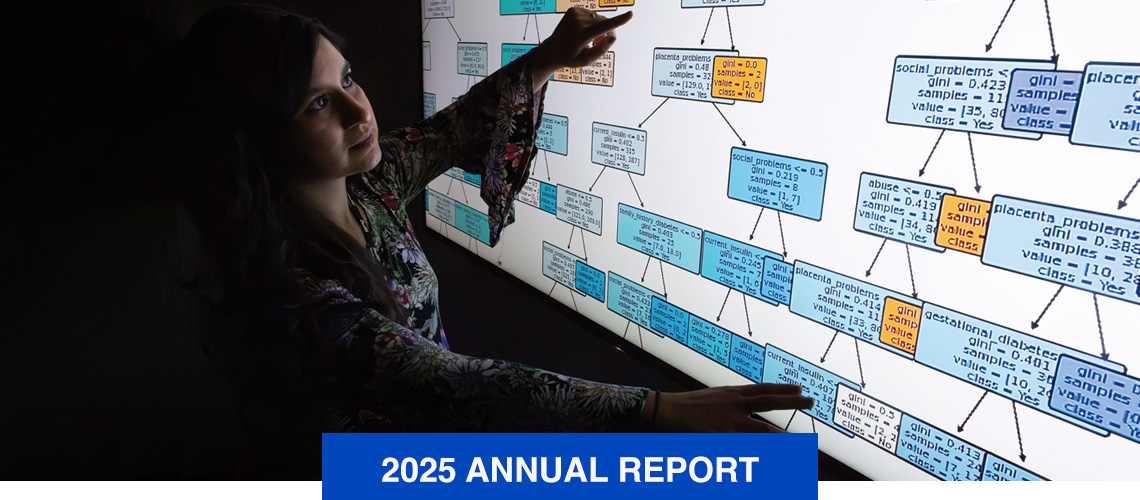
SwRI worked with other San Antonio nonprofits to develop a computer model to predict outcomes for pregnant mothers. These data visualizations can guide real-time interventions.
Southwest Research Institute supports the biomedical and healthcare industry, developing biomaterials and pharmaceuticals while supporting injury recovery, community health, human performance and more.
Malaria is spread by mosquitoes, causing an estimated 600,000 deaths annually worldwide, mostly in children. Bed nets that release insecticides have been the first line of defense to reduce malaria transmission; however, mosquitoes are developing resistance, and this approach is proving far less effective than in the past. SwRI is developing new bed netting solutions designed to attack the actual bloodborne parasites that cause malaria. In collaboration with academia, public health and veterans’ affairs agencies, SwRI designed netting systems that deliver parasite-targeting drugs to mosquitoes as they land on the nets.
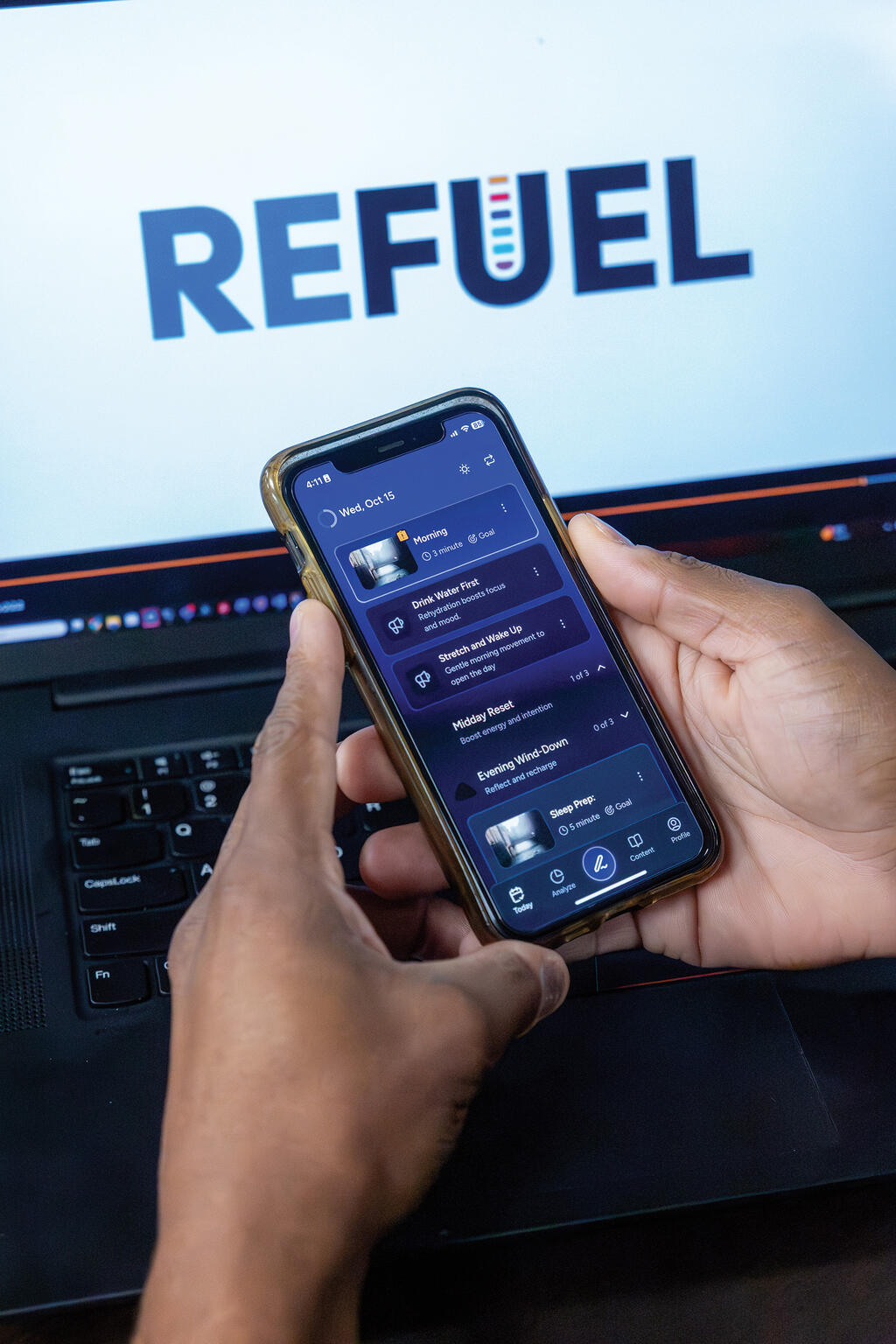
SwRI developed the REFUEL mobile application using a database and algorithms to help the U.S. Air Force analyze human performance and biometric data for mission-critical insights and decision making.
In 2025, we developed an algorithm based on deep neural networks to analyze brain activity recorded from electroencephalography data to distinguish individuals with mild traumatic brain injuries from healthy controls. This algorithm could identify individuals with concussions up to four months after a head injury. Additionally, using brain activity recorded two weeks post-injury, it could predict which patients would experience worsening symptoms in the following months.
We developed a weightlifting app that allows users to track the 3D path of a barbell during lifts. Utilizing computer vision, the app determines the 3D position and pose of the barbell with a single iPad camera, to help improve lifting techniques.
SwRI adapted its markerless motion capture tool, the Engine for Automated Biomechanical Evaluation (ENABLE®), to gather gait data from horses. This internally funded project created a tool that could be used to collect gait data to help identify injuries, understand treatment efficacy and provide sports feedback. Existing tools that measure horse movements are time-consuming to use and require specialized expertise and equipment.
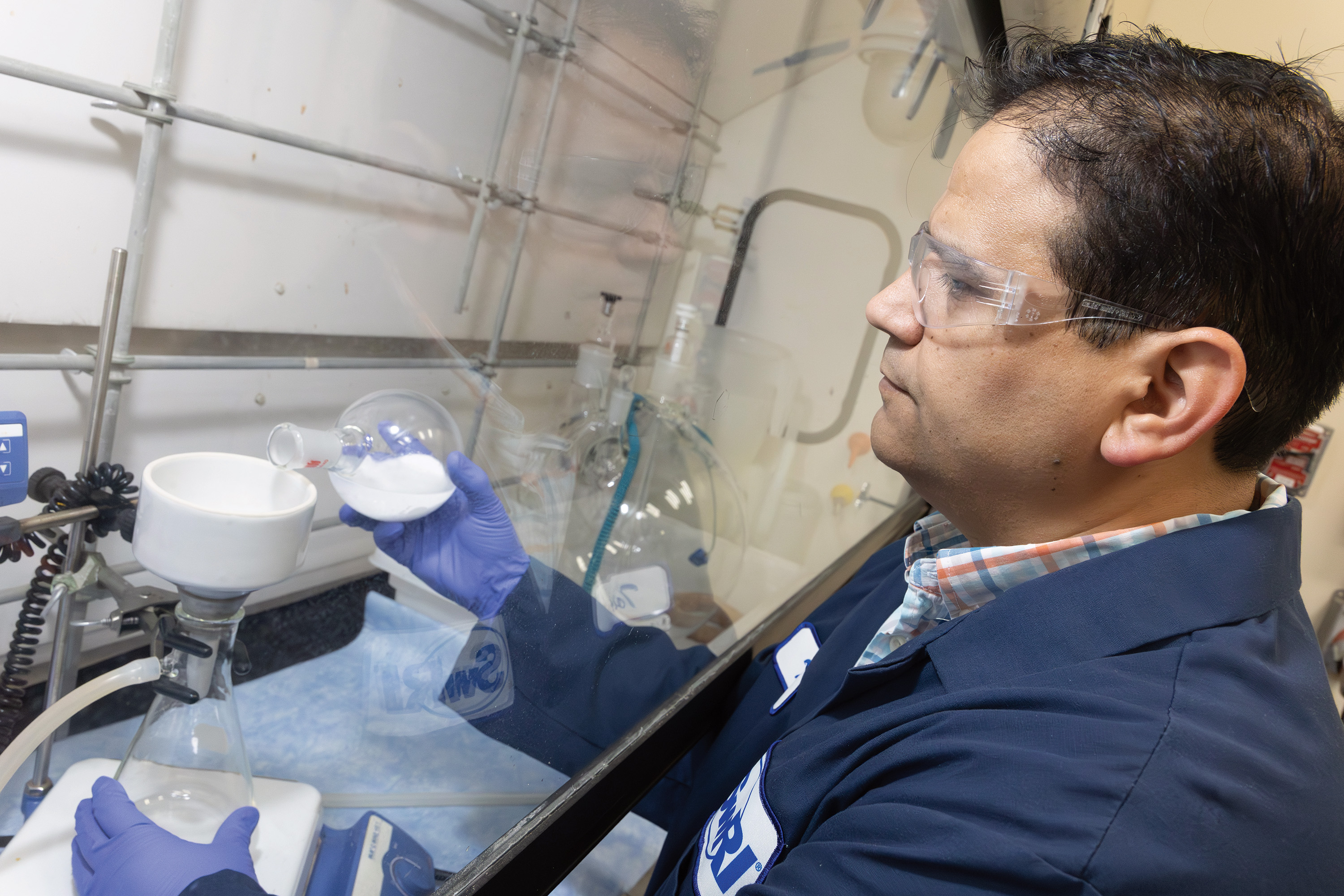
While studying antidotes for pesticides and nerve agents, SwRI researchers discovered that adding calcium chloride during normal-phase chromatography of highly polar compounds resulted in purification equivalent to techniques using more expensive materials and equipment.