
IR&D
About the Header
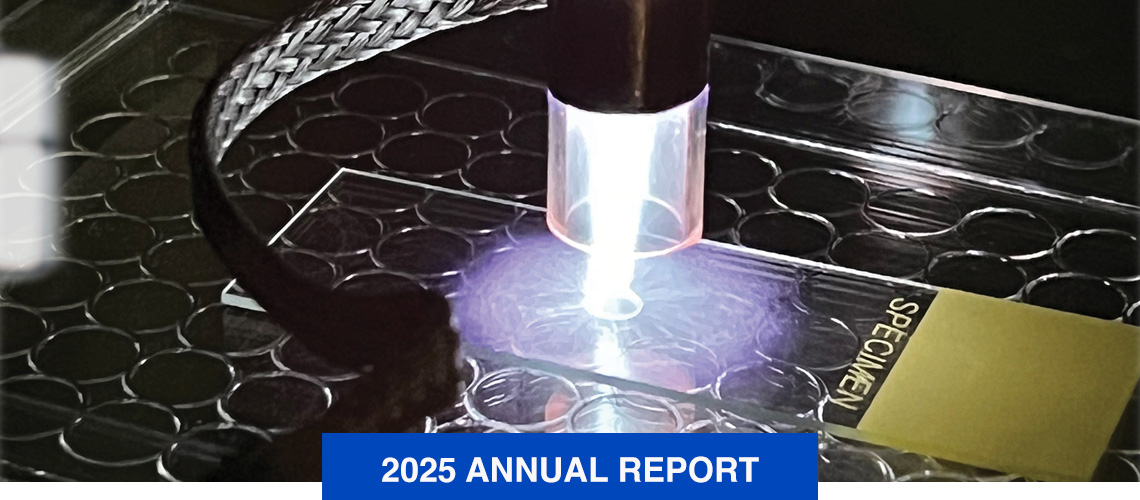
To help meet global demands for sustainable food production, SwRI scientists used internal funding to study how plasma mutagenesis can improve microbial fermentation to enhance tolerance, enzyme activity and production traits in microbial species. Using a lactic acid bacterium widely used in dairy and fermented foods, we explored how to promote mutations that enhance fructose utilization to improve flavor, reduce costs and expand plasma mutagenesis as a food manufacturing tool.
As a nonprofit research and development organization, SwRI invests in innovation, using our robust internal research and development (IR&D) program to expand and enhance our expertise and encourage our staff’s professional growth. In 2025, SwRI initiated 140 new IR&D projects, investing more than $13 million in internal research, a record number of new projects and record monetary investment. These included a marked increase in targeted internal projects designed to prove concepts for potential client programs and to assist with our business development efforts. IR&D fulfills SwRI’s objective of conducting innovative research and development for the benefit of industry, the government and humankind.
Through internal research, we increase our technical capabilities, expand our reputation as a leader in science and technology, and invest in research positioning SwRI to address our clients’ future needs. The program also allows engineers and scientists to grow in their technical fields by providing freedom to explore innovative and unproven concepts without contractual restrictions and expectations. IR&D is frequently cited as a key enabling factor leading to new projects, new clients and completely new research arenas within SwRI.
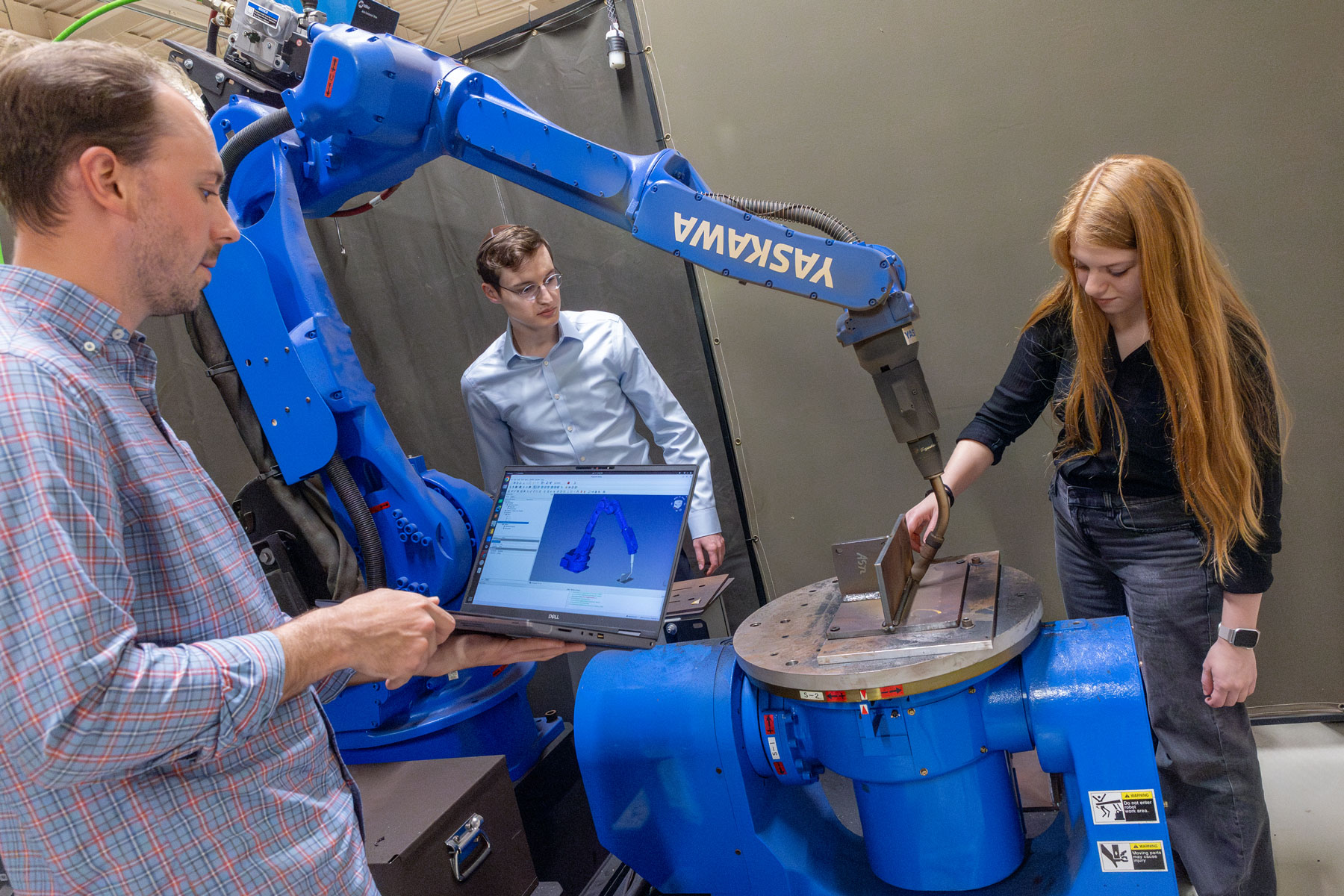
SwRI developed a learning-based framework that integrates residual stress insights from physics-based simulations with real-world assembly variations to optimize welding of large structures. The resulting robotic system increases the service life and performance, while reducing post-fabrication rework, of large structures such as ships.
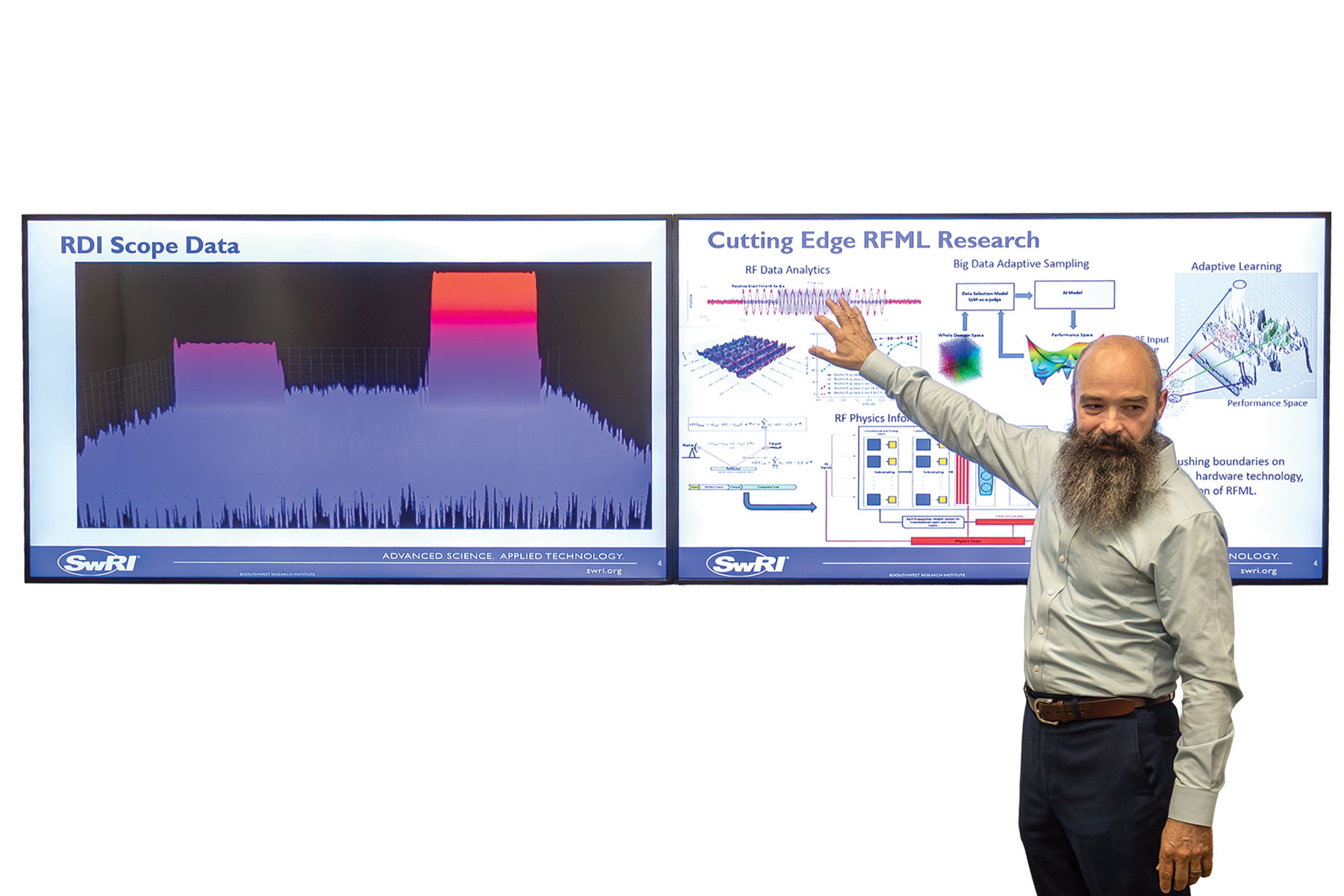
SwRI trained complex cognitive electronic warfare (EW) algorithms to help Air Force systems discern between friendly and adversarial data signatures as seen in the image on the left.