
Earth & Space
About the Header
Four SwRI-built PUNCH spacecraft launched in March 2025 to image in exquisite detail the birth of the solar wind and how it evolves as it streams through the inner solar system.
Southwest Research Institute is home to one of the nation’s leading space science and engineering programs, conducting fundamental and applied research and developing innovative technology for commercial companies and government agencies worldwide. SwRI’s strong Earth science expertise complements our space research.
In fiscal year 2025, SwRI supported five launches with spacecraft, instruments, testing and other expertise. In October 2024, two SwRI-developed instruments launched aboard NASA’s Europa Clipper to help understand the potential habitability of Jupiter’s moon Europa. The Ultraviolet Spectrograph (Europa-UVS) is the sixth in a family of instruments designed to look at the composition and chemistry of Europa while the novel MAss Spectrometer for Planetary EXploration (MASPEX) is designed to sample the moon’s atmosphere with unprecedented precision.
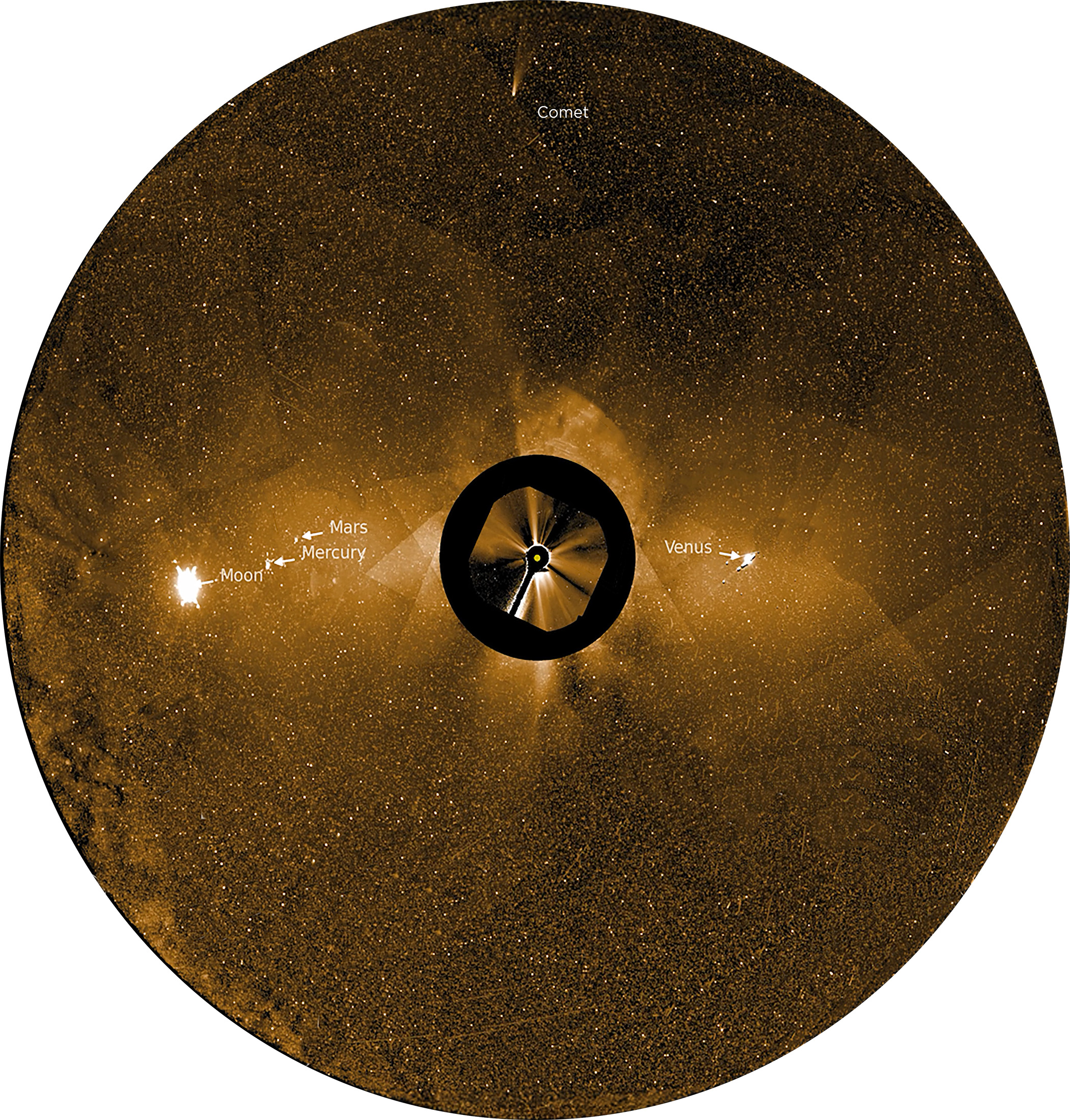
Since launch, the SwRI-led PUNCH mission has been refining images of the Sun in context while tracking comets, enormous space weather events, the Moon and planets.
On March 2, the first SwRI instrument to land on Earth’s Moon touched down aboard the Firefly Aerospace’s Blue Ghost 1 lander. The SwRI-led Lunar Magnetotelluric Sounder (LMS) was activated and deployed its five sensors to study the Moon’s interior by measuring electric and magnetic fields. The LMS instrument was the first extraterrestrial application of magnetotellurics, which uses natural variations in surface electric and magnetic fields to calculate how easily electricity flows in subsurface materials, revealing their composition and structure.
On March 11, four small satellites designed and built by SwRI launched into a polar orbit to act as a single virtual instrument 8,000 miles across. The SwRI-led Polarimeter to Unify the Corona and Heliosphere (PUNCH) mission collects widefield, 3D movies of the entire inner solar system. Three of these spacecraft include SwRI-developed Wide Field Imagers that have already captured coronal mass ejections as they erupted from the Sun and traveled across the inner solar system. The fourth spacecraft has a Narrow Field Imager that allows scientists to see details of the Sun’s atmosphere by blocking out its bright face. State-of-the-art processing on the ground removes the background starfield, over 99% of the light in each image, to reveal the extremely faint glimmer of the solar wind.
IMAGES COURTESY SPACEX
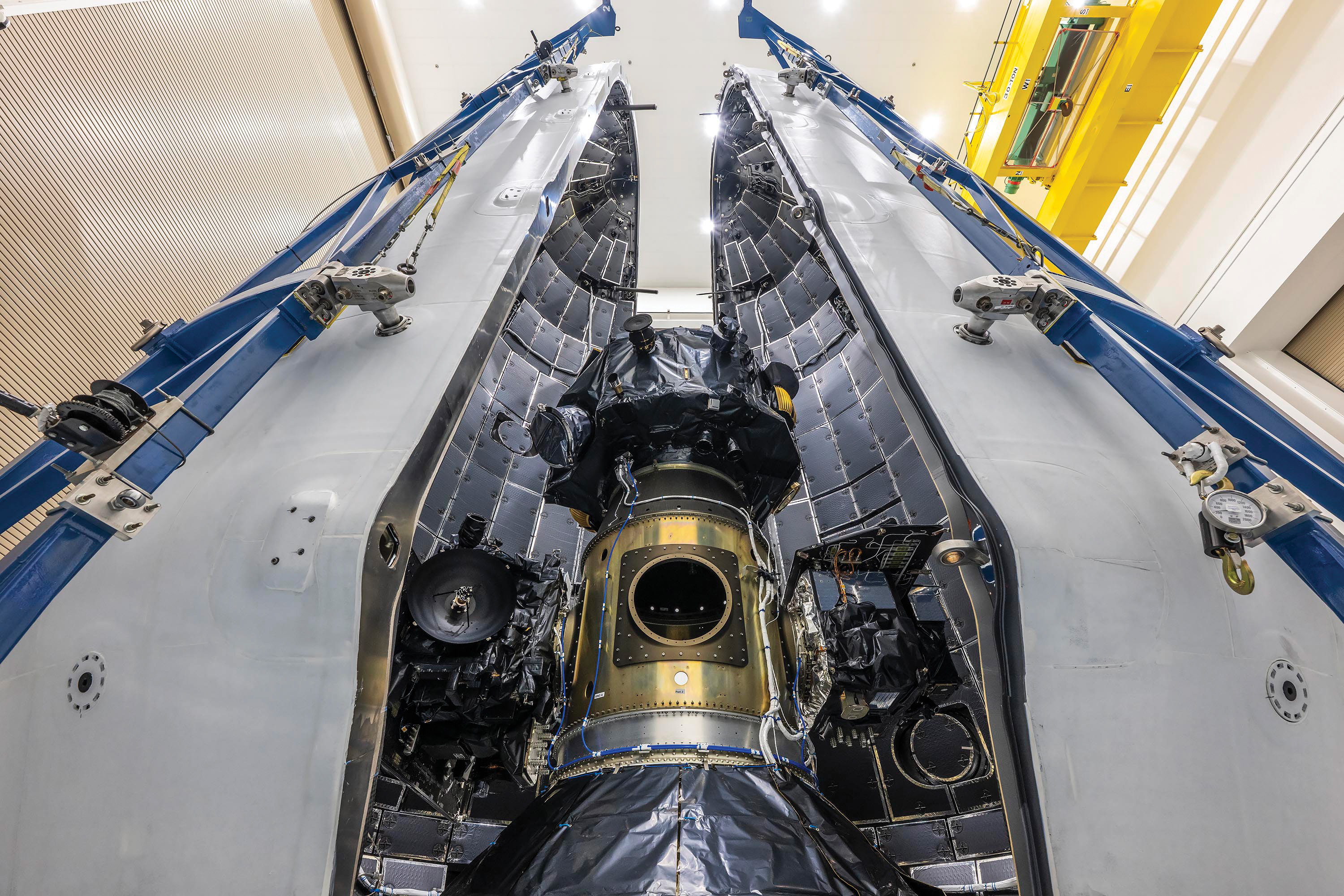
Three spacecraft designed to monitor and map the heliosphere and the solar wind that defines it launched in September. SwRI played key roles in both NASA’s IMAP mission, the primary spacecraft on top, and SWFO-L1, the NOAA satellite on the right.
NASA’s Tandem Reconnection and Cusp Electrodynamics Reconnaissance Satellites (TRACERS) mission launched in July. SwRI provided comprehensive mission management and science to the University of Iowa and developed the Analyzer for Cusp Ions (ACI) instruments, which study interactions between the Earth’s and Sun’s magnetic fields. In addition to managing the development of the two satellite bus platforms and supporting instrument integration and testing, SwRI is supporting science operations post-launch.
On Sept. 24, 2025, NASA launched two spacecraft loaded with SwRI technology designed to better understand and map the Sun’s influence across the solar system. The National Oceanic and Atmospheric Administration's (NOAA) Space Weather Follow-On Lagrange 1 (SWFO-L1) satellite shared a ride to space with the primary payload, NASA’s Interstellar Mapping and Acceleration Probe (IMAP) mission. SwRI played a key role in IMAP, managing the payload office as well as providing critical technology and the SwRI-developed Compact Dual Ion Composition Experiment (CoDICE) instrument. The SwRI-built Solar Wind Plasma Sensor (SWiPS) and SWFO Magnetometer (SWFO-MAG) are two of four instruments integrated into SWFO-L1, NOAA’s first satellite designed specifically for continuous, operational space weather observations.
Also in 2025, a new lunar payload called DIMPLE — Dating an Irregular Mare Patch with a Lunar Explorer — passed its preliminary design review. The instrument will probe a lunar volcano named Ina that appears to be geologically recent, despite the current view that lunar volcanism ended billions of years ago. DIMPLE will determine the geologic context and age of Ina using cameras and a novel SwRI-developed laser-spectroscopy instrument called the Chemistry Organic and Dating Experiment or CODEX.
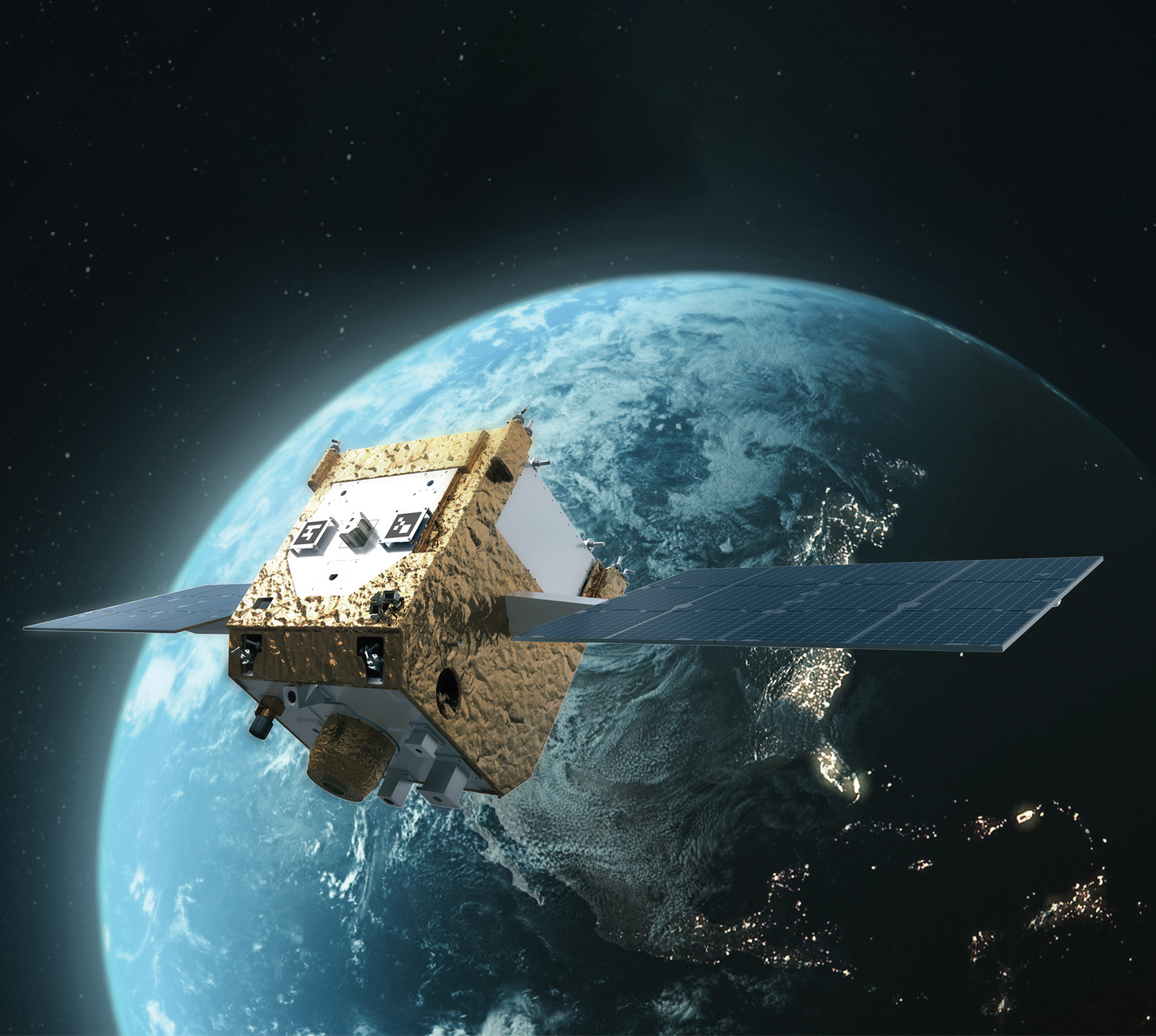
IMAGE COURTESY ASTROSCALE U.S.
SwRI engineers are developing the Astroscale U.S. Refueler illustrated here. This demonstration spacecraft is designed to refuel compatible satellites in orbit.
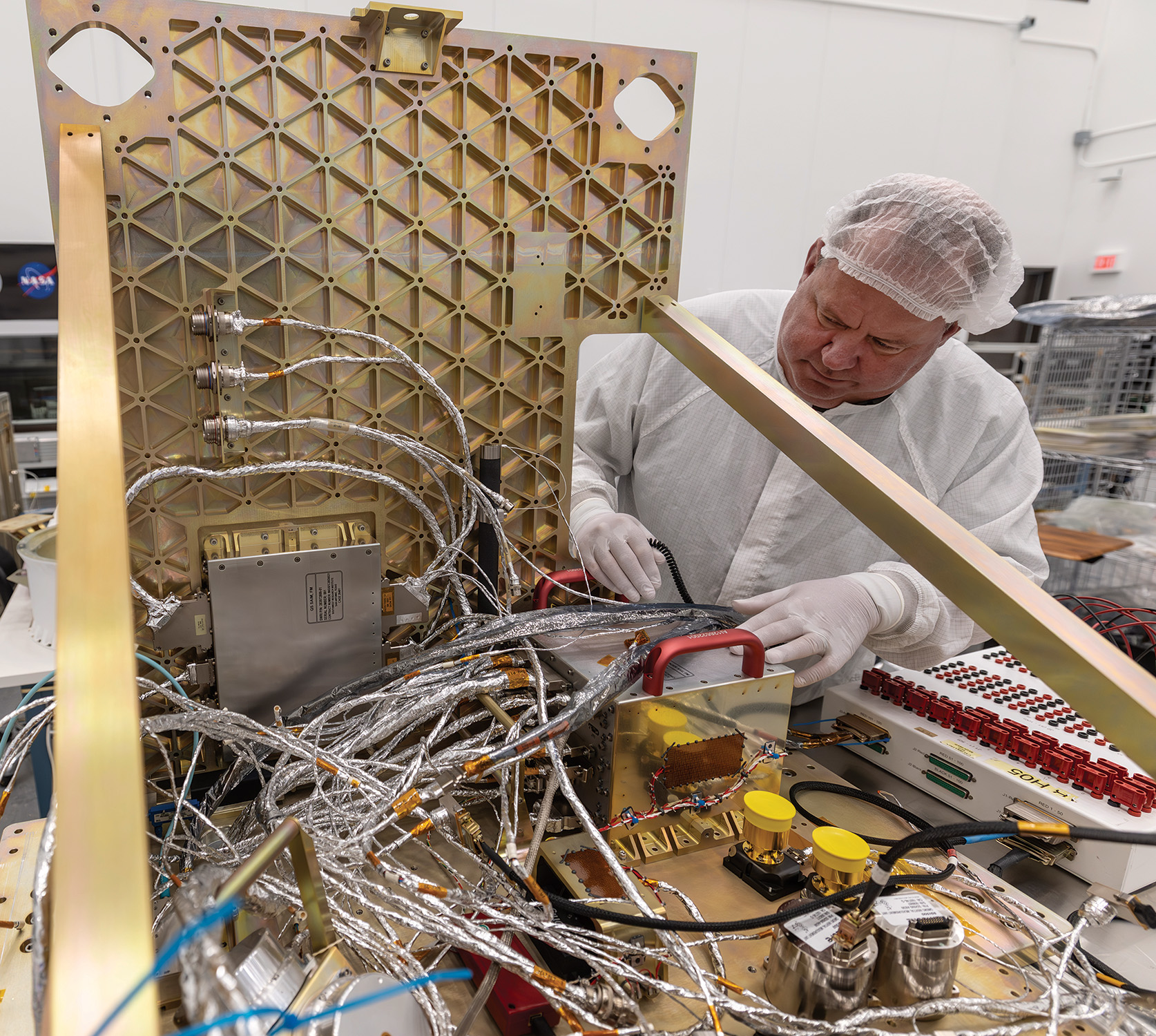
SwRI is building QuickSounder, the first of a new generation of NOAA low-Earth orbit environmental satellites, which will deliver 95% of collected data within 30 minutes to significantly improve weather forecasting.
Additional instruments under development include another magnetometer and two custom space weather coronagraphs for upcoming NOAA satellites. SwRI is also developing NASA’s Joint EUV (Extreme Ultraviolet) coronal Diagnostic Investigation, or JEDI, for ESA’s Vigil space weather mission to study underlying mechanisms of the Sun’s activity. In preparation for a 2026 launch, an SwRI team is integrating two instruments into the CubeSat Imaging X-ray Solar Spectrometer for NASA’s Heliophysics Flight Opportunities in Research and Technology program.
SwRI is building three spacecraft in the 74,000-square-foot Space System Spacecraft and Payload Processing Facility — created to respond to customers needing to rapidly design, assemble and test spacecraft, particularly small satellites. QuickSounder is the first of a new generation of NOAA low-Earth orbit environmental satellites. The SwRI-designed and -built satellite will characterize the physical properties of Earth’s atmosphere that heavily influence global weather patterns.
Engineers are also building, integrating and testing two servicing spacecraft for Astroscale U.S. The Life Extension in Orbit (LEXI) spacecraft is designed to extend the life of in-orbit client satellites by docking with them and performing propulsive maneuvers intended to either return them to service or move them to a disposal orbit beyond crowded geostationary orbit. The Astroscale U.S. Satellite Refueler, funded by the U.S. Space Force, is designed to dock with and refuel client vehicles or accept fuel from on-orbit tankers in geostationary orbit.
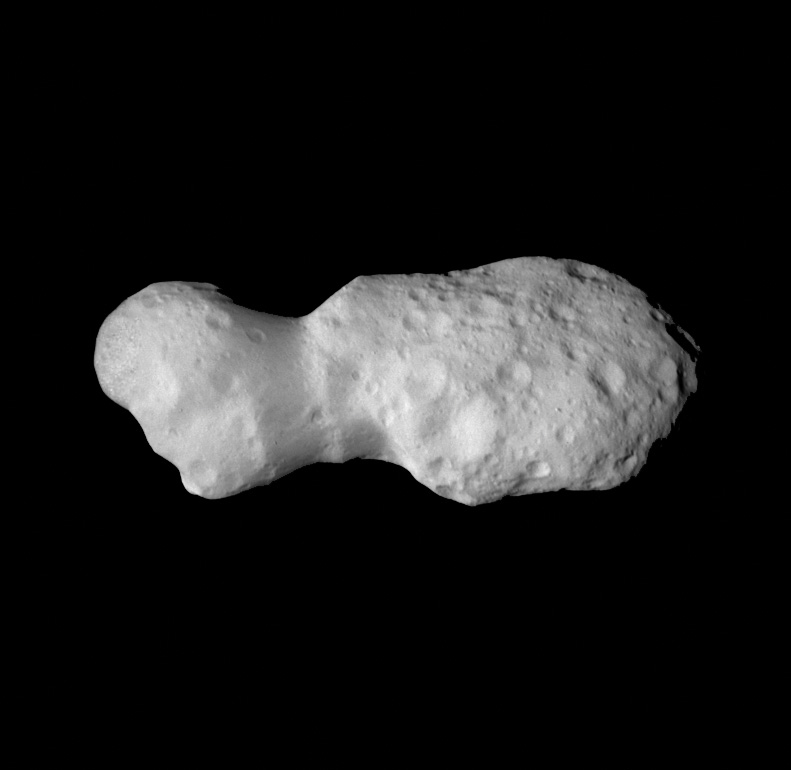
IMAGE COURTESY NASA/GODDARD/SWRI/JOHNS HOPKINS APL/NOIRLAB
The SwRI-led Lucy mission flew past asteroid Donaldjohanson on April 20, 2025, capturing this image from approximately 660 miles (1,100 km) away, before continuing its journey to the Jupiter system for the first encounters with eight Trojan asteroids.
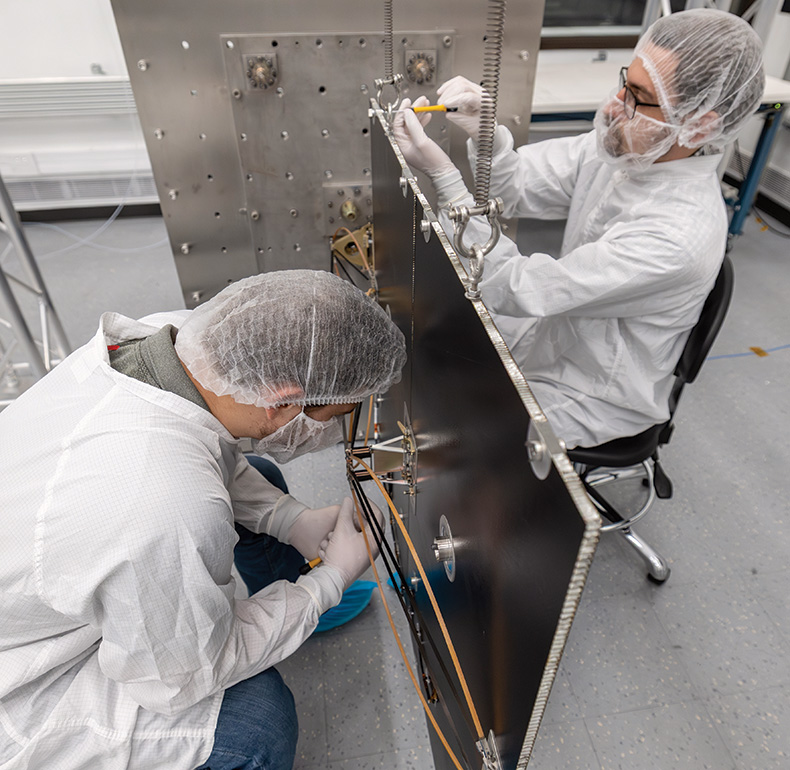
Engineers are integrating SwRI-developed Parallelogram Synchronized Truss Assembly (PaSTA) technology into solar arrays on two spacecraft, giving them the stability needed for maneuvering in outer space.
To support these programs, SwRI developed and patented its Parallelogram Synchronized Truss Assembly (PaSTA), which stiffens deployable structures on spacecraft, such as solar arrays, enabling safe and autonomous spacecraft rendezvous and docking operations. SwRI is deploying PaSTA technology in the solar arrays for both the refueler and LEXI spacecraft.
This year, SwRI staff delivered exquisite astronomical hardware designed to observe the universe with unparalleled sensitivity. The Spectrograph and Camera for Observations of Rapid Phenomena in the Infrared and Optical (SCORPIO) is a powerful eight-channel imager and spectrograph for the Gemini Telescope in Chile. For the last year, SCORPIO has been in Madrid, Spain, for optics integration and alignment and will ship to Chile in 2026 to complete verification and final integration into the telescope to start observing the stars.
NASA’s Lucy spacecraft flew past main belt asteroid Donaldjohanson on April 20, successfully collecting data about the object that formed about 155 million years ago when a larger parent asteroid broke apart. Scheduled to visit a total of 11 asteroids during its 12-year mission, the SwRI-led Lucy mission used this second asteroid encounter, following the Dinkinesh-Selam system visited in 2023, as the spacecraft’s final dress rehearsal before reaching the Jupiter system for encounters with eight Trojan asteroids starting in 2027.
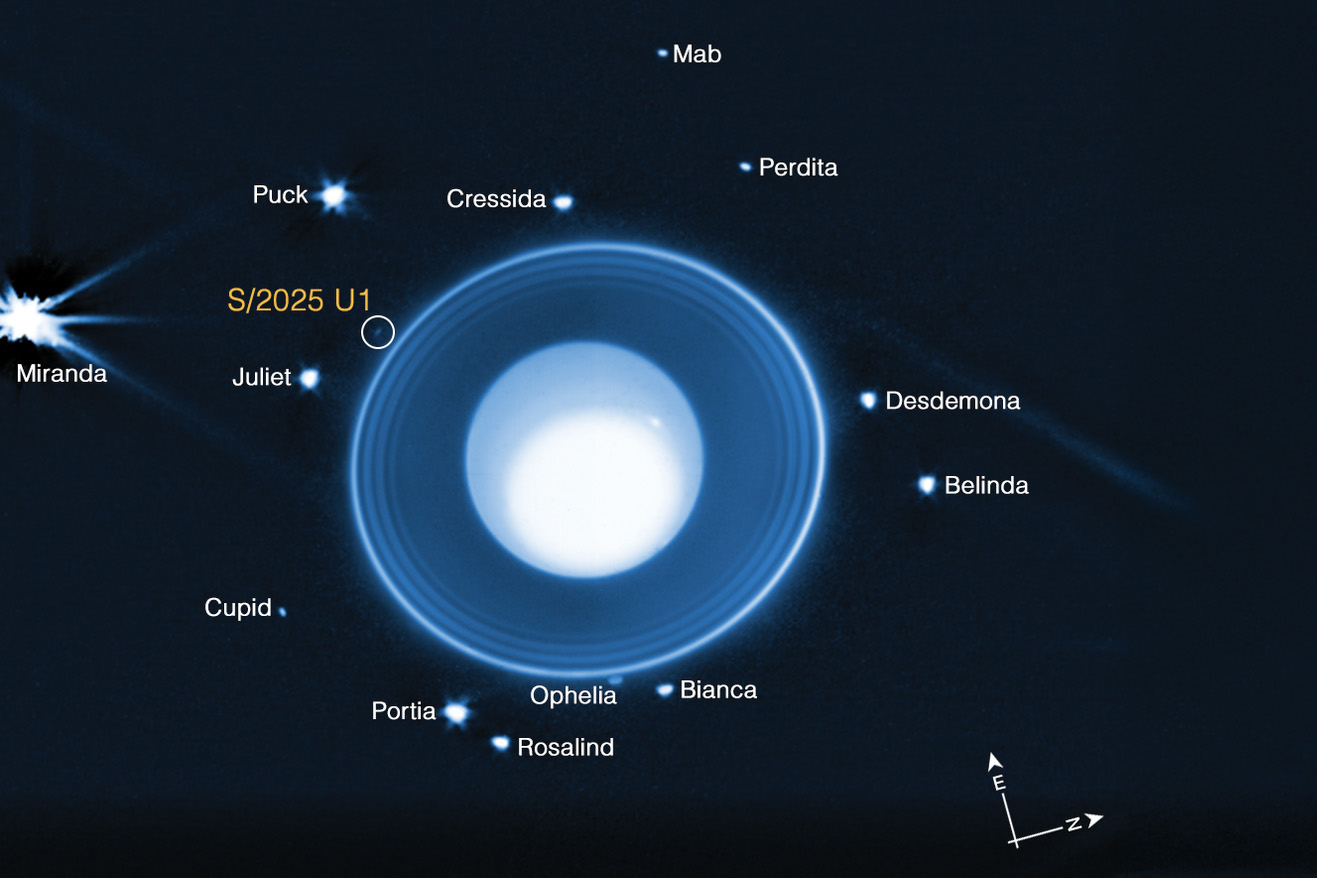
IMAGE COURTESY NASA/ESA/CSA/STSCI/SWRI/UNIVERSITY OF IDAHO
SwRI led a James Webb Space Telescope survey that discovered a previously unknown moon (circled) orbiting Uranus between its satellites Bianca and Ophelia, shown along with 13 of the other 28 known moons orbiting the planet.
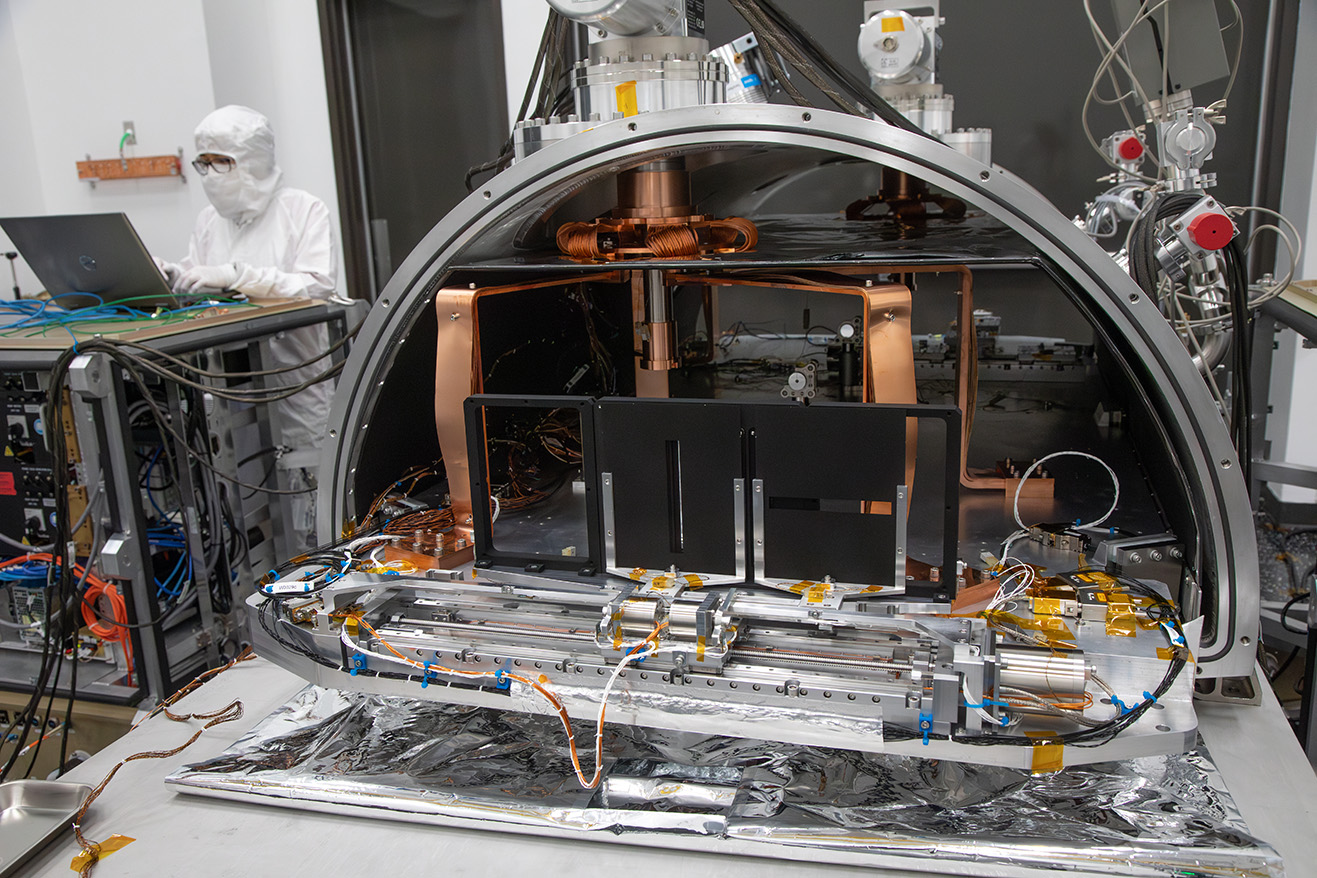
SwRI staff members assembled a powerful eight-channel imager for the Gemini Telescope in Chile, which, once completed and installed, will offer unique, unprecedented views of the universe.
In 2025, the SwRI-led PUNCH and Lucy missions also observed interstellar comet 3I/ATLAS, only the third interstellar object scientists have discovered traveling through our solar system. From 240 million miles away, Lucy’s high-resolution panchromatic black-and-white imager captured photos of the comet in September, as the comet approached Mars. Then in late Fall, PUNCH had an exclusive view of the interstellar interloper when it was too close to the Sun for other telescopes or spacecraft to observe.
SwRI scientists have earned coveted time on the James Webb Space Telescope (JWST), making new discoveries about the most distant reaches of the solar system and beyond. Using observations from this premier space telescope, an SwRI-led team discovered a previously unknown moon orbiting Uranus, which is by far the smallest satellite to date, bringing the planet’s total moon count to 29. Other JWST studies detected carbon dioxide and hydrogen peroxide on the frozen surface of Pluto’s largest moon Charon and discovered methane gas on the distant dwarf planet Makemake, the only such object with a confirmed presence of gas. SwRI compared JWST spectroscopy data from asteroid Polana with laboratory data from samples returned from asteroids Bennu and Ryugu to posit that all could have originated from the same parent asteroid in the main belt between Mars and Jupiter.
SwRI modeled the chemistry of an exoplanet between Earth and Neptune in size, finding evidence that it’s a rocky planet with a thick, hot atmosphere. Models show that the planet is likely too hot to be habitable but could serve as an archetype to understand a relatively common class of exoplanets distinctly different from anything found in our solar system.
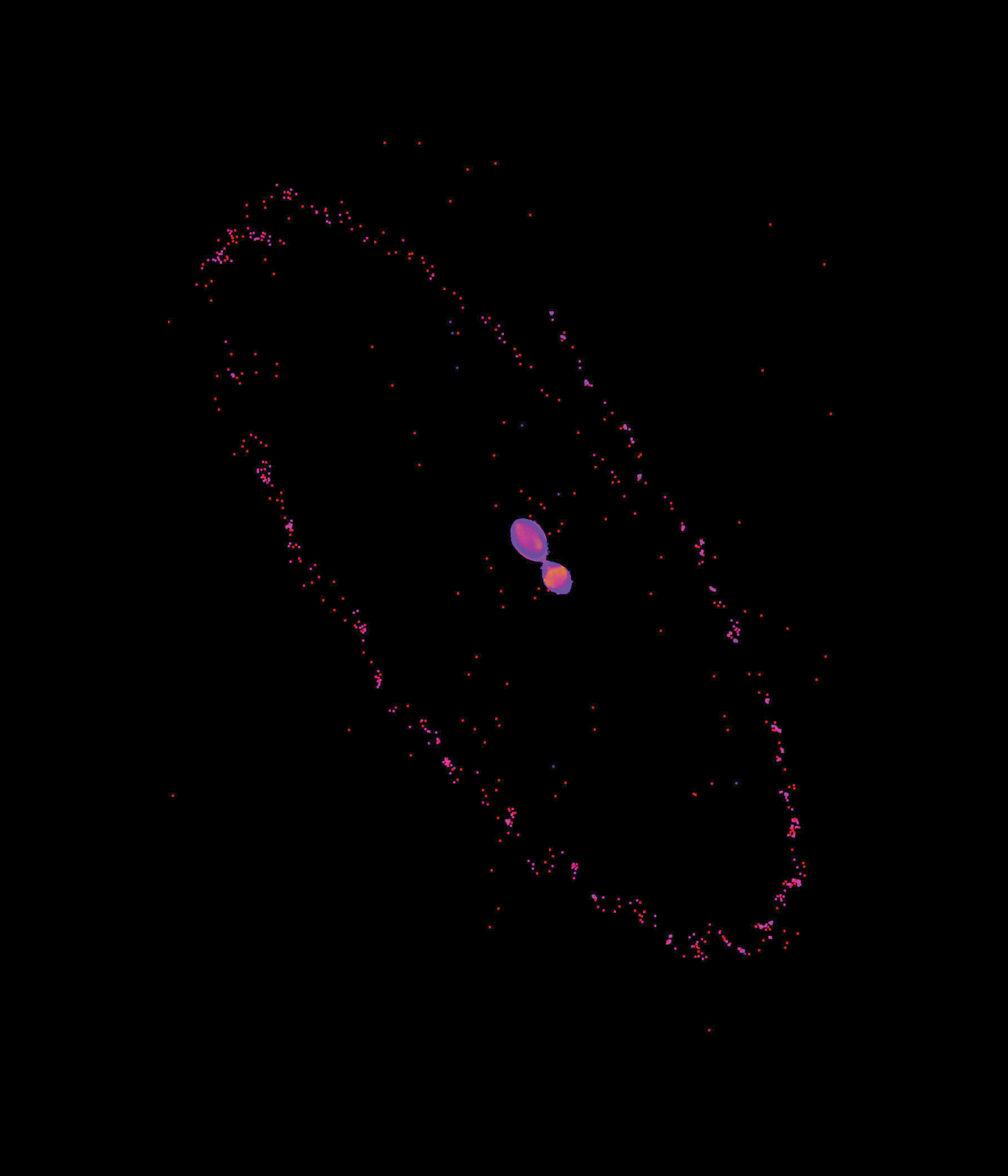
SwRI's advanced modeling indicates that the formation of Pluto and Charon may parallel that of the Earth-Moon system. In the resulting “kiss-and-capture” regime, Pluto and Charon collide and initially stick together before separating into a stable orbit.
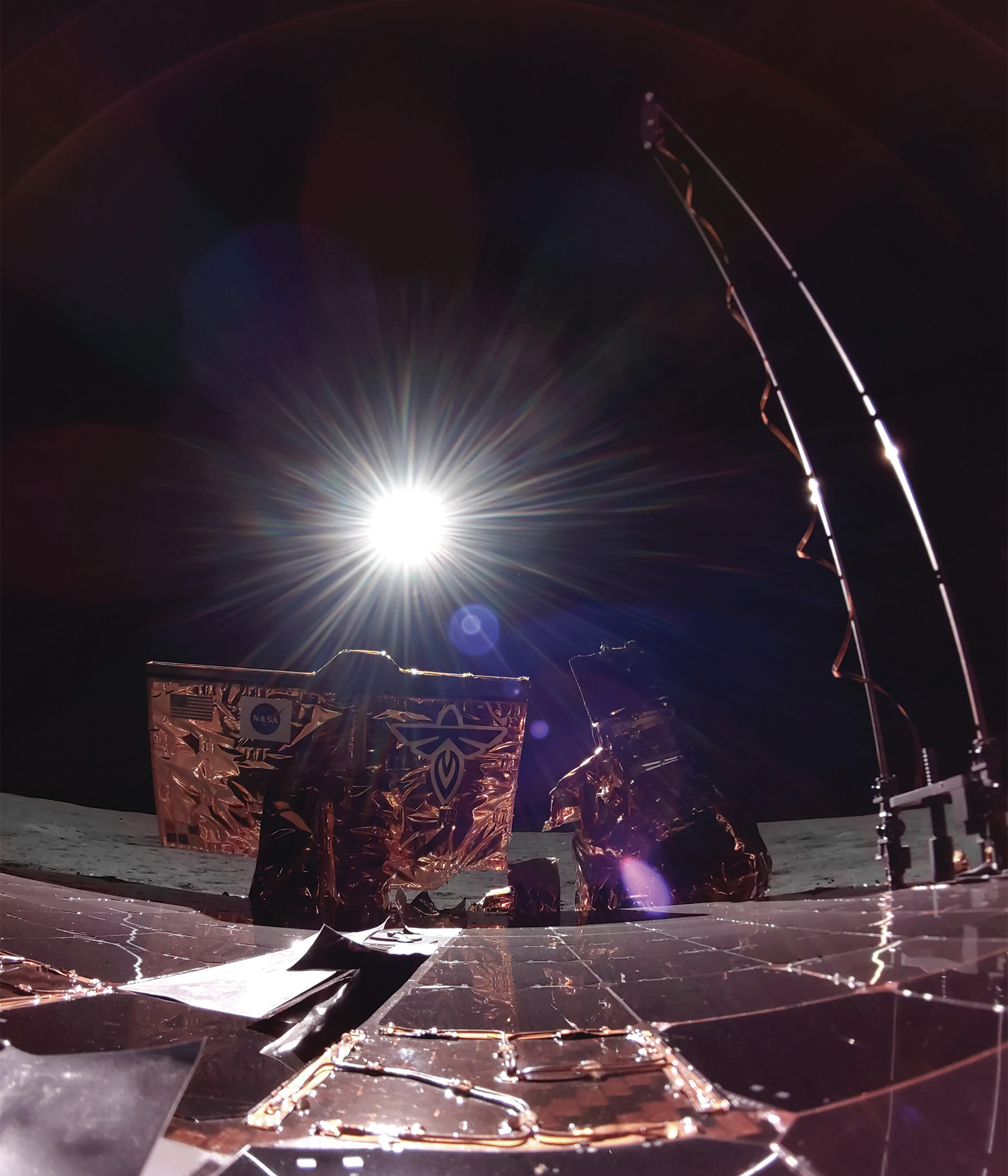
IMAGE COURTESY FIREFLY
Using four sensors and a magnetometer (shown deployed above right), the first instrument SwRI has landed on the Moon collected data to allow scientists to characterize the lunar subsurface from aboard the Blue Ghost lander.
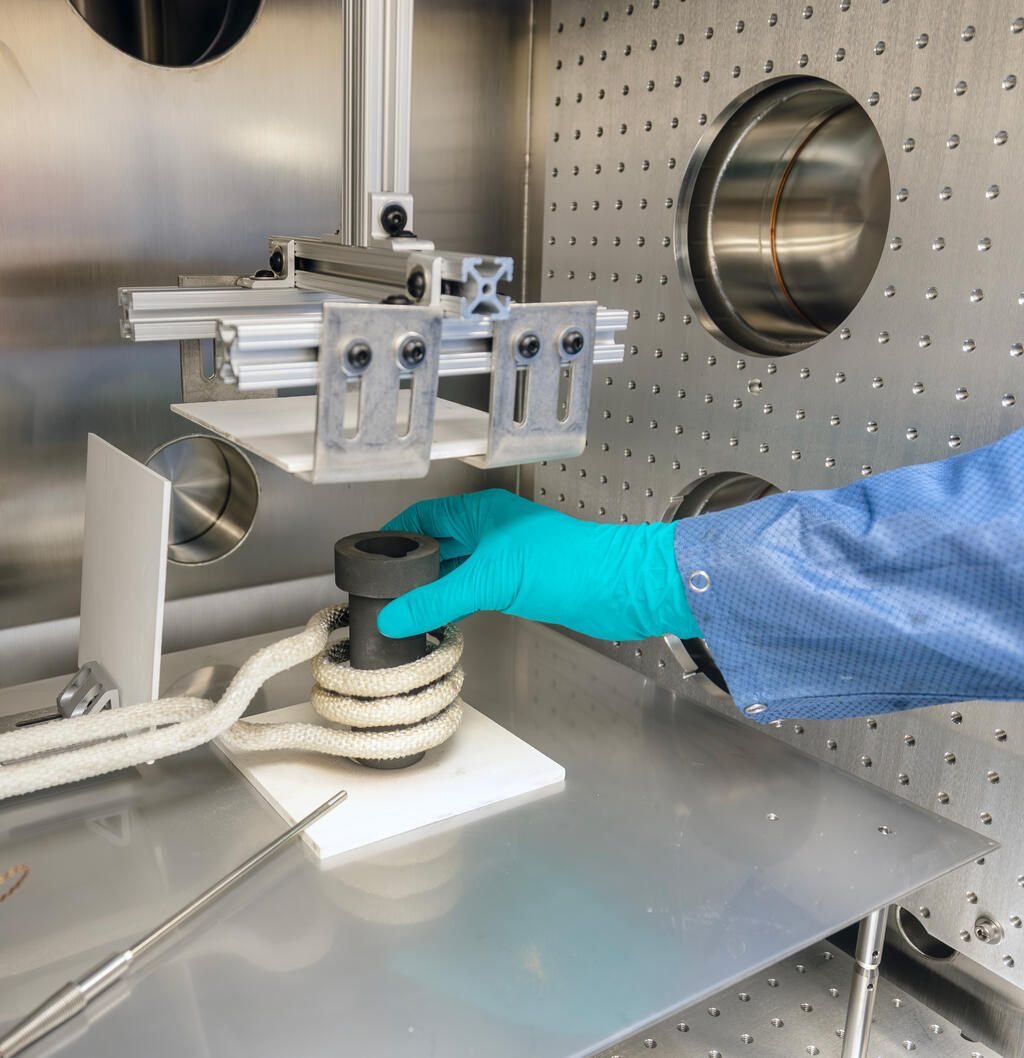
SwRI developed this Planetary Laboratory for Novel Environments Testing and eXperiments (Planet-X) facility to evaluate space hardware at temperatures from -200 to 200 Celsius, in high vacuum, using a high-resolution gas analyzer and other sensors.
From its location at the edge of the solar system, the SwRI-led New Horizons observed Lyman-alpha emissions to create the first map of our galaxy in this ultraviolet wavelength, shedding light on nearby galactic structures and processes. The SwRI-developed ultraviolet spectrograph onboard New Horizons collected data to help astronomers assess the composition, temperature and movement of distant stars and galaxies.
An SwRI study underway in frozen sand dunes in Alaska is applying the constraints affecting life in these harsh environments to understand the habitability of other worlds. The nutrient-poor sand dunes freeze annually at their surface and offer little to no moisture, conditions considered analogous to dune fields on Mars or one of Saturn’s moons.
Also in 2025, SwRI engineers designed and tested space fluid systems for multiple commercial space and aerospace vehicles. Liquid propellants exhibit unique behaviors in accelerated low-gravity environments, challenges that must be managed for successful flight. SwRI performed slosh and baffle design analyses for three vehicles to help mitigate mechanical issues and ensure proper control. We also designed propellant management devices for a lunar lander and a hypersonic aircraft.
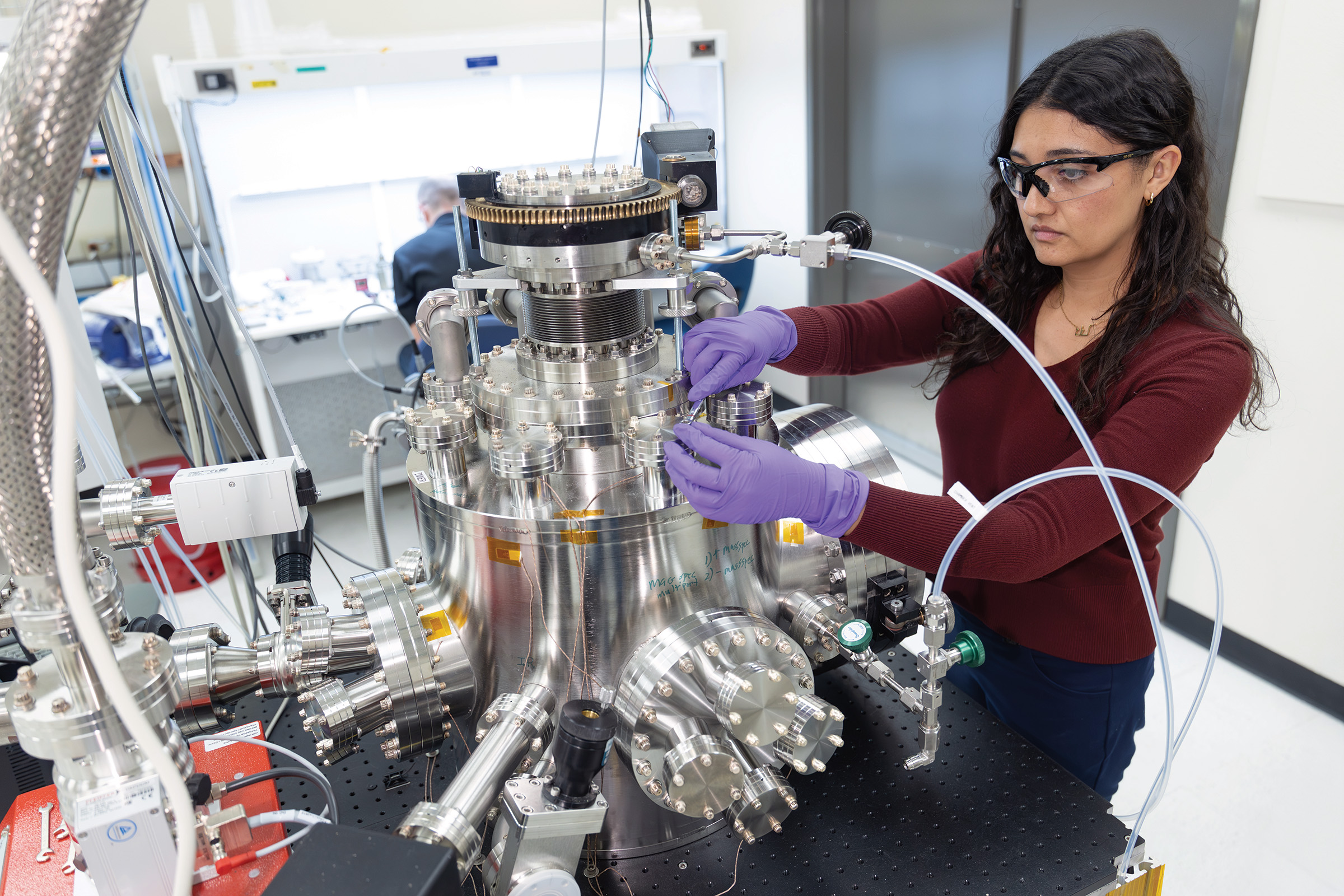
SwRI is developing a new lab to replicate nebular cloud conditions that led to the formation of stars like our Sun, to help understand new JWST and other observations.
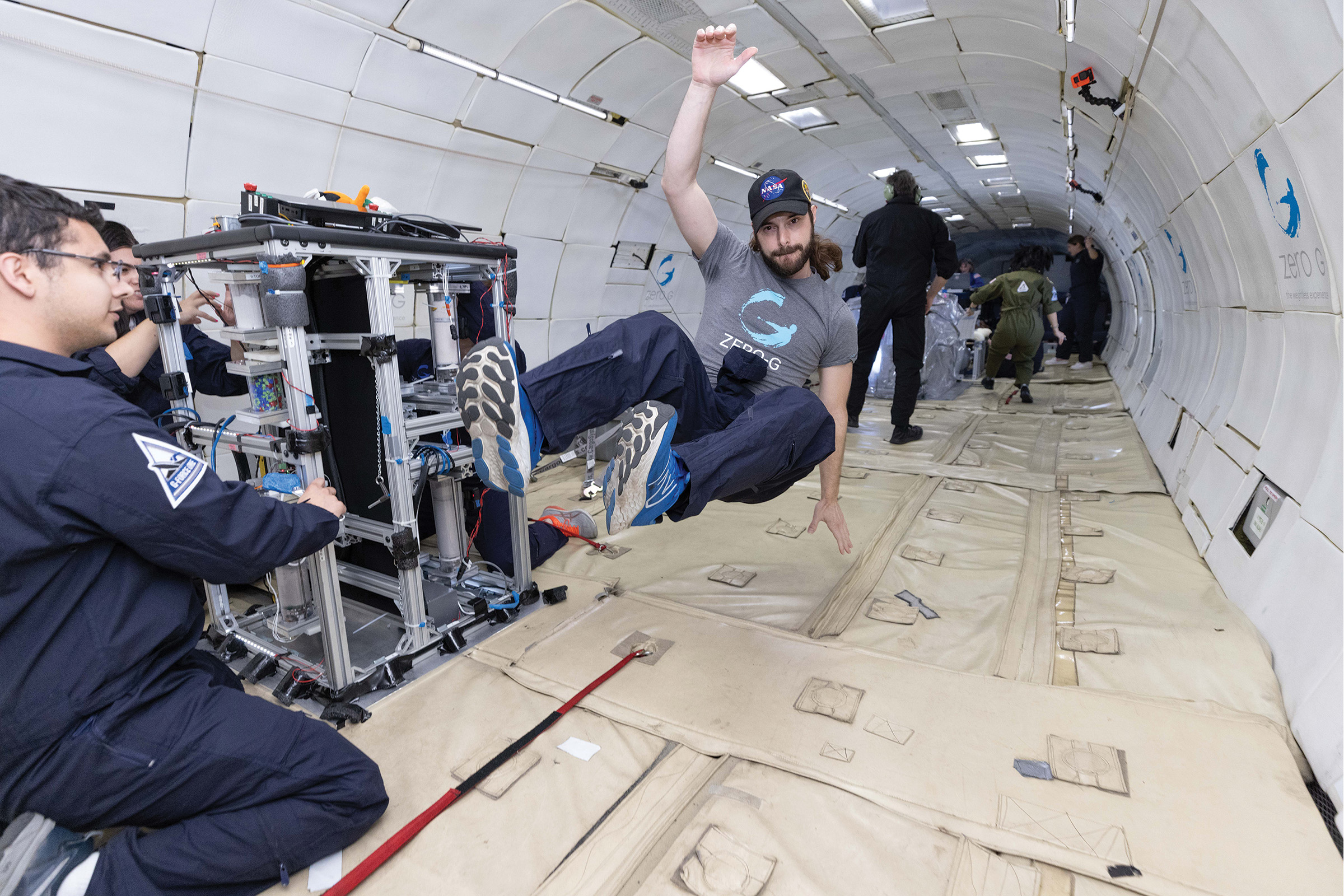
IMAGE COURTESY ZERO-G
To support future crewed and robotic Moon missions, SwRI tested a penetrator probe in reduced-gravity conditions aboard a parabolic flight, maturing sensor hardware that will aid in exploration activities on the lunar surface.
Working with the University of Texas at San Antonio, SwRI will flight-test novel technology designed to improve the production of propellants and life-support resources on the Moon and Mars. UT-San Antonio designed the electrolyzer to use local resources to create necessities, such as oxygen and fuels, to support long-term human habitation on these worlds. SwRI engineers are integrating the electrolyzer into an SwRI-built flight rig to test its performance in low gravity on a series of parabolic flights.