
Integrated Pharmaceutical Services
Advanced science. Applied technology.


Part of an advanced field of medicine, cell and gene therapy (CGT) targets the root cause of disease at the cellular and genetic level. CGT shows promise for treating genetic disorders and rare metabolic diseases, cancers and chronic illnesses, marking a transformative shift toward personalized and potentially one-time treatments.
Southwest Research Institute (SwRI) collaborates with government and industry on CGT research spanning stem cell cultivation, biologics manufacturing, gene therapy, biologic-based drug development and more.
For more information, please contact Jian Ling or call +1 210 522 3953.
What is the difference between cell and gene therapy?
In cell therapy, healthy or engineered cells are introduced into a patient’s body to replace or repair damaged tissues, regenerate functions, or deliver therapeutic effects — examples include stem cell transplants or CAR T-cells that are reprogrammed to attack various cancers. Gene therapy involves removing a patient’s own cells, editing them with new genetic material and then returning those cells as living medicine back into the patient’s body.
How does SwRI perform CGT research?
SwRI is a nonprofit R&D organization with more than 15 years of experience in regenerative medicine. SwRI’s Biologics Manufacturing Laboratory propagates cells to support cell and gene therapy research for personalized medical treatments.
SwRI advances stem cell research to support regenerative medicine and the development of stem cell therapies for a variety of applications including tissue engineering, wound healing and diseases associated with aging. SwRI also supports the development of custom assays and develops manufacturing solutions to support our clients with scale up for clinical trials. SwRI also provides clean room labs and adheres to current Good Manufacturing Practices (CGMP).
What are stem cells?
Stem cells are unique cells in our body that can make new copies of themselves and change (or differentiate) into various types of cells in our body, such as blood, skin, neural, and muscular cells. Think of stem cells like a body’s “spare parts” that scientists can use to treat patients with diabetes, heart problems, and Parkinson’s.
Hematopoietic Stem Cells (HSCs) are multipotent cells found primarily in the bone marrow that give rise to all blood cells and immune cells throughout a person’s life. Mesenchymal Stem Cells (MSCs) are a type of multipotent adult stem cells that can self-renew and differentiate into a variety of specialized cell types like bone cells, cartilage cells, fat cells, etc.
Induced Pluripotent Stem Cells (iPSCs) are adult skin cells or blood cells that are reprogrammed back into a pluripotent state, meaning they regain the ability to differentiate into almost any type of cell in the body – much like embryonic stem cells.
Featured Expert
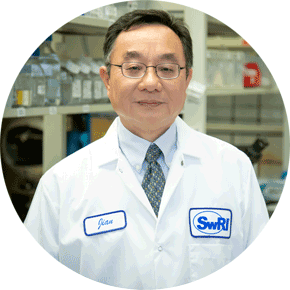
Jian Ling, Ph.D.
Institute Engineer
Jian Ling, Ph.D. advances biomedical research and the development of biomedical devices. He serves as the principal investigator for novel 3D-printed cell expansion bioreactors with broad applications in cell and gene therapies, vaccines, and biologic manufacturing. Dr. Ling holds over 20 U.S. patents and has authored more than a dozen peer-reviewed journal articles. Contact
An SwRI-developed bioreactor offers an automated, scalable, and closed cell expansion platform that continuously propagates various cells, including T-cells, MSCs, iPSCs, while maintaining their properties for in vitro studies and future clinical applications in cell and gene therapies. Developed using internal funding, this technology enables a reliable and scalable supply of cells and cell derived biologics essential for advancing biopharmaceuticals, cell and gene therapies, vaccines, personalized medicine, and other healthcare products.

SwRI's novel bioreactor propagates cells for large-scale drugs used in gene therapy and other biologics applications.