


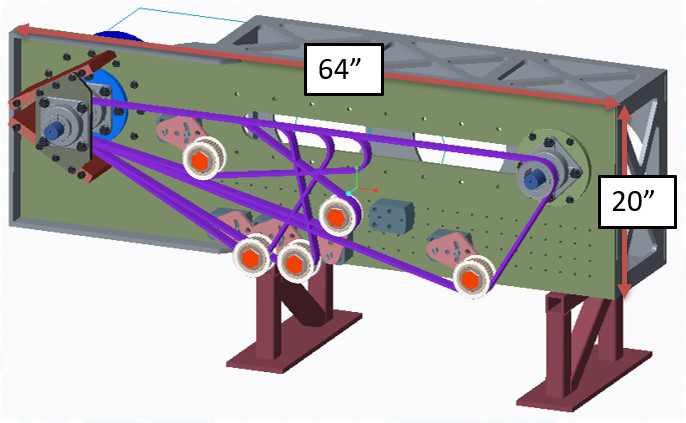
Figure 1: Belt rig design.
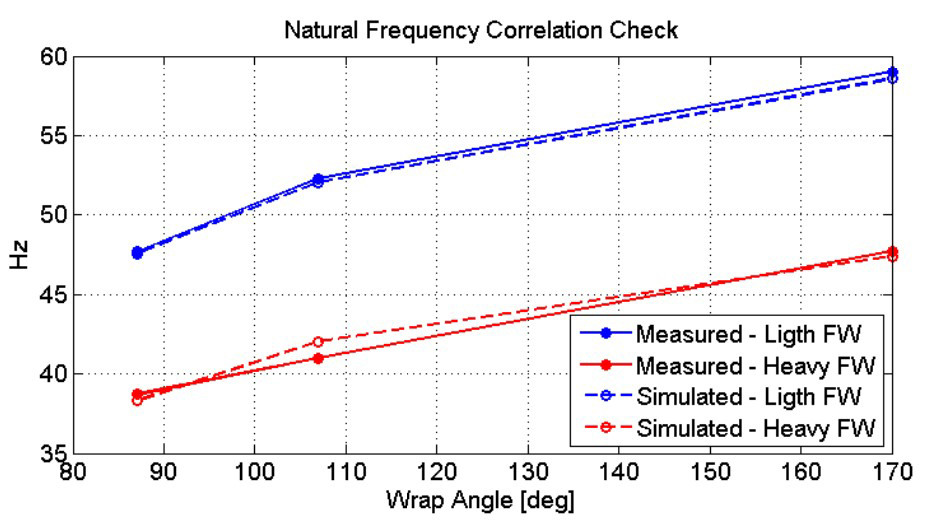
Figure 2: Good correlation of natural frequency was achieved, both as a response to system inertia and wrap angle on the driven pulley.
Accomplishments
The measured parameters were used to populate the modelling parameters of a torsional vibration digital twin of the belt rig. The simulation results were then compared to the rig measurements.
The rig produced consistent static and dynamic measurements and the simulation results were in good agreement with the measurements, both in terms of natural frequencies and vibration amplitudes across the speed range.
Moving forward, the intention is to establish a database of parameters for belts of different types and different vendors, to be used for accurate modelling and sizing of engine belt drives as early as possible in the engine design process. With this process, an optimum configuration can be determined while the design is still fluid.
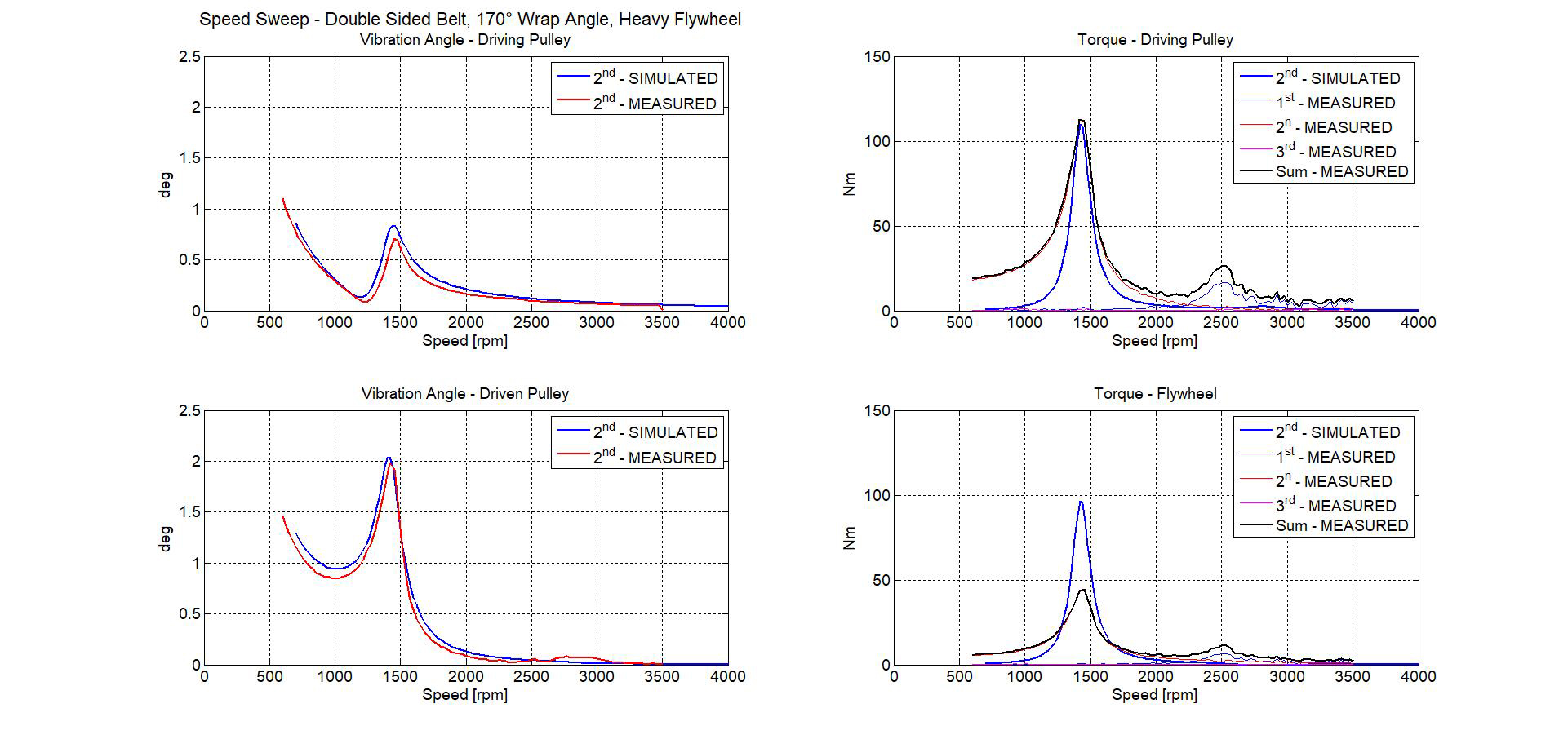
Figure 3: Good correlation of vibration amplitude achieved across the speed range.