


Background
The National Renewable Energy Laboratory (NREL) awarded SwRI a project to develop a natural-gas fueled medium-duty truck with a hybrid powertrain. The objective of this project was to further the state-of-the-art for natural gas-fueled vehicles in the medium and heavy- duty markets, as well as hybrid powertrain technology in that same market space. The deliverables for this project were to create a medium- duty natural gas hybrid demonstration vehicle, reduce green-house-gases by 25% relative to the diesel baseline, and achieve the anticipated 2027 0.02 g/bhp-hr NOx regulation.
Approach
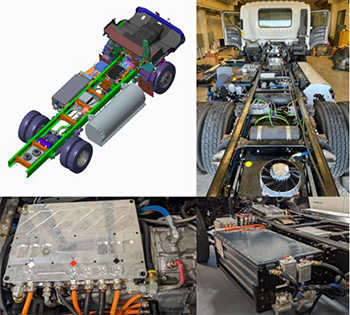
Figure 1: NREL Vehicle Model vs. Actual Build
This PDIR project created the processes that define the system-level requirements for the control algorithms utilizing industry standard engineering tools, develop and implement the performance and diagnostic algorithms, and verify the software via software-in-the-loop (SIL) and hardware-in-the-loop (HIL) testing capabilities.
The funding to support this PDIR—and its two predecessors (R6064 and R6121)—has generated IP associated with the development of a toolchain, processes, and methodologies required to identify an optimal hybrid powertrain system, both in configuration and size. A simulation environment was created to support the development of the software control system in the absence of physical hardware. Finally, the developed software was further validated on vehicle via HIL testing.
Accomplishments
The diesel baseline vehicle was fully converted into a natural-gas P2 hybrid. All hardware, performance algorithms, and diagnostics were verified via SIL and HIL testing. The vehicle was placed on a chassis dyno and ran several representative duty-cycles to quantify the reduction in CO2 emissions relative to the diesel baseline and the 25% CO2 reduction target shown in red in Figure 2 below. The P2 hybrid provides the greatest improvement in the multi-purpose category cycle as this is the most transient of the three cycles shown. Internal combustion engines are less efficient than electric motor during transience; therefore, the vehicle controller can use the electric motor for transient maneuvers providing a significant efficiency and CO2 improvement over the diesel baseline. However, as the duty cycle becomes less transient, as shown in the Urban and Regional Category drive cycles, the emissions improvement of the P2 hybrid relative to the diesel baseline diminishes. It is also noteworthy that as the driving range increases the P2 hybrid advantage decreases. This is due to the state-of-charge of the battery reducing over time which forces the controller to rely more on the natural-gas engine to power the vehicle to conserve the energy within the battery.

Figure 2: Process & Toolchain Flow Chart