


Background
This project was undertaken to reduce uncertainty and risk in modeling efforts that were encountered on a client project. Supplemental analysis and research correlations were used to satisfy the client’s objectives. However, increasing model certainty, reducing process complexity, and improving efficiency were identified as key requirements for further commercial promotion and execution.
Approach
The objective of the project was to develop and improve processes of modeling the thermal and electromagnetic performance of an e-motor to increase accuracy and capability. The primary methods were to replace splash cooling correlations with multiphase spray cooling and replace one-way decoupled electromagnetic analysis with two-way coupled analysis. The goal was to complete the research with a modeling process that could be applied to any type of e-motor cooling method (splash, spray, etc.) and that was ready for analysis of fluid properties from current and future clients.
Accomplishments
The research successfully implemented multiphase physics to capture the air/oil flow separation within the e-motor cooling system, which provided the most significant improvement in e-motor component temperature prediction, as validated by the results shown in Figure 1. The research also integrated two-way electromagnetic coupling for further improvement and reduced data processing compared to one-way coupling. These modeling improvements are necessary to ensure simulation can distinguish between small changes in operation or cooling fluids in an efficient and effective way.
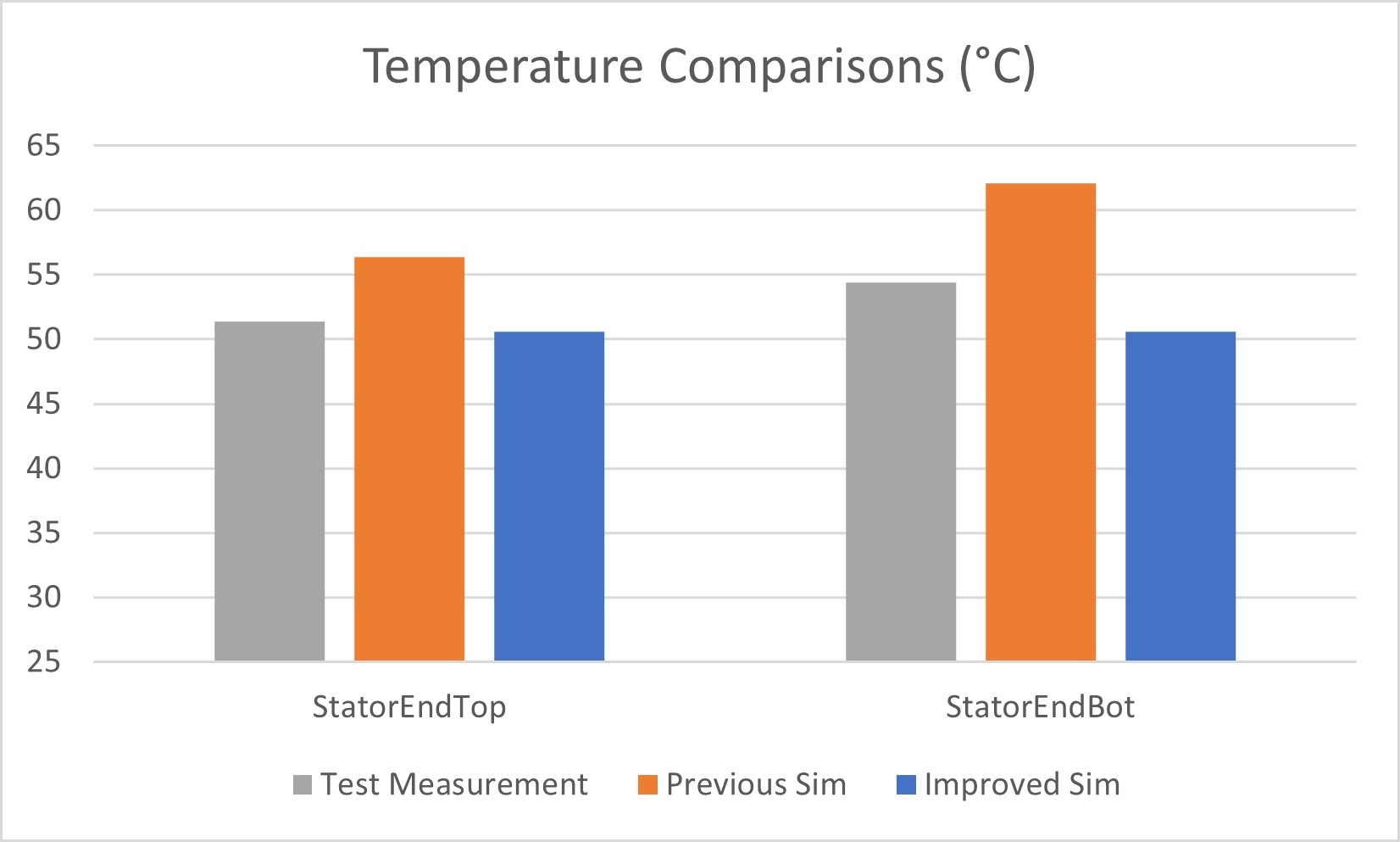
Figure 1: Temperature validation of an e-motor stator.