


Background
To reduce carbon emissions, alternative fuels are being investigated as a replacement to current hydrocarbon-based fuels. Multiple additive companies have expressed a need to understand the effects of alternative fuels, such as ammonia and hydrogen, on lubricating oil. Currently, there are limited options in existing engine test stands and bench test equipment for simulating the conditions (temperature, gases, humidity, and others) experienced by a lubricant.
SwRI has devised a modified Bench Environmentally friendly fuel Lubricant Test (BELT) rig that will meet this need by artificially aging an oil. This apparatus is based upon an existing testing platform, the Romaszewski Oil Bench Oxidation (ROBO) test. Analytical property testing on the new and stressed oils is performed to assess the impact of alternative fuels on lubricating oils.
Approach
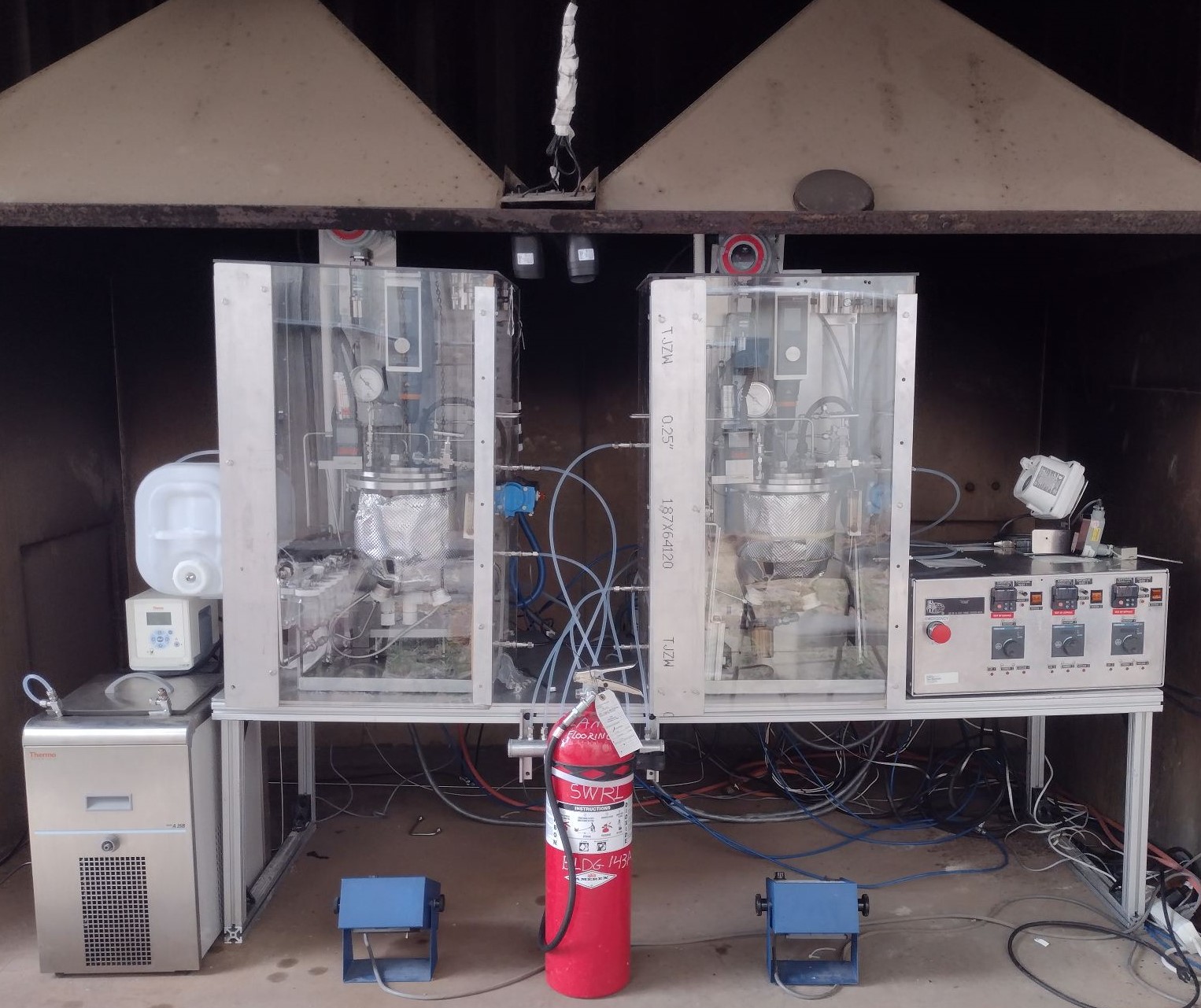
Figure 1: The two BELT rigs in a large hood with the Hydrogen BELT rig on the left and the ammonia BELT rig on the right.
SwRI has designed and built the BELT rig with a suitable safety abatement system to contain and minimize any potential safety hazards. Once built, SwRI ran operational and shakedown tests to confirm the instrument is operational and able to handle the conditions for artificial aging of lubricants. The shakedown tests on two different lubricants compared analytical properties after aging under the same set of conditions. The BELT rig is a design with various customizable conditions. The vessel volume and temperature are customizable ranging from 2.5 to 6 liters of sample and ranging from 50°C to 200°C. The sample can be stirred while in the vessel and humidity can be controlled up to 98%. Additional gases may be flowed through the sample as well. During aging of the sample, coupons (metal or elastomeric) can be included in the test, and intermediate subsamples can be automatically taken throughout the duration.
Accomplishments
Two BELT rigs have been built, one for handling ammonia gas and one for handling hydrogen gas. Operational tests confirmed the capabilities of each instrument (temperature, stir speed, humidity level, vacuum, automatic interval sampling, and dual independent gas flow). Intermediate subsampling and inclusion of metal coupons have been maintained for up to 168 hours. Shakedown testing for both rigs demonstrated each lubricant experienced oxidation from aging and corrosion. Results indicate a significant increase in the oxidation of the oil, measured viscometrically, by elemental analysis, and with Fourier-transform infrared spectroscopy (FTIR).