


Background
Aviation is a significant contributor to global emissions, accounting for 2% to 3% of total carbon emissions and 9% to 12% of U.S. transportation greenhouse gases. To address this issue, sustainable aviation fuels (SAFs) have been explored as a solution capable of reducing lifecycle CO2 emissions by up to 80%.
Primary objectives of this project included developing an in-house hydrotreated SAF with an ideal yield target of 50wt%, though achieving 35wt% was deemed satisfactory, blending it with conventional Jet-A fuel, characterizing it in a jet engine to ensure it met performance standards, and collecting pollutant emissions data from these blends. Additionally, an in-depth investigation of soot morphology and composition was conducted. The project also aimed at minimizing fuel consumption during emissions measurements. This project was a collaborative effort among four divisions.
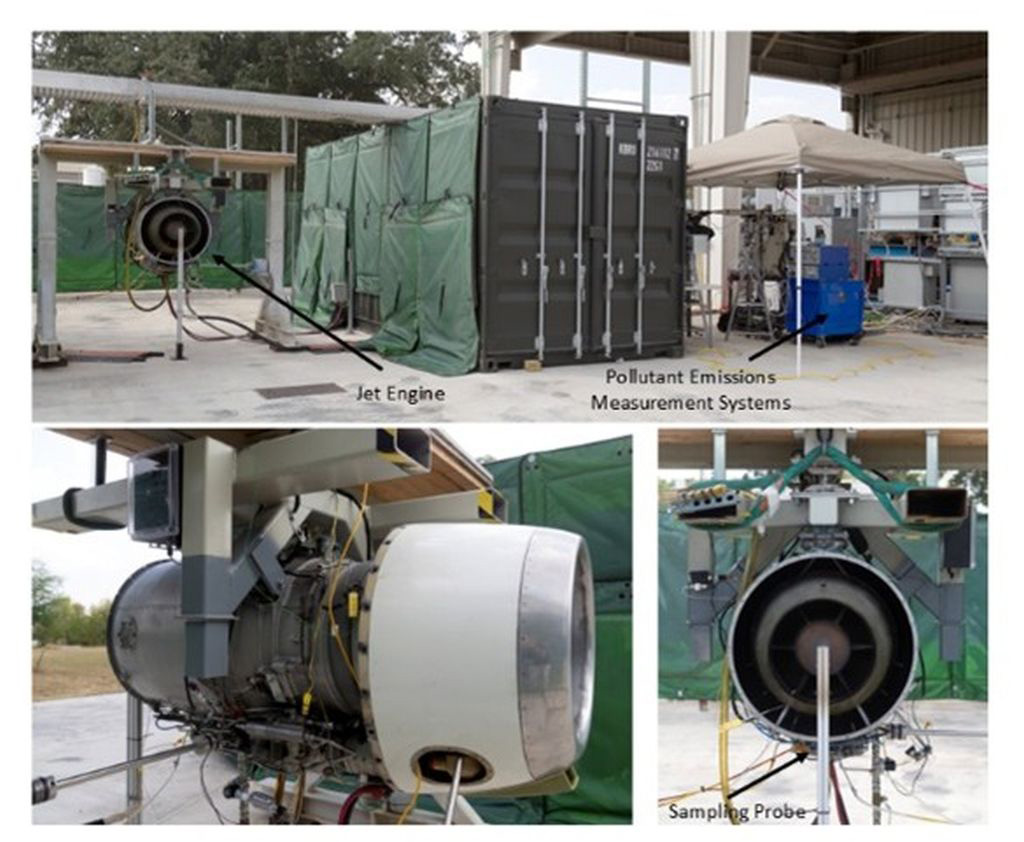
Figure 1: Picture of the test facility
Approach
Production Approach: A client-provided crude was hydrotreated to produce refined fuel. Division 01 demonstrated a 30±1 wt% yield, achieving basic performance requirements for the SAF blend.
Characterization Approach: Blending of the in-house SAF with Jet-A and characterization of its properties were performed according to ASTM standards by Division 08.
Testing and Emissions Approach: Engine testing using the Pratt and Whitney JT15D-4 engine measured CO, CO2, NOx, O2, and SO2 emissions, using a Testo 350 gas analyzer. Soot particles were collected and analyzed using an SEM, and soot mass concentration and particle size distribution were measured using an AVL micro soot sensor and Cambustion DMS500.
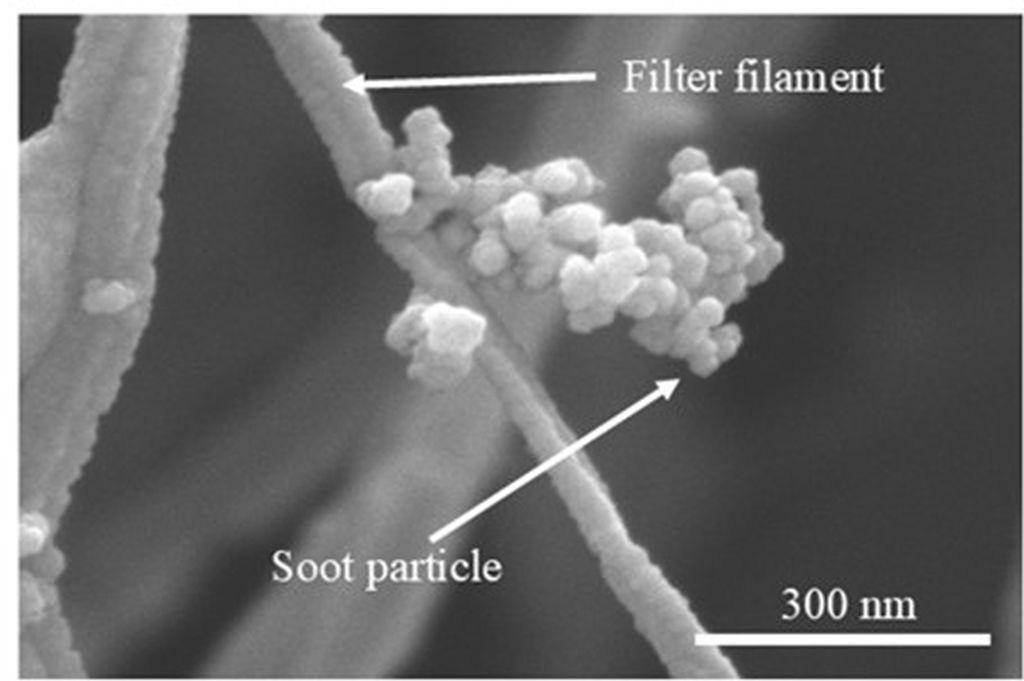
Figure 2: Images of soot particles
Accomplishments
The project has been completed. The following main results have been achieved:
SAF Production: Achieved a 30±1 wt% yield, producing 5.5 gallons of pure SAF.
Fuel Characterization: Produced SAF-Jet-A blend met ASTM D1655 performance standards and demonstrated lower sulfur and aromatic content compared to conventional jet fuels.
Engine Performance and Emissions: SAF blends exhibited similar engine performance to conventional Jet-A, validating their drop-in nature, lowered SO2 levels for SAF blends as expected from lower sulfur content; and detailed soot particle analysis provided new data on soot morphology and composition from SAFs.