


Background
SwRI's Low NOx controller achieved a target of 0.02 g/bhp-hr. tailpipe NOx emissions in EPA and CARB-funded projects. Automating the controller’s calibration can save development time and improve precision. This project aimed to develop a physics-informed neural network (PINN) model to simulate SCR chemical kinetics and automate calibration using a genetic algorithm.
Approach
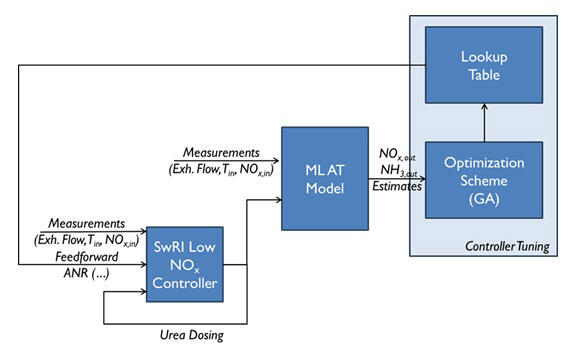
Figure 1: Closed Loop Controller Tuning Framework
To develop a dynamic NOx emission prediction model, both Physics-Informed Neural Networks (PINNs) and Long Short-Term Memory (LSTM) recurrent neural networks were utilized. LSTMs are effective for sequence-to-sequence predictions and have been used for NOx predictions. PINNs incorporate physical dynamics into the neural network loss function and are relatively novel in automotive contexts.
A PINN-based model was created and trained on emissions data from a Copper Zeolite (Cu-Ze) SCR catalyst, accurately capturing chemical kinetics, catalyst degradation, and thermal dynamics. This model was integrated into MATLAB-Simulink with a Genetic Algorithm to optimize controller calibration in 45 minutes over 1200 iterations, effectively targeting a tailpipe NOx emission threshold. Figure 1 illustrates the framework used for controller tuning leveraging the PINN-based SCR ML model.
Accomplishments
The project achieved a high-accuracy dynamic NOx emission model using a PINN-based approach. Validated against regulatory and real-world cycles, it maintained ±1% prediction accuracy with a cumulative error within 8%. The model retained accuracy within 10% when retrained with Vanadium SCR data. The MATLAB-Simulink integration with a Genetic Algorithm produced optimized calibration tables, outperforming manual methods and significantly reducing calibration time and effort. This approach shows potential for broader applications in other nonlinear systems, such as engine controllers, fuel cells, and lithium-ion batteries.
Publications
Chundru, Venkata Rajesh, et al. Automated Calibration of Heavy-Duty Low NOx Aftertreatment System Controls using Physics-Informed Machine Learning and Global Optimization Methods. No. 2025-01-0402. SAE Technical Paper, 2025.
Presentations
Chundru, Venkata Rajesh, et al. “Automated Calibration of Heavy-Duty Low NOx Aftertreatment System Controls Using Machine Learning and Global Optimization Methods”, 35th CRC real world emissions workshop poster session Apr 15, 2025