


Background
One of the biggest gaps in the development of a hydrogen (or any alternative energy) mobility economy is to enable fleets of vehicles to make use of the fuel, particularly in commercial applications. Hydrogen brings challenges because of the expense of transporting low-density fuel from a production facility to a fleet refueling site. As such, there is more potential for on-site fuel production with hydrogen. With such a complex fuel scenario, combined with the limited production volumes of hydrogen-fueled vehicles, fleet managers are in a situation where it is difficult to make good business decisions for how to implement hydrogen (or many other alternative energy solutions) into their fleet operations. Provision of unbiased and easy-to-understand data on total cost of ownership for various fleet options can help to support the introduction of lower carbon-intensity alternative fuels into fleet operations wherein centralized refueling makes it easier to bring these new technologies to use.
Approach
A coupled set of tools were developed to support decision making on the economics of alternative fuel fleet vehicles. The first tool is a model for estimating the cost of delivering the fuel to the pump (or charger in an EV situation). This tool considers various pathways for producing the fuel on-site (such as conversion from waste biomass or hydrogen generation via electrolysis) or purchasing the fuel and having it delivered to on-site storage. The output from this tool feeds into a total cost of ownership (TCO) tool that accounts for the purchase price of each vehicle, the maintenance costs, residual value, impact on driver staffing required, etc. The output from the TCO tool is an estimated cost per mile of using the alternatively fueled vehicle that can be directly compared with existing fleet data on the same cost for the incumbent vehicle technology.
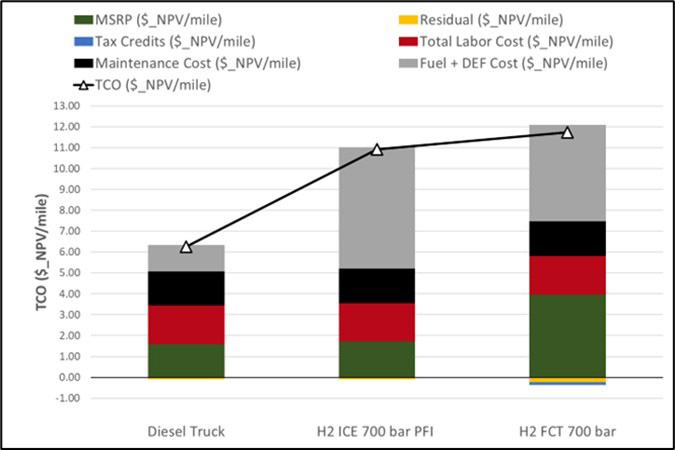
Figure 1: Comparison of Total Cost of Ownership for a Refuse Truck fueled on Diesel or Hydrogen Fuel.
Accomplishments
Work to date has been directed at building and validating these tools for the case of hydrogen fueled vehicles (fuel cell or hydrogen internal combustion engine). A refuse truck fleet was used as the initial deployment scenario, where historical fleet data was available from a local partner. The models show that a hydrogen fueled refuse truck is roughly twice as expensive per mile to operate as the base diesel truck (see Figure 1). The biggest challenge is that the fuel itself is significantly more expensive than diesel fuel, accounting for nearly all the TCO difference between diesel and hydrogen.
Presentations
A workshop was held at SwRI on October 1, 2025 to share the results of the work with stakeholders in Texas.