


Background
Battery thermal runaway modeling capabilities in industry and at SwRI have been developed to better understand and investigate thermal runaway risks in battery packs, and advancements in this space continue. Prior to this project, SwRI’s thermal runway modeling techniques did not consider flammable vent gases and solid particulates, which play a major role in thermal runaway propagation and vehicle occupant safety.
Approach
The purpose of this IR&D program was to develop a novel, physics-based approach of battery abuse modeling to accurately model the vent gases and particulates that exit the cell during thermal runaway. This model predicts specific vent gas species and particulate chemical composition by using the chemical reactions associated with battery cell chemistry. To assess the accuracy of the modeling, seven 55-Ah Nickel-Manganese-Cobalt (NMC) battery cells were brought to thermal runaway via external heating from a ceramic heater attached to the cell. Testing was performed within a pressure vessel to enable accurate quantification of the gas release volume during thermal runaway.
Accomplishments
A new battery thermal runaway kinetic mechanism was developed, using both a 2-step and single-step methodology to simulate vent gas and solid particulate ejection from the failed cell. The developed model matches the test data for gas generation and heat release within the 15% target set for this project. In addition, the calculated percentage of vent gas species (CH4, C2H4, C2H6, H2, CO2, CO, and O2) from a newly developed 90-reactions mechanism is within 5% of the test data gathered on this project. During the project, the model was applied to a module design. The newly developed battery thermal abuse model now allows SwRI to consider the hazards from vent gas and solid particulates during battery thermal runaway with more fidelity at the concept phase of a battery design project. With this modeling capability, given the size and chemistry of a particular cell, SwRI can predict the rate of vent gases leaving the cell including the amount of hazardous gas constituents. The prediction of vent gas volume and particulate generation in addition to cell heat release during thermal runaway enables better evaluations of containment during failure before test data is available.
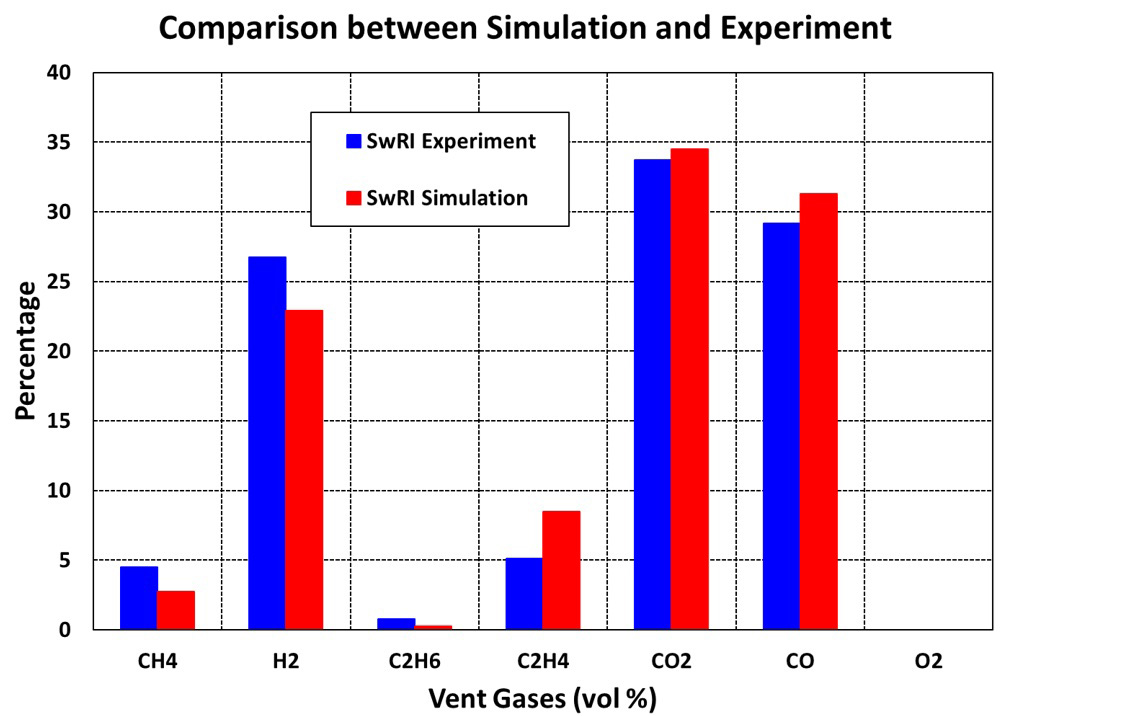
Figure 1: Simulated Vent Gases Volume Percentage and Comparison with SwRI Experiment.
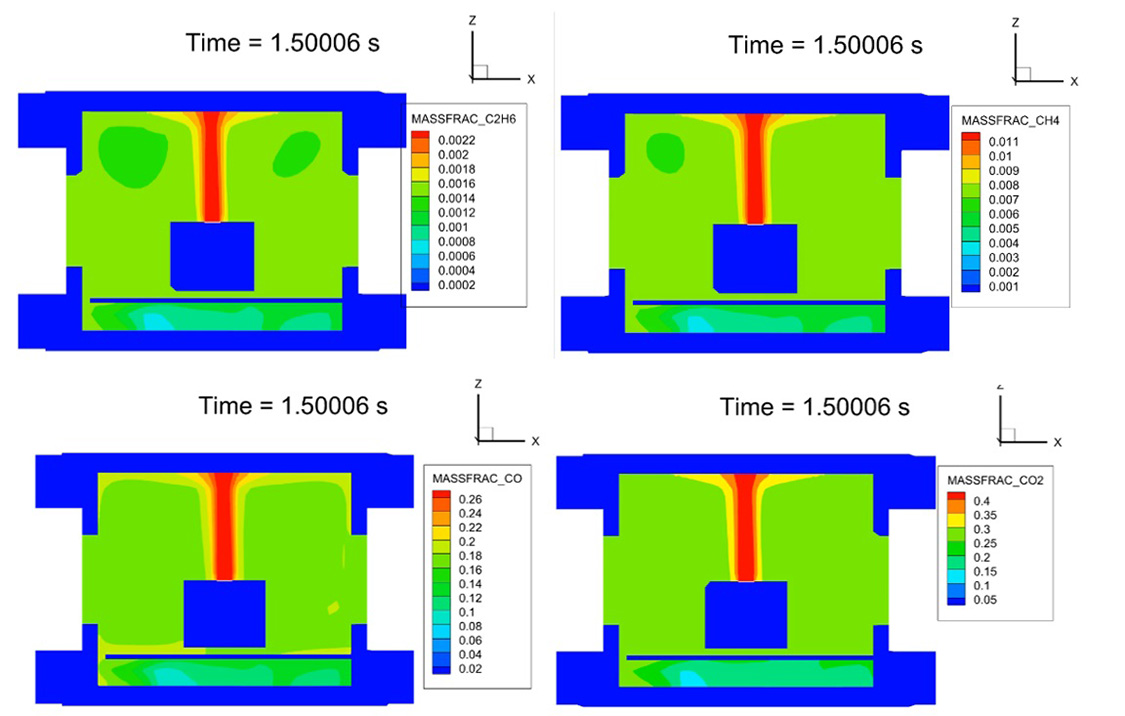
Figure 2: Simulated Vent Gases from SwRI Battery Thermal Runaway Case.