


Background
Divisions at Southwest Research Institute (SwRI) have collaboratively developed eco-mobility algorithms for connected and automated vehicles (CAVs), achieving up to a 30% improvement in fuel and energy efficiency without requiring powertrain hardware modifications. Although these algorithms have been validated in both real-world and virtual environments, they have not yet been evaluated on externally developed, third-party deployment platforms. Unresolved research questions include how transportation efficiency is impacted when multiple CAVs independently optimize their behavior using distinct algorithms, and how the resulting duty cycles affect component durability.
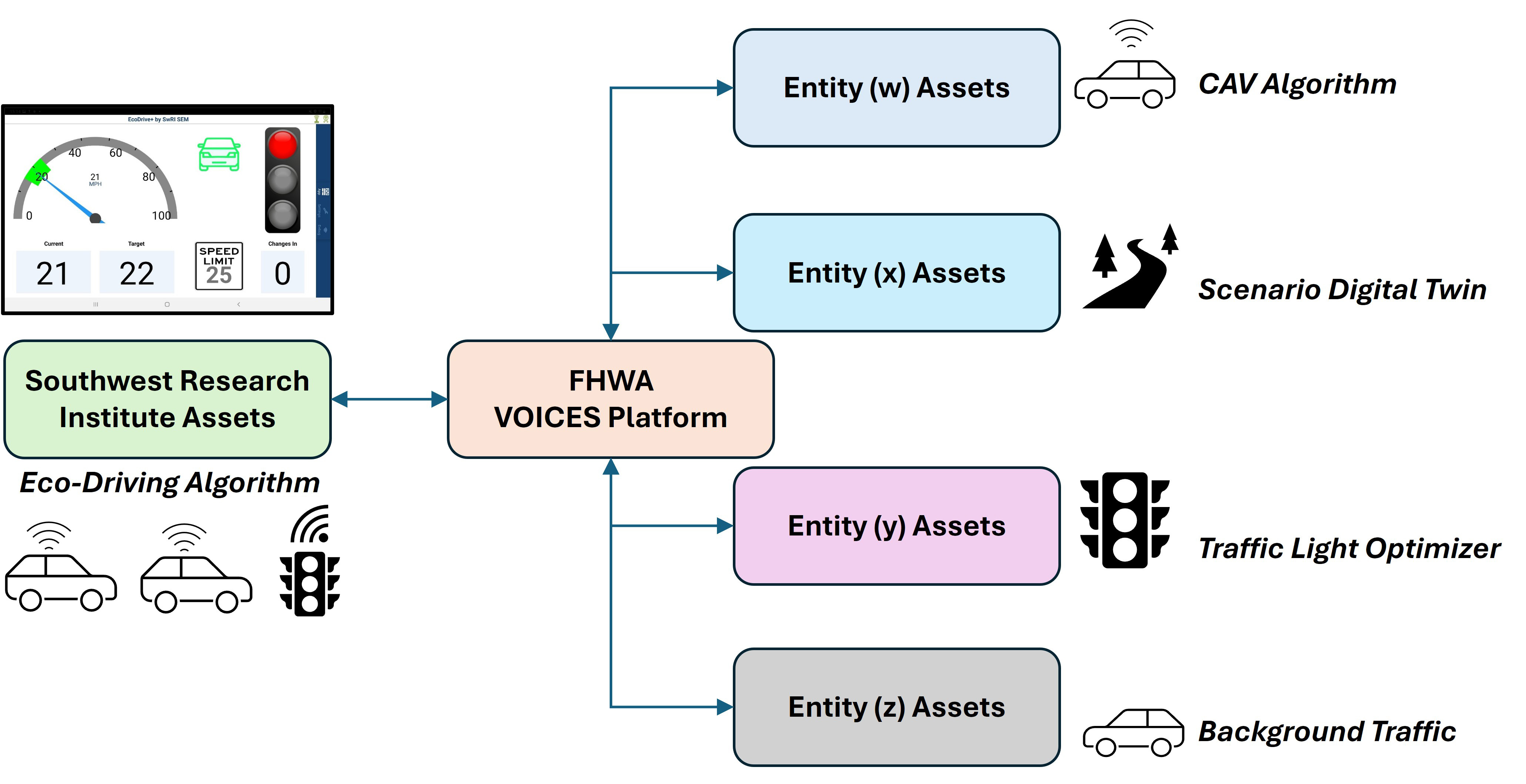
Figure 1: SwRI Eco-Driving integrated with the FHWA VOICES platform, exchanging data with collaborating entities and their assets
Approach
SwRI participated in the Fall 2025 Federal Highway Administration (FHWA) VOICES (Virtual Open Innovation Collaborative Environment for Safety) test campaign, integrating its Eco-Driving algorithm into a standardized, distributed testing framework with national laboratories, universities, and industry partners. This setup enabled geographically distributed asset integration and collaborative experiments to quantify the algorithm’s energy impacts. In addition, SwRI analyzed data from prior instrumented CAV tests to evaluate the effects of Eco-Driving on battery operation and cycle life.
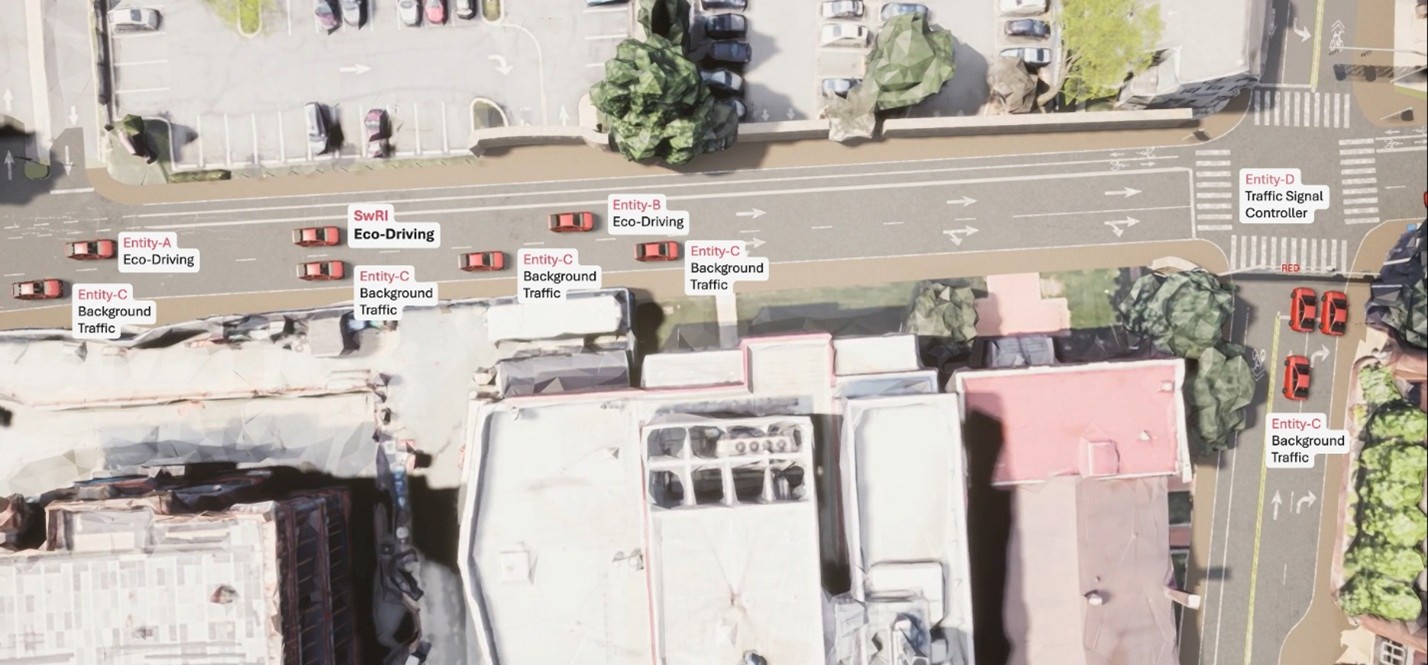
Figure 2: SwRI Eco-Driving vehicle operating on the virtual test corridor alongside other participants
Accomplishments
Distributed co-simulations on a ~1.4 km digital twin demonstrated a ~32% reduction in Positive Kinetic Energy (PKE) demand for SwRI Eco-Driving compared to lead vehicles. In addition, analysis of prior vehicle test data indicates that Eco-Driving extends EV battery cycle life by increasing range per charge and reducing both peak and average battery current demands.
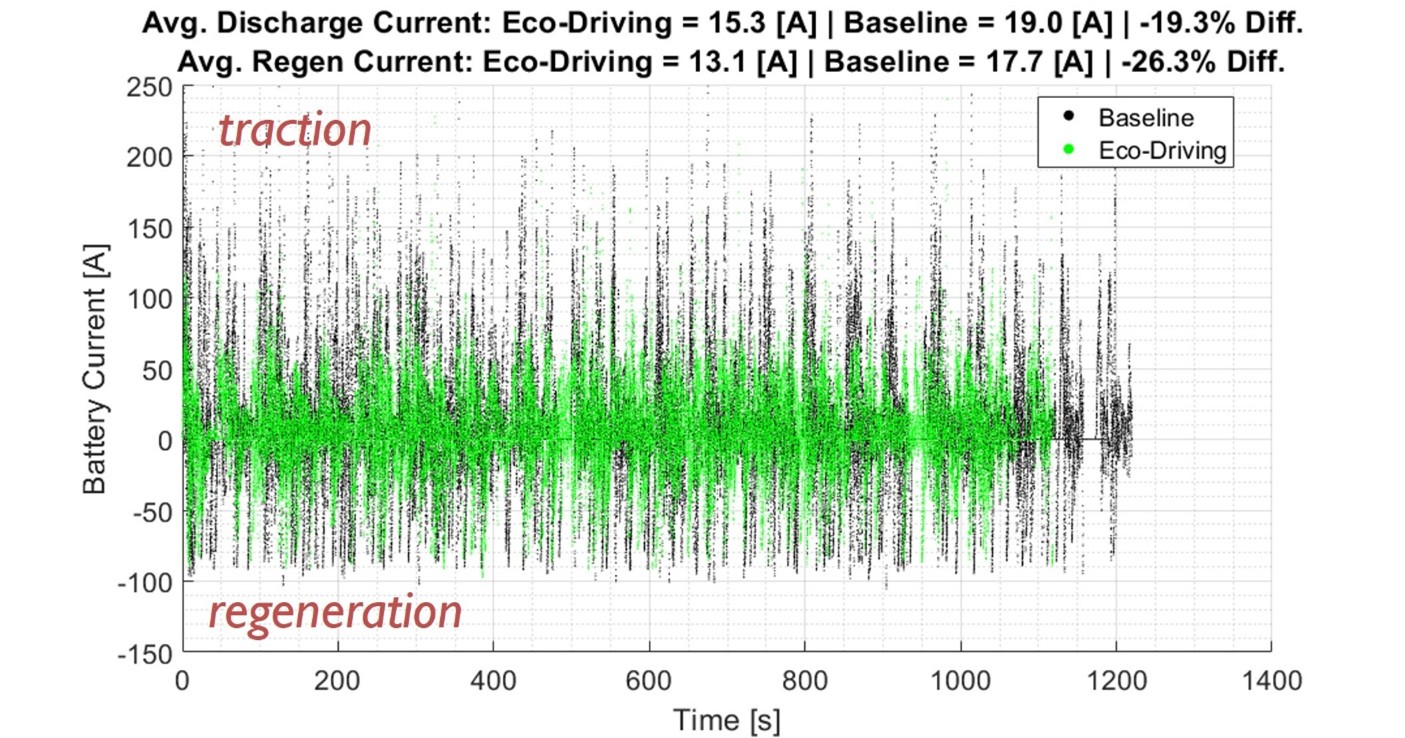
Figure 3: Reduction in average and peak battery current demand achieved with Eco-Driving