


Background
Graphene is an emergent super material with extraordinary physical, chemical, and electrical properties that was first isolated from graphite in 2004. Since then, extensive research has led to a myriad of industries developing technologies using graphene, such as coatings, electronics, drug delivery, lubricants, and more. Currently, existing methods of graphene production are limited in scale or cost prohibitive. Increasing demand for graphene year over year has shown that there is strong interest from both commercial and governing bodies to develop scalable graphene production processes, with the U.S. Department of Energy driving further interest by providing funding opportunities quarterly to aid the development of processes utilizing recycled materials to produce value-added products. Metallothermic reductions are a class of high temperature redox reactions in which a high activity metal acts as a reducing agent to reduce a target material from an oxide or halide into its elemental form. Metallothermic reduction of carbon dioxide not only serves as a method of producing graphene but also can reduce emissions by converting waste carbon dioxide into a useful material. The objective of this project was to realize a conceptual CO2 to graphene process through bench scale experimentation, process simulations, and technoeconomic analysis. Data resulting from the project was incorporated into securing a process patent.
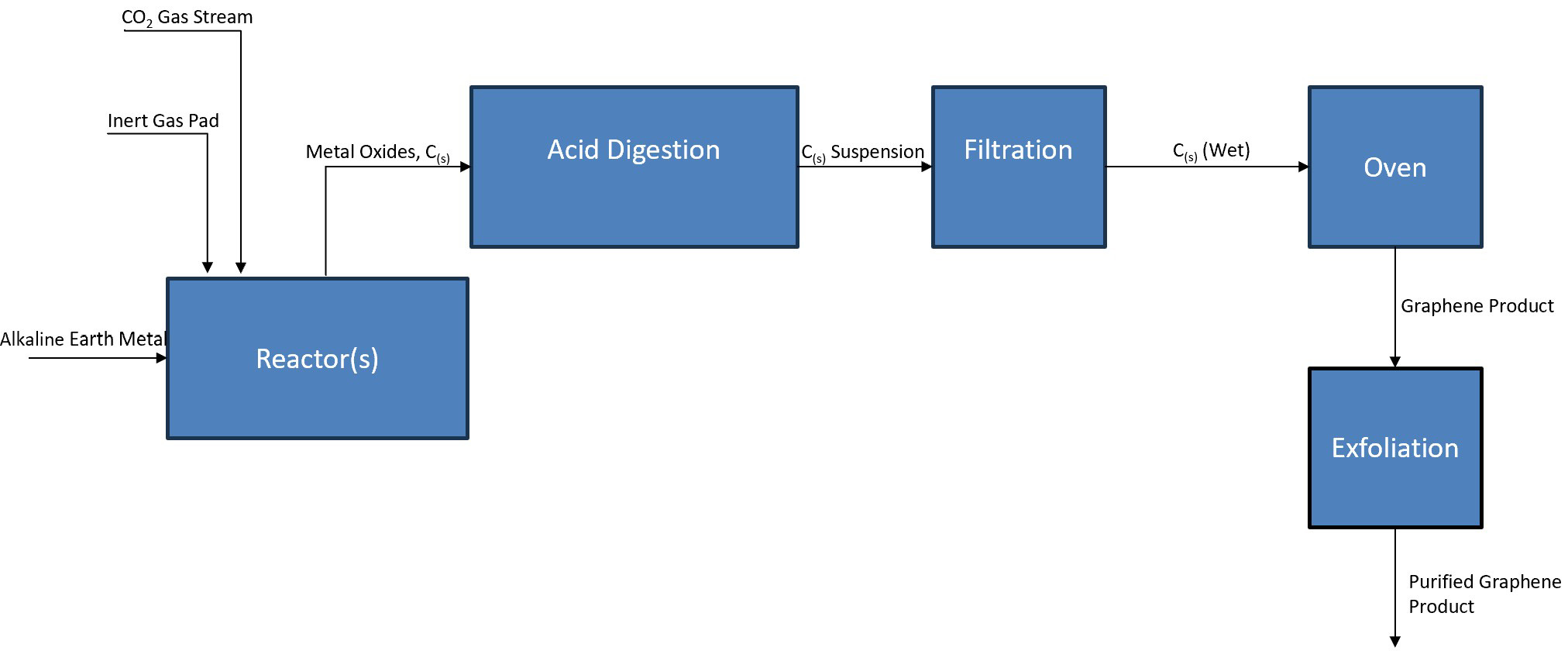
Figure 1: A flow diagram depicts the general CO2 to graphene process.
Approach
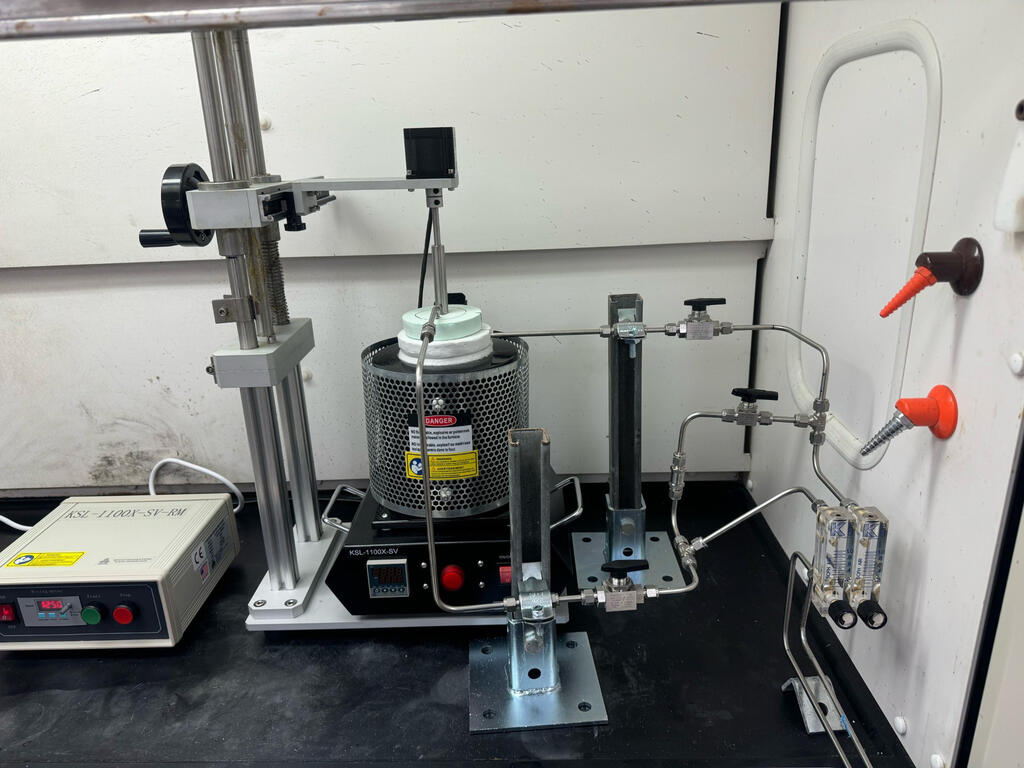
Figure 2: This is the reactor configuration used for early magnesiothermic reduction experiments. Online temperature and flow rate logging were used to track operating parameters
Bench scale experiments of CO2 metallothermic reductions were performed under stirred conditions in a modified crucible melting furnace, gathering fundamental data to feed into the technoeconomic assessment of the concept process. The carbonaceous products were isolated and characterized by Raman, SEM, and STM analysis to determine quality and graphene character.
A process simulation based on the concept process was developed in AspenPlus targeting 10-tons per annum of graphene production in a batch process. Results gained from the bench scale experiments were then fed into the process simulation to determine plant capital costs, operational costs, payback period, carbon intensity, and net-zero requirements. Multiple process scenarios were considered, including the base concept with full-recycling of materials, a single-pass concept where no material recycling was considered, and a hybrid ion-switch concept incorporating the recycling of some aqueous byproducts.
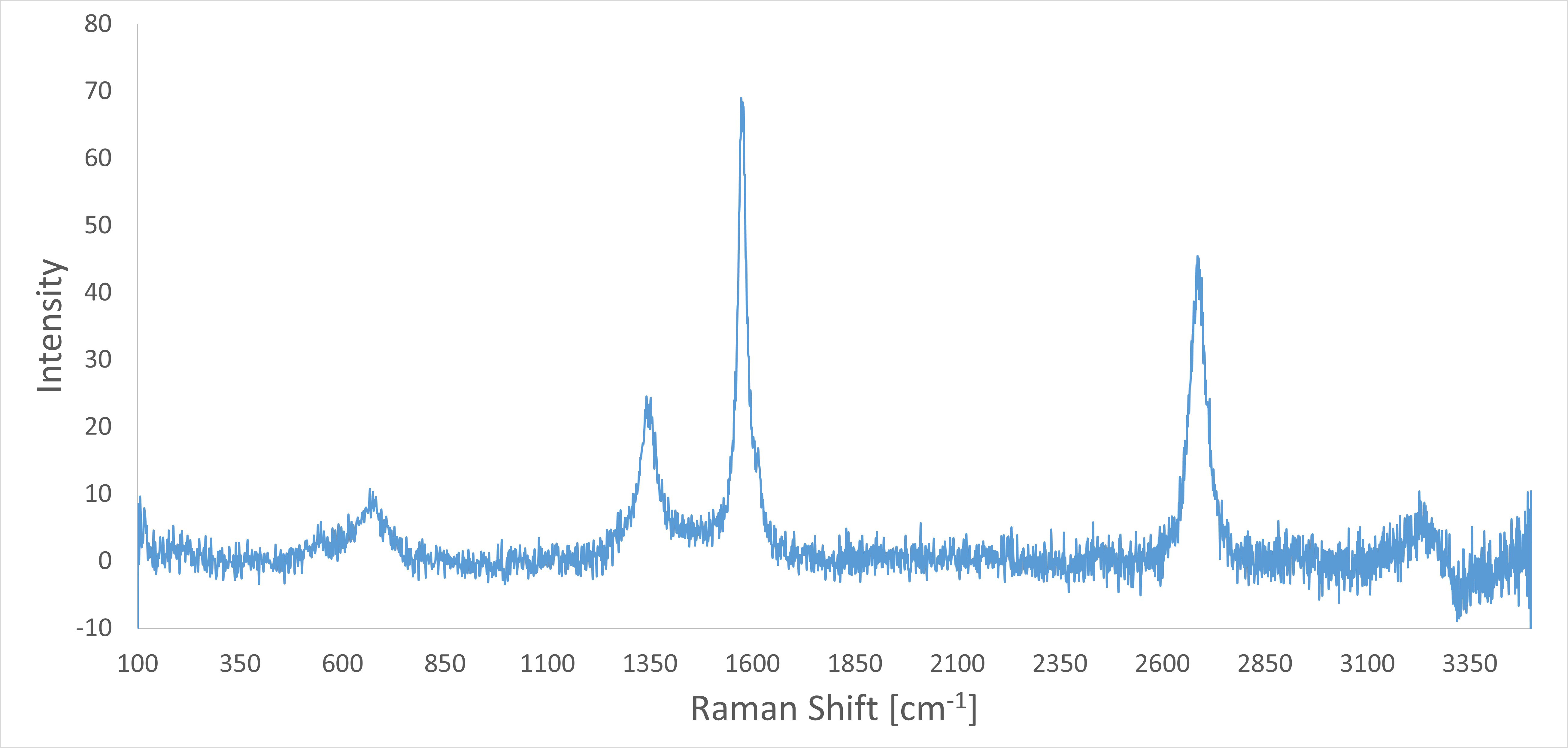
Figure 3: Raman data shows the spectrum of a graphene sample produced in bench experiments.
Accomplishments
Bench scale testing demonstrated the ability to produce 60 g of carbon material per kg of magnesium feedstock at stoichiometric yields of 20%, improving upon published literature. Raman data showed ID/IG, AD/AG, and A2D/AG values of 0.3318, 0.6901, and 1.5333, respectively. The technoeconomic analysis incorporated data from the bench scale testing as a basis and at a 10-ton per annum scale each process configuration was viable, with the single-pass mode of operation providing the highest cost-benefit. Additionally, in the single-pass configuration, we estimate the process to be net-negative in CO2 emissions when power is supplied through natural gas.
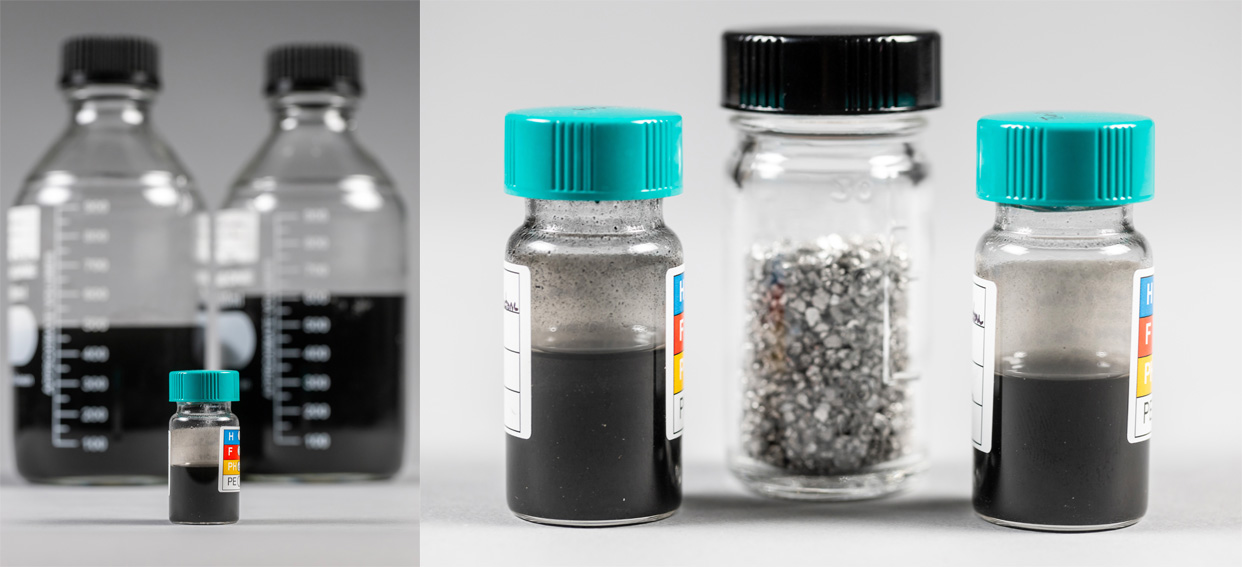
Figures 4 & 5: SwRI developed graphene samples are shown in suspension.
Technical Presentations
Dhukka, Inaya. “Utilization of CO2 By Reduction into Carbonaceous Forms: An Overview of a Novel CO2 Utilization Process Including a Technoeconomic Analysis Based on Experimental Data and Process Simulation.” American Institute of Chemical Engineers (AIChE) Spring 2026, Dallas, Texas, 9 April 2025.
Salas, Miles. “Utilization of CO2 By Reduction into Carbonaceous Forms: Experimental Data, Process Simulation, and Technoeconomic Analysis.” American Institute of Chemical Engineers (AIChE) Annual Meeting 2025, 3 November 2025.
Patents
SwRI Docket 4316 – Patent application filed and currently under review.