


Background
NASA’s Juno spacecraft is tasked with characterizing Jupiter’s atmosphere, magnetic field, and magnetosphere. Southwest Research Institute (SwRI) scientists are particularly interested in two recurring phenomena: Transient Luminous Events (TLEs) in Jupiter’s upper atmosphere and magnetopause crossings at the boundary of the planet’s magnetic field. Traditionally, both have been identified manually, requiring significant effort and limiting scalability. This project developed automated machine learning pipelines to enhance event detection efficiency and accuracy.
Approach
The team developed a Python-based data pipeline to process Juno’s raw mission data outside of proprietary software environments.
TLE Detection:
- Ultraviolet Spectrograph (UVS) photon count data was stitched into grayscale images for analysis.
- Three methods were tested—image thresholding, YOLOv5, and a Convoluted Neural Network (CNN)—with the CNN showing the strongest results despite the limited dataset.
Magnetopause Crossings:
- Data from JADE and MAG instruments was cleaned, interpolated, and merged into continuous time series.
- Random Forest, a hybrid Principal Component Analysis (PCA) + Random Forest method, and Bi-LSTM were evaluated, with Random Forest achieving the best performance.
Accomplishments
This research demonstrated that machine learning can reliably identify planetary events of scientific interest and significantly reduce reliance on manual inspection. The CNN approach confirmed the feasibility of automated TLE detection, though future work must expand training data to address overfitting. For magnetopause crossings, Random Forest models provided high accuracy while remaining computationally efficient, outperforming more complex approaches.
The findings confirm that automated detection of complex space phenomena is both feasible and beneficial. These methods will strengthen SwRI’s role in supporting NASA’s space missions by enabling faster, more accurate data analysis and by establishing reusable tools for future planetary exploration.
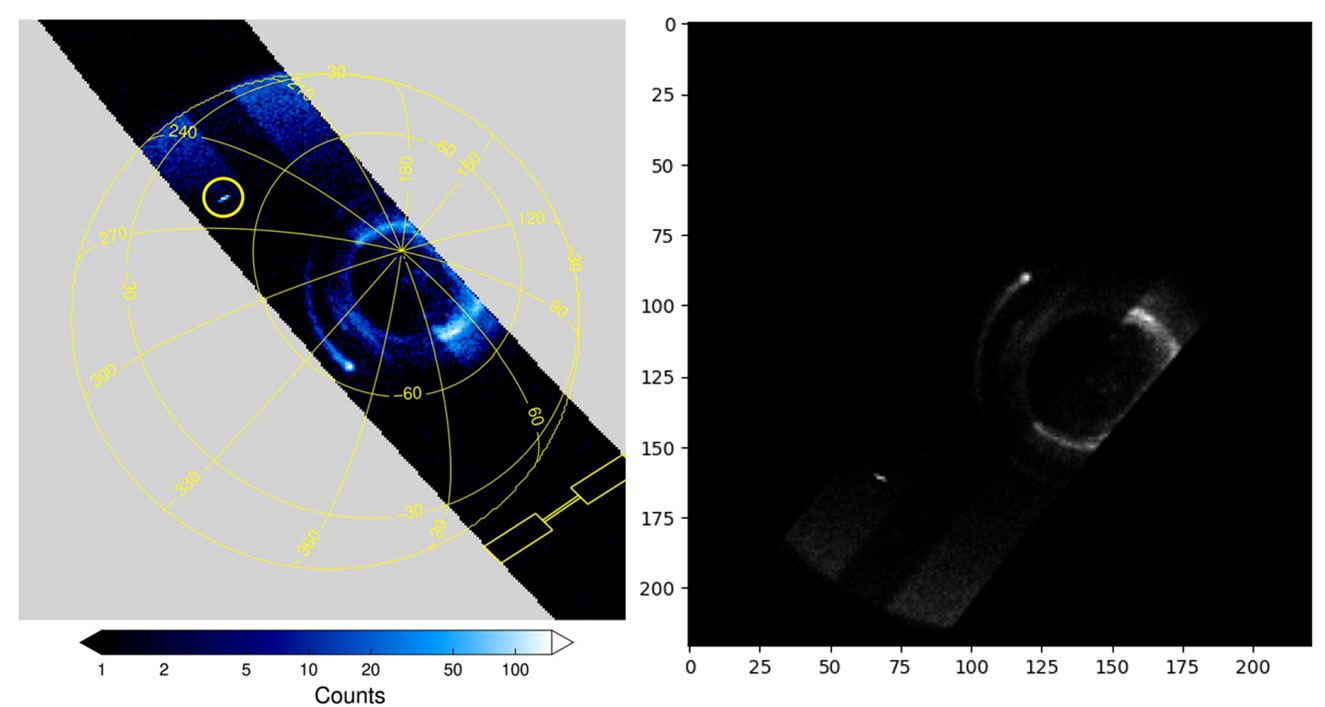
Figure 1: Proprietary Interactive Data Language Image (left) and Python Generated Image (right).