


Background
A long-standing challenge in our understanding of the climate of present-day Mars is the initiation, development and rapid growth of global dust storms and the specific drivers of the observed interannual quasi-periodicity. The primary objective of this research is to test the feasibility of a novel mechanism to introduce variability to dust lifting processes. This method requires the active, short-term formation and erosion of salt crusts on present-day Mars that would restrict dust lifting in regions with high winds. Prior to the laboratory work funded here, there had been no laboratory investigations that assessed the environmental conditions required to initiate crust formation on present-day Mars nor any significant efforts to quantify the resultant tensile strength, particle size distribution of cohered grains, and durability of formed crusts against wind-based erosion for Mars.
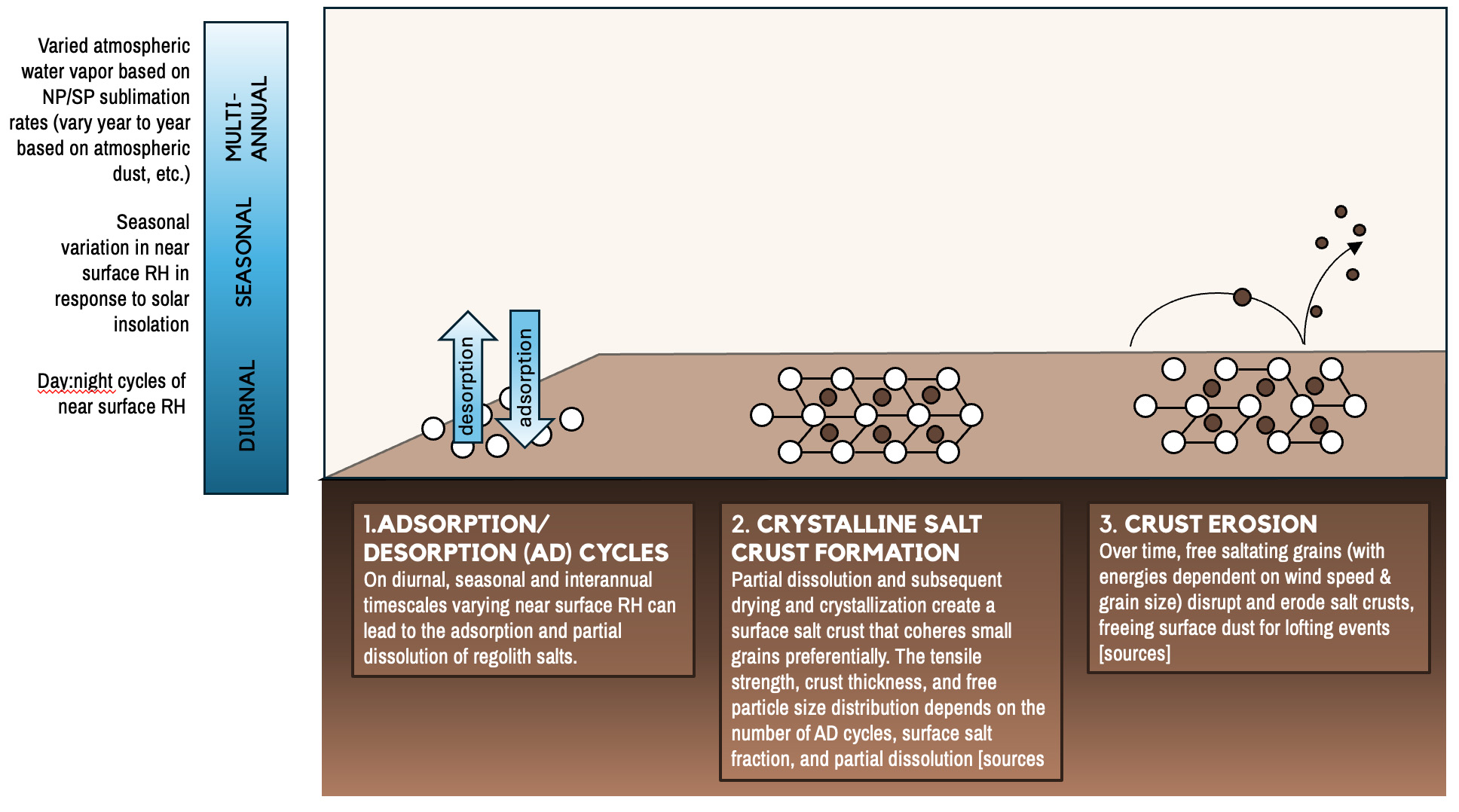
Figure 1: Proposed salt crust-dust lifting coupling mechanism. The vertical scale shows variations in timing, for example due to diurnal, seasonal and inter annual variations to the globe and local atmospheric water vapor and subsequent impacts on surface salt crust spatial distribution and temporally varying mechanical features.
Approach
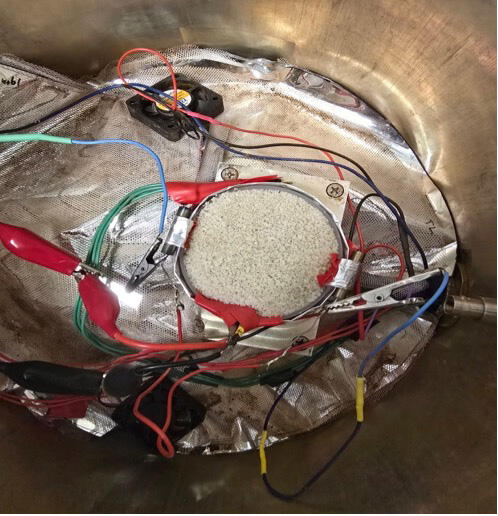
Figure 2: Mars chamber set-up at the start of the experiment.
Laboratory experiments using three Mars regolith analog materials, a medium grained sand, Sil-Co-Sil 125, a high purity silica powder with no grains exceeding 125 um, and JSC-1A Mars, a lunar regolith simulant with a broad size distribution and a significant fine grain component (<100 um), assessed the dependence of salt duricrust formation on the relative humidity and regolith salt mass percent. Samples were baked (dried out in the Mars chamber under Mars pressure at room temperature) fort a minimum of two hours to remove excess moisture. Salt was added to match a target weight percentage (5-10%) and baked an additional One to two hours at which point, the sample temperature was reduced and water vapor added to the chamber. The target relative humidity was held constant for two to four hours, after which the sample was dried overnight. Samples were examined visually, looking for changes to color and surface texture and tilted to evaluate if surface material is fully cemented or if loose particles remain. Penetrometer measurements assessed the tensile strength of crusts. For extremely friable crusts or samples with conglomeration, penetrometer tests were not possible or fell below the minimum testable quantity. Crust fragment thickness was measured using a digital caliper.
Accomplishments
Salt crusts were formed in a laboratory under present-day mars conditions (pressure, relative humidity and temperature, Figure 3). While crust formation was more likely at higher temperatures, consistent with predictions, at lower temperatures that more closely matched Mars surface conditions, friable crusts or conglomerates could form. This result would more easily permit saltating grains (with limited kinetic energy due to low Martian gravity) to break up crusts on shorter, sub-decadal timescales. The primary predicted mode for dust emission on Mars is due to saltation of larger sand grains that inject dust grains into the near surface atmosphere layer on impact. Saltating grains could therefore disrupt crusts over time without emitting dust (as occurs on Earth) introducing a time varying control on local dust emission. In cases where crusts do not form but conglomerations are observed, dust emission could be restricted as in crust cases, or, following the brittle aggregate theory (Kok et al., 2011b) could potentially enhance overall emission. Crust samples were visually assessed and, where possible, mechanical properties were measured, including the tensile strength using an in-house manufactured penetrometer needle. Conglomerated samples were passed through sieves to assess changes to the sample particle size distribution (PSD).
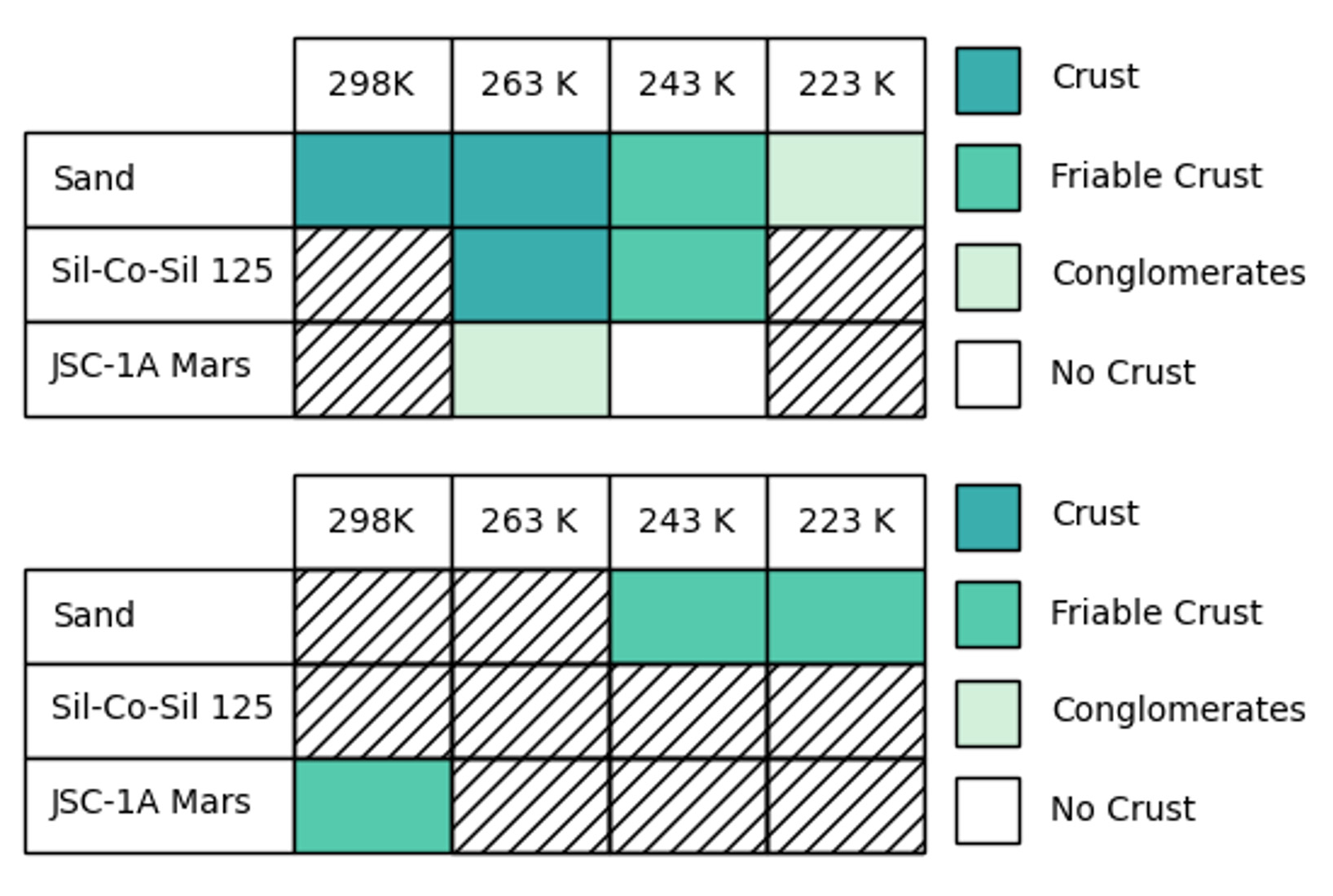
Figure 3: Experimental findings for samples with 10% (top) and 5% (bottom) perchlorate percent by weight.
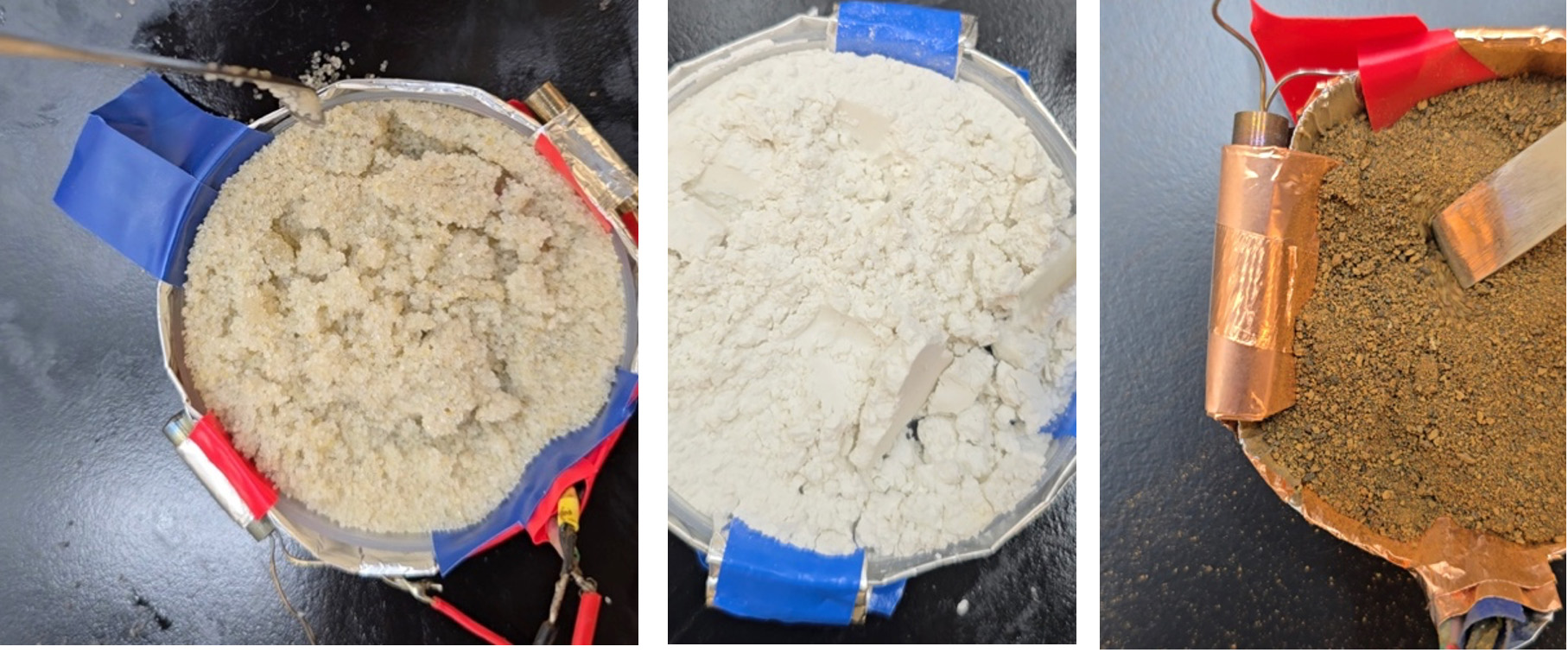
Figure 4: Formed crusts or conglomerates in experiments using (left) sand, (center) Sil-Co-Sil 125 and (right) JSC-1A Mars
Resulting Project Work
The research represents a pilot study for a forthcoming NASA ROSES Solar System Science (S3) or NASA ROSES early career research grant proposal (projected fall 2025-Spring 2026).