


Background
This research enables robotics in space by leveraging existing SwRI robotics capabilities and transforming them to meet the current and future needs of the space industry. The space industry is pushing for industrial-style robotics and perception capabilities to enable In-space Servicing, Assembly, and Maintenance (ISAM). While there have been a few early missions in this area, the industry needs robotics for ISAM that are less expensive, smaller, reconfigurable, and more easily reprogrammable.
Approach
This project advances robotics technology for ISAM by focusing on two areas of research:
Vision systems in space: Equip cameras and other sensing modalities with machine vision using low-power field programmable gate arrays (FPGAs). This enables passive advanced image processing in space for building a 3D model of a spacecraft and identifying object heading, speed, and rotation.
Dynamic path planning: Use hardware and software to simulate planning robot paths while considering the variables of space operations, such as microgravity. This enables leveraging the dynamics of the system to generate optimized robot trajectories for space systems.
Accomplishments
The motion planning team used simulation tools to develop a novel approach to physics informed motion planning, enabling motion planning in a free-floating, microgravity environment. This physics-informed motion planning was tested in SwRI’s Space Robotics Center to validate performance in hardware. Finally, the physics-informed motion planning was combined with vision-based closed loop control to enable a debris collection operation on a floating system.
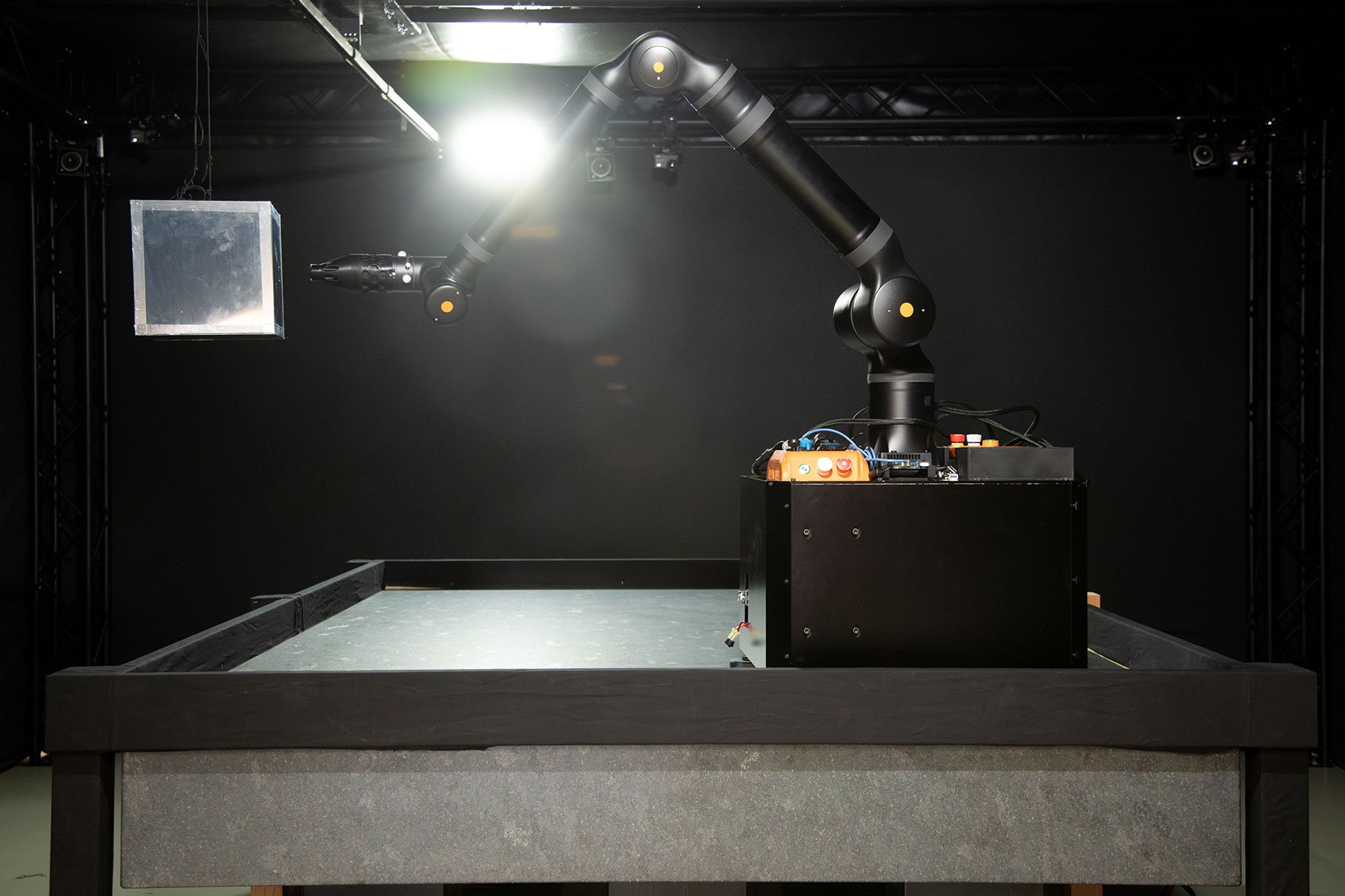
Figure 1: SwRI’s Space Robotics Center enables “floating” three-axis motion of an air bearing-mounted platform on a granite table (two translation axes in the plane of the table and one vertical rotation through the platform’s center of mass).
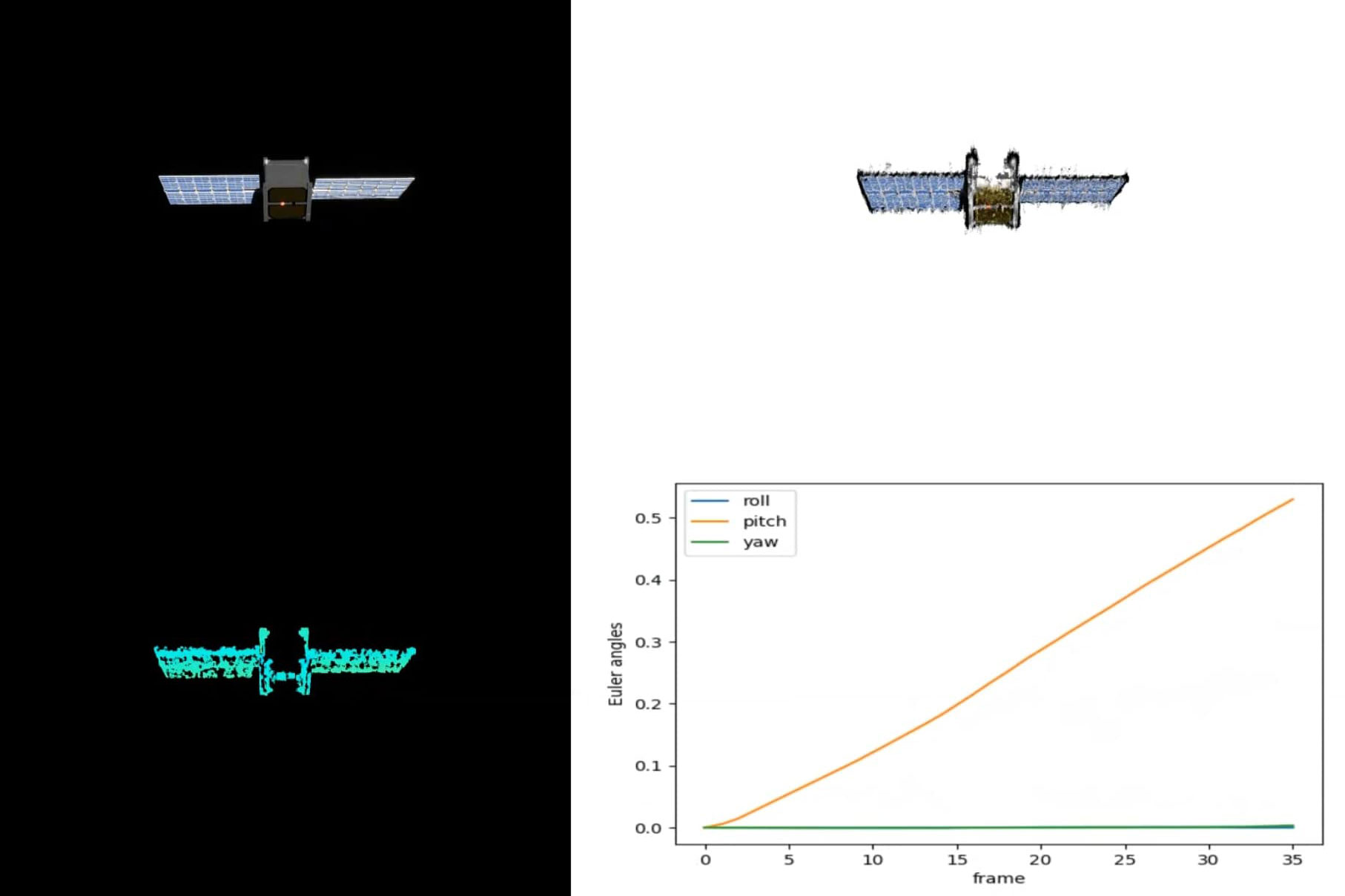
Figure 2: Feature tracking algorithms deployed on an FPGA can reconstruct the general geometry and movement of an object in space using simulated camera data.