


Background
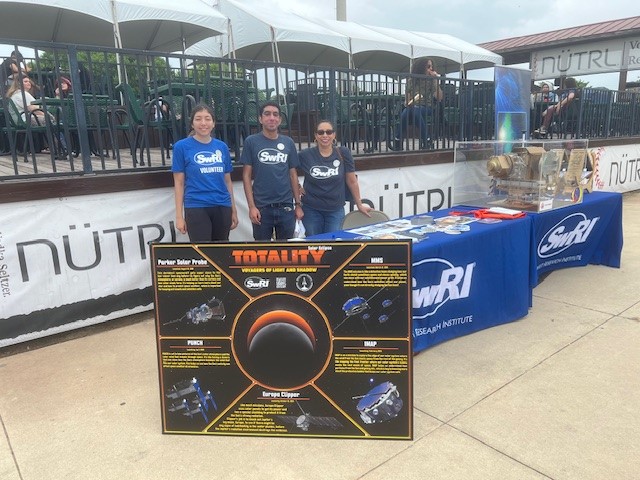
Figure 1. Umer Salman (Div. 15), Valerie Avila (Div. 15), and Yasmine Elshahawi (Purchasing) at the Total Solar Eclipse viewing party hosted at the Wolff Stadium for over 3000 members of the public, including busses of school children, to attend.
The city of San Antonio was uniquely situated at the intersection of the annular solar eclipse on October 14th, 2023, and the total solar eclipse on April 8, 2024, providing an exceedingly rare opportunity to directly connect these celestial events with STEM (science, technology, engineering, and mathematics) careers and education. This PDIR leveraged this fortuitous cosmic alignment while addressing elements of all four areas that constitute independent research and development through (1) increasing public knowledge in science by stimulating interest and curiosity in scientific phenomena as an introduction to basic research; (2) providing the public with the underlying science and mathematics needed to understand how eclipses occur and what we can learn from observing them and other astronomical objects and events; (3) including elements of engineering intended to exploit the potential for observing solar eclipses using telescopes and optical devices with the appropriate solar filters that support the potential scientific discoveries that may arise through dedicated studies of the Sun, its corona, the solar wind, and the solar wind’s interaction with the Earth’s magnetic field; and (4) allowing SwRI and the public to evaluate scientific instruments and equipment and learn how to use them the advance scientific knowledge, educating future scientists and engineers on the systematic application of scientific knowledge and engineering design.
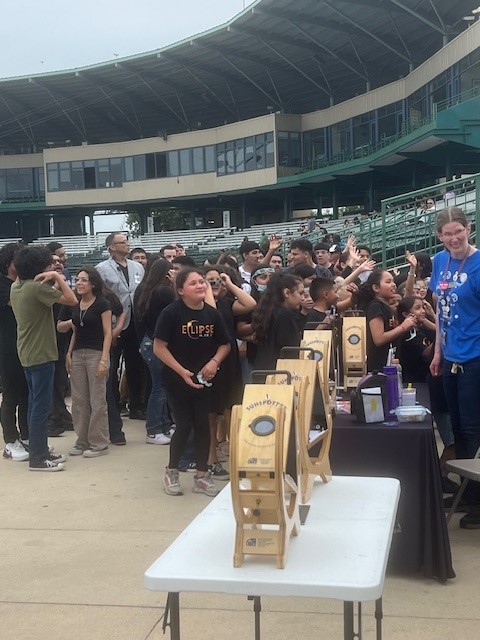
Figure 2. Sunspotter devices focus the image of the Sun onto a piece of paper, where members of the community could safely “see” the Sun, including its dark sunspots, and watch the change in shape of the Sun as it was eclipsed by the Moon.
Through established and new partnerships within the greater San Antonio community, as well as leveraging existing SwRI-led eclipse outreach efforts funded by NASA and the NSF, this program supported dozens of community-based and school-based events focused on the eclipse and the purchase of materials needed for the public to safely experience the solar eclipses.
Approach
To achieve the goals of this program, we capitalized on the expertise of the scientists and engineers who work at the institute, who served as subject matter experts (SME’s) at public community and school-based events. The program also leveraged materials and outreach efforts that have been funded by NASA through the PUNCH mission and the citizen science program CATE 2024 funded by NASA National Science Foundation.
Through a strong partnership with the San Antonio Independent School District (SAISD), we worked with administrators and teachers to extend the reach of knowledge and inspiration for basic research into the classrooms over the course of the school year. By partnering with Workforce Solutions Alamo, which is invested in developing technical skills for students across 13 counties in the San Antonio area, these same efforts are extended into more rural communities. Through partnerships with the San Antonio Library System (SAPL), the Scobee Education Center at San Antonio College, the Witte Museum, the DOSeum, and others, we supported dozens of events and shared science and engineering concepts related to the eclipse with thousands of community members.
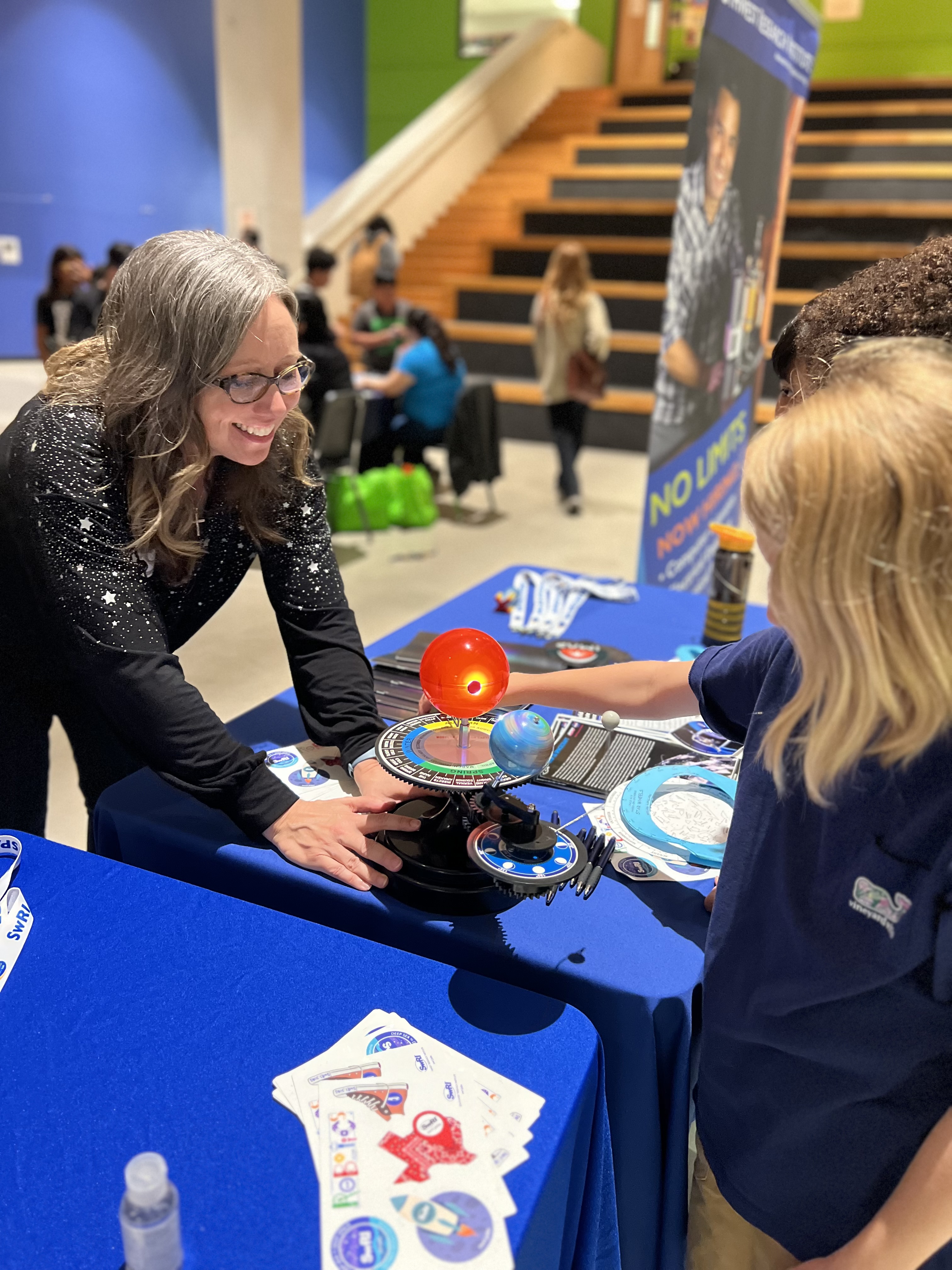
Figure 3. Amy Burgin explains how solar eclipses occur with students at a STEM event at SAISD’s Advanced Learning Academy, where students also participated in a conversation with astronauts on the International Space Station.Amy Burgain (Div. 15) demonstrating the mechanics of a solar eclipse during the “Downlink” event with astronauts on the International Space Station at the SAISD Advance Learning Academy.
Accomplishments
SwRI Subject Matter Experts supported over 45 solar eclipse related events across the greater San Antonio areas, reaching >20,000 attendees. This includes 7500+ people at events leading up to the two eclipses through library and school visits, plus additional 16000+ people at large eclipse events. We trained 250+ SAISD teachers to incorporate eclipse-related activities in all of their classrooms. A UTSA student (former SwRI intern) filmed four videos at SwRI that describe the science behind the eclipses and the type of solar and lunar research that local scientists conduct; these videos were shared with the 45,000 students in the SAISD. We discussed the eclipses on TV, podcasts, and in the news. Finally, we updated the science and engineering displays at the Scobee Education Center on the San Antonio College campus, including a new video that focuses on the eclipses in San Antonio and the engineering feats used to now student the Sun from space.
This effort also supported existing SwRI eclipse-related programs including the NSF-funded Citizen CATE project. Leading up to the total solar eclipse in April, SwRI scientists led eclipse volunteer training events for community members and gave talks at libraries and schools, including an event where students spoke with astronauts on the International Space Station. STEM experts provided information for local newspaper articles. On the day of the eclipse, despite the clouds, SwRI scientists supported large-scale eclipse viewing events at universities, wineries, Wollf Stadium, SeaWorld, and more. There was also a viewing event at SwRI’s campus.
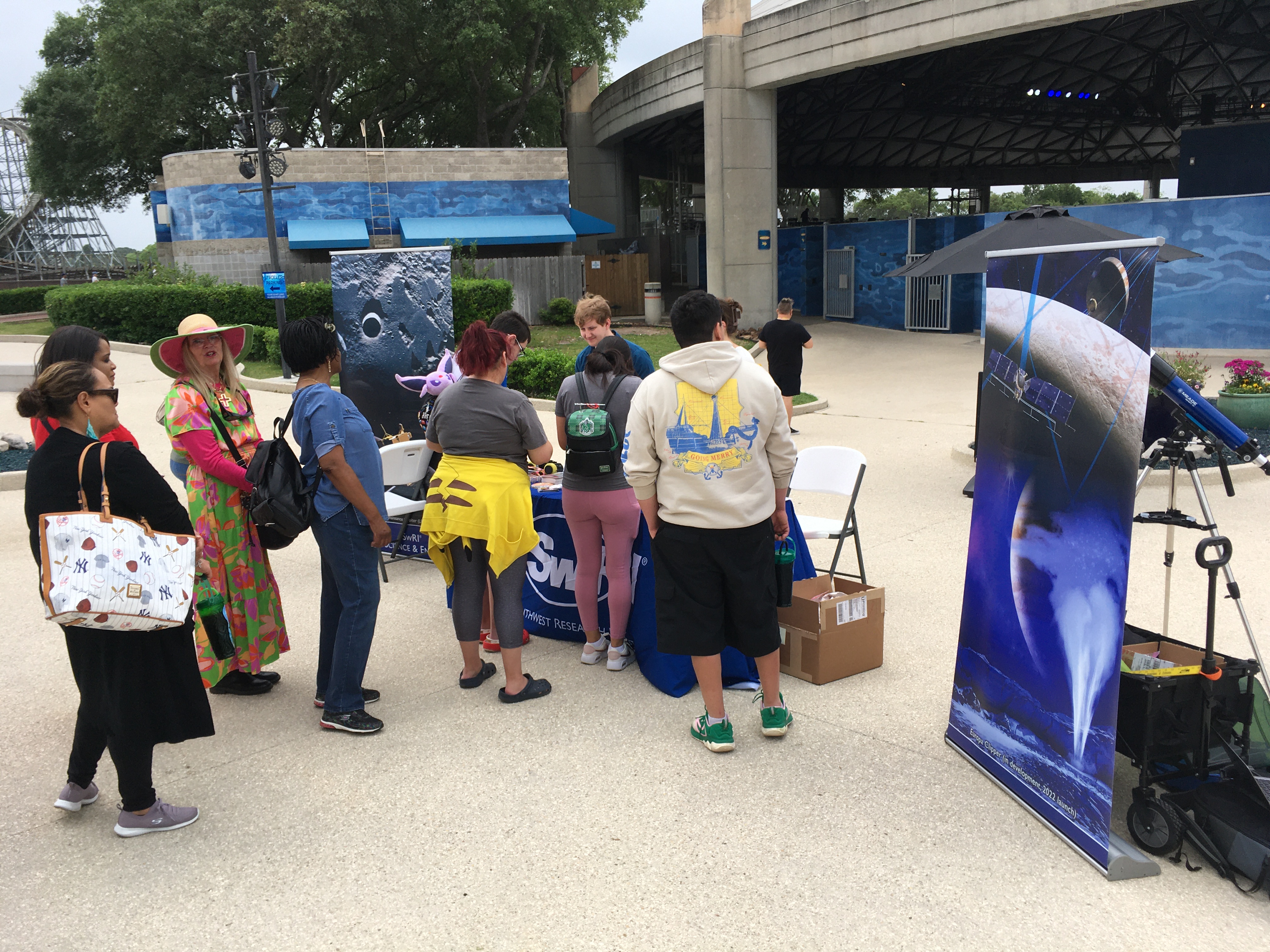
Figure 4. SwRI booth shares STEM materials, solar eclipse glasses, and more at SeaWorld, where hundreds of people gathered to experience the solar eclipse.
Through this effort, 30,000 solar viewing glasses were distributed to SwRI employees and the public. 25,000 pinhole projectors, including 5,000 in Spanish, which were designed by and featured the logo of the SwRI-led PUNCH mission, were also distributed. SwRI subject matter experts attended over 45 events leading up to and during the eclipse, with direct and indirect impacts to tens of thousands of people in the greater San Antonio area.