


Background
Many carbon-free energy sources, such as solar and wind power, are often too intermittent to provide reliable, grid-scale power. Therefore, energy storage technologies will be critical in the transition to a carbon-free economy. Compared to other storage technologies, thermochemical energy (i.e., renewable fuels requiring combustion for conversion) is the most practical pathway to providing grid-scale energy storage/dispatch at seasonal durations (Figure 1). Thus, industries and governments are actively pursuing combustion systems that utilize hydrogen (H2), ammonia (NH3), renewable natural gas (RNG), and other alternative fuels.
SwRI’s HEAT Facility and the Machinery Department are well suited to play key roles in the development of these combustion systems. However, use of the HEAT facility is limited by some key components being client owned and by cost barriers related to combustor rig development. The work pursued in this Presidential Discretion IR&D (PDIR) replaces systems currently owned by the client with lower cost alternatives. Furthermore, test fuel capabilities will be expanded to include NH3.
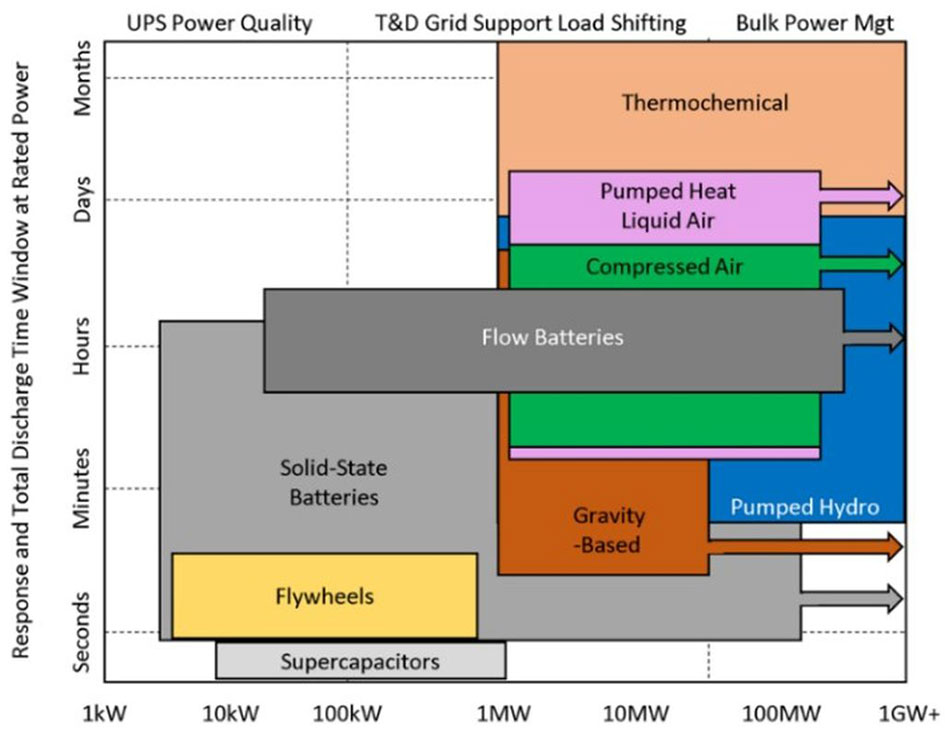
Figure 1: Thermochemical is the most practical pathway for grid-scale storage at seasonal durations.
Approach
Design and test a lower-cost combustor rig: Most combustion tests require the design of a unique combustor, and this design effort is often prohibitively expensive. Alternative manufacturing processes are being explored as a means to reduce the overall design and manufacturing costs associated with combustion tests.
Add capability to test with NH3: The existing fuel mixing cart (Figure 3) is used to mix up to four gaseous fuel components (including natural gas and H2) to generate custom fuel blends that mimic various fuel sources. This system is being expanded to include NH3.
Increase access to multiple commercial and government clients: Several key components utilized in the HEAT facility are client owned. Work in this PDIR will either remove the ownership barrier or develop replacement equipment to allow HEAT facility access to a wider customer base.
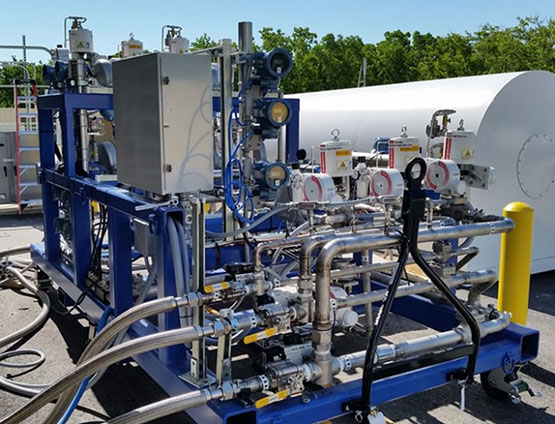
Figure 2: The fuel cart will allow the use of NH3.
![A photo of the “as printed” liner [left] that was post-machined to produce the final assembly [right].](https://www.swri.org/sites/default/files/186243-fig3-additively-manufactured-combustor.jpg)
Figure 3: An additively manufactured combustor liner was created to demonstrate low-cost combustion performance test capabilities. The “as printed” liner [left] was post-machined to produce the final assembly [right].
Accomplishments
The project team generated two alternative designs for the combustors. The additively manufactured design will yield roughly 33% to 50% lower manufacturing costs compared to combustors manufactured with traditional techniques. This combustor has been built, and final machining is complete (Figure 3).
Initial estimates for the cast refractory combustor indicate roughly 80% to 90% lower costs compared to traditional manufacturing techniques. However, the project team has identified numerous manufacturing and technical challenges that may prohibit the use of refractory materials. For example, casting methods cannot achieve the tight dimensional tolerances and features required. Also, the considerable differences in thermal expansion between refractory and metallic components makes interfacing these components very challenging.
The project team has also successfully negotiated the use of the existing HEAT facility equipment such that this equipment will be available for use by a larger client base. This has led to an active, major project with many additional proposals in progress.
Finally, the project team has retrofitted the fuel blending cart with components that will permit the use of anhydrous NH3 in future work. Further, the project team has also commissioned a study to understand the safety impacts of storing/using anhydrous NH3 fuel. These activities have resulted in several active proposals.
In addition to activities sponsored under this PDIR, a commercial project recently added a new air compressor for use at the HEAT facility. This new air compressor has dramatically improved the conditions that can be achieved. Specifically, the compressor can deliver 14 lbm/sec air flow at 300 psig.
Final testing for the PDIR effort is concluded in the first quarter of calendar year 2026.