


Background
The Hydrogen Industry Testbed Scoping Study Supplemental Studies (HITS4) Research Initiative PDIR was launched to advance the conceptual designs from the original HITSS program into detailed designs ready for phased implementation. The program placed special emphasis on siting, safety, and final design requirements, while also conducting a broader study to identify safe campus locations for testing with hazardous fluids such as hydrogen and other flammable gases.
Approach
To accomplish this objective, five project teams were formed, each with a dedicated manager and mentorship support. The teams worked independently on their assigned technical tasks while meeting regularly to share progress, exchange lessons learned, and strengthen program cohesion. This collaborative model mirrored the approach of the original HITSS program but expanded its scope and depth. The five projects addressed a range of capabilities critical to hydrogen testing and safety. These included the design of a high-pressure hydrogen gas mobile test rig, modifications to enable liquid hydrogen component testing, a siting review and design plan for a biomass gasification pilot plant, development of supporting equipment for flameless combustion research, and a comprehensive siting study of potential hazardous fluid releases across the SwRI campus. Together, these studies provided a stronger technical foundation for facility planning while also refining cost estimates, safety reviews, and customer engagement strategies.
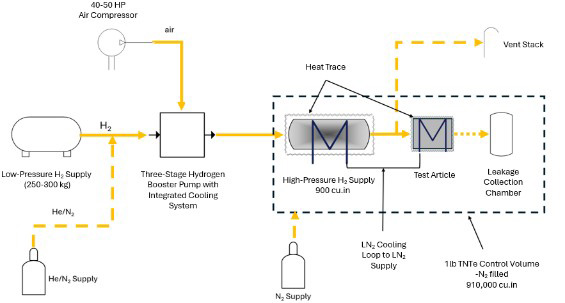
Figure 1: High-Pressure H2 Gas Mobile Test Rig (HPH2): Conceptual design of a mobile high-pressure hydrogen test unit, enabling safe incremental development of SwRI’s hydrogen testing capabilities.
Accomplishments
The HITS4 teams successfully advanced all projects to detailed design with documented siting reviews, safety assessments, and cost estimates. Several projects identified customer-funded pathways for near-term deployment, including the high-pressure mobile test rig and liquid hydrogen unit. The biomass gasification pilot plant completed site selection and safety reviews, positioning it for detailed design in the next phase. The flameless combustion team developed an instrumentation and equipment roadmap that will be validated through IR&D efforts. At the same time, the siting study delivered a framework that will guide future hazardous fluid testing at SwRI. Collectively, these accomplishments provide SwRI with clear implementation strategies that balance near-term customer opportunities with long-term facility growth, reinforcing the Institute’s leadership role in hydrogen research and testing.
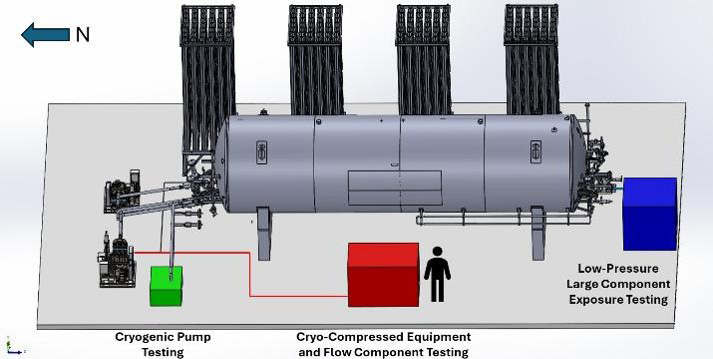
Figure 2: Liquid H2 Component Test Unit: Proposed modifications to existing LH2 infrastructure to support cryogenic pump, cryo-compressed, and flow component testing at SwRI’s hydrogen tank site.