


Background
The recent shift in the global perspective on energy production strongly favors the development and implementation of renewable, reliable, and low-cost sources of power. Shifting the energy production grid from the current non-renewable sources to renewable or decarbonized non-renewable technologies presents a variety of technical challenges. An evaluation and demonstration of these technologies at a pilot-scale facility was completed, showing how a pilot could serve as proof-of-concept and would provide valuable lessons for future grid-scale applications. This effort evaluated net-zero cost-effective electricity production infrastructure at SwRI and to demonstrate new pilot-scale clean energy technologies for clients. A representation of the interacting decarbonized systems on SwRI’s site is shown in the figure below.
Approach
The project investigated the characteristics of SwRI’s San Antonio Campus for opportunities as a premiere location for clean energy research and pilot-scale demonstrations. The technical approach consisted of early feasibility study activities to evaluate SwRI’s electrical demand, site power requirements, and infrastructure and contractual agreements. Subsequently, the project team developed an analytical tool that evaluated onsite power generation technologies suitable for SwRI’s electricity usage, land availability, and natural gas/electric infrastructure at scales up to full-scale net-zero power generation. Estimates on the storage necessary to utilize excess renewable power were made and the trends in cost were examined, generating a roadmap for net-zero emission for power generation on SwRI campus.
The PyZ modeling tool has been a major asset developed under Project Z. During Phase 2, the team completed an initial modeling effort. For this, the team collected sources of cost and performance data, extracted renewable generation performance for San Antonio and load data for SwRI, looked at the available technologies for analysis, and performed some initial estimates of performance and cost. In Phase 3, the team worked on expanding the tool’s capability for rapid assessment of interconnected systems. This integrated the tool with detailed solar models, utility billing models, energy storage models with state-of-storage, and customizable decarbonized generator models. The flexibility of these additions allowed for broad analysis of size sweeps and created charts of the lowest cost systems relative to the amount of decarbonization. In Phase 4 the tool was expanded to cover modeling of wind, geothermal, industrial heat as a load, and a more detailed energy storage system model. For Phase 4, the cost assumptions were checked against changing tax incentives and an estimate of the local cost of installation by a PV installer.
Accomplishments
The team built a high-fidelity model to explore system dynamics, storage dynamics, and multiple dispatch strategies. The exploration of these elements will provide a robust picture of SwRI’s future integration of renewable technologies in a step-by-step approach. Photovoltaic (PV) solar energy systems are modeled, along with lithium-ion battery energy storage (BES). Gas powered generators, such as a gas turbine (GT) or piston gas engine, were also modeled with carbon-neutral fuels or carbon capture and storage (CCS) to prevent carbon dioxide emissions. Due to the high cost of conventional BES, the cost and performance of other energy storage systems were considered. A thermal energy storage system, including pumped thermal energy storage (PTES), creates stores of heat energy that are utilized in a heat engine for generating electricity.
The team successfully improved the PyZ tool, engaged a local installer for updated pricing, and assessed the impacts on the cost of electricity as the system progressed to net-zero electricity generation at SwRI. For a system composed only of PV, 33% decarbonization is achievable without the levelized cost of electricity (LCOE) rising above current prices, assuming the federal investment tax credit (ITC) is applied to the installation. However, trying to push PV with energy storage to full decarbonization causes a dramatic increase in costs that may be infeasible. Decarbonized fossil fuels were considered in earlier phases, and it was found that GT and CCS can cover the gap to 100% decarbonization.
New PV costs provided by a study from a local installer resulted in higher electricity costs compared to the previous results, an increase of 44%. The new CAPEX for PV causes the LCOE breakeven point to shift from 39-42% to 11-33%, with the ITC allowing for the most savings and level of decarbonization. Without capturing the ITC, costs remain similar to current electric costs up to a decarbonization of about 20%.
Work was also completed on implementing industrial thermal energy modules, geothermal power generation, and an advanced model of storage systems.
The team developed a cost estimate with a local solar installer to further understand costs. This study provided an estimate for a 10 MW PV system as a field installation option and as a distributed installation option, using carport and rooftop installations across the main campus. The assessment provided a representative cost, layout, and performance. With the developed tools and onsite PV generation, SwRI is positioned to bring in new business in the area of distributed, reliable power for mixed systems.
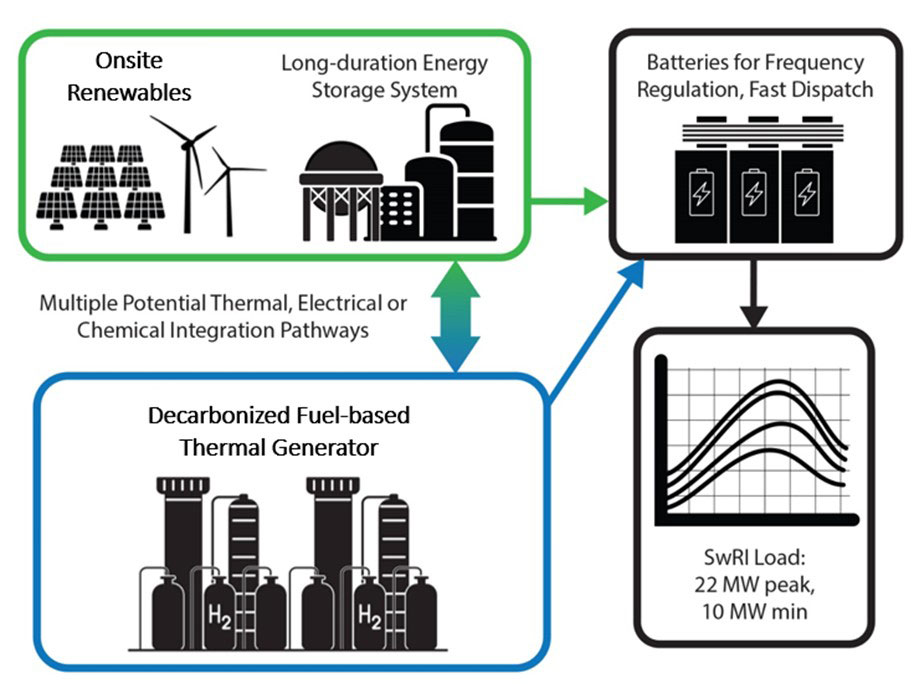
Figure 1: Interconnected systems for decarbonized power.
Publications
Bulnes, F.K., McCandless, C., Pryor, O., Smith, N.R., Hofer, D., Schmitt, J., “Techno-Economic Analysis for Adoption of Largescale Renewable Microgrid Systems in Isolated Communities”, Proceedings of ASME Energy Sustainability Conference 2025, Westminster, Colorado, June 8-10, 2025.
Pryor, O., Schmitt, J., Bulnes, F.K., Hofer, D., Smith, N.R., Allison, T., “Development of a Power Generation and Economic Model for Micro-grid Applications”, Proceedings of ASME Turbo Expo 2025, Memphis, Tennessee, June 16-20, 2025.
Presentations
Allison, T., “Defining the Roles of Long-Duration Energy Storage in Grid Decarbonization”, GPPS Forum25, Zurich, Switzerland, January 15, 2025.