


Background
Zoom lenses are optically and mechanically complex and typically operate using moving parts. SwRI has been employing liquid lenses for a variety of beam steering applications, but in this project, we investigate their feasibility to simplify zoom lens design. Liquid lenses operate by using the electrowetting effect to change the curvature between two immiscible fluids with differing refractive indices. Thus, changing the voltage applied to a liquid lens changes its focal length. A combination of multiple liquid lenses and fixed lenses should provide the necessary degrees of freedom to design a zoom lens. A liquid zoom lens has the advantage of small size, no moving parts, and very rapid zoom (tens of milliseconds).
Approach
A range of lens designs are being investigated using both 5.8 mm and 2.9 mm clear aperture liquid lenses. Most designs evaluated use 2 liquid lenses and 3 or 4 fixed lenses. An example design is shown in Figure 1. To accelerate the design process, we have primarily been using commercially available miniature fixed lenses for the design. A test fixture was prepared with an image sensor and mounts to support the miniature lenses. These designs are being tested in the lab to evaluate zoom range, field of view, image resolution, and distortion.
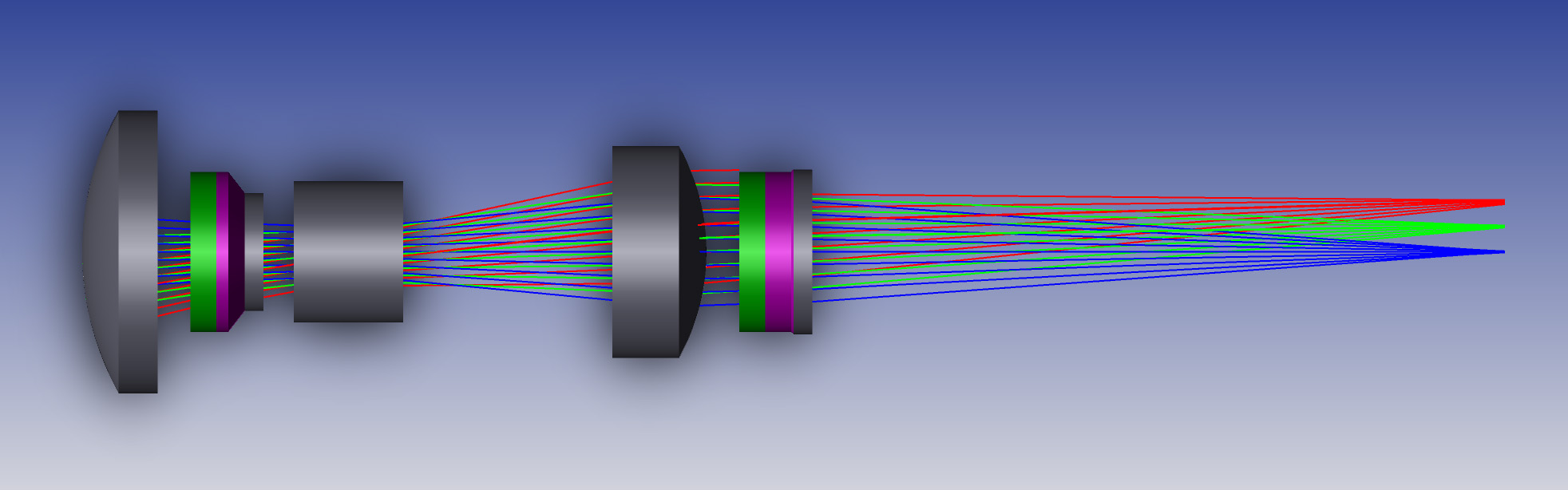
Figure 1. Example zoom liquid lens design using two 2.9 mm liquid lenses and four fixed lenses.
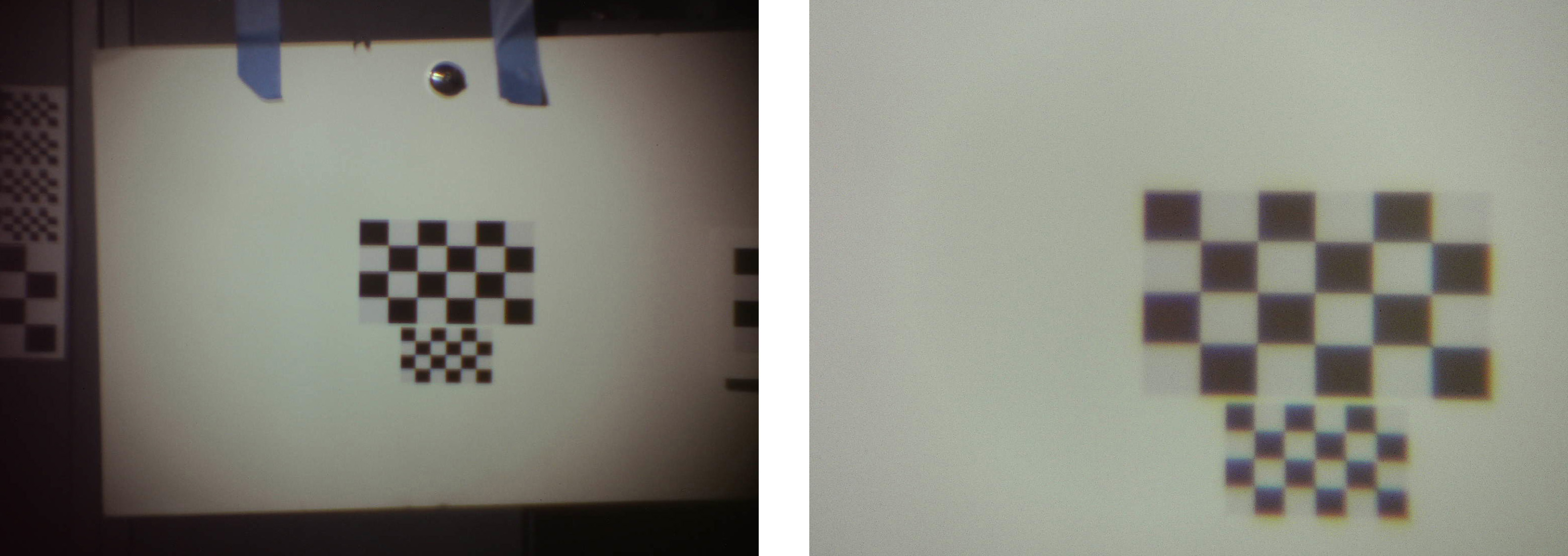
Figure 2. Photos taken of a resolution target at 20 feet of the design in Figure 1 at wide zoom and narrow zoom.
Accomplishments
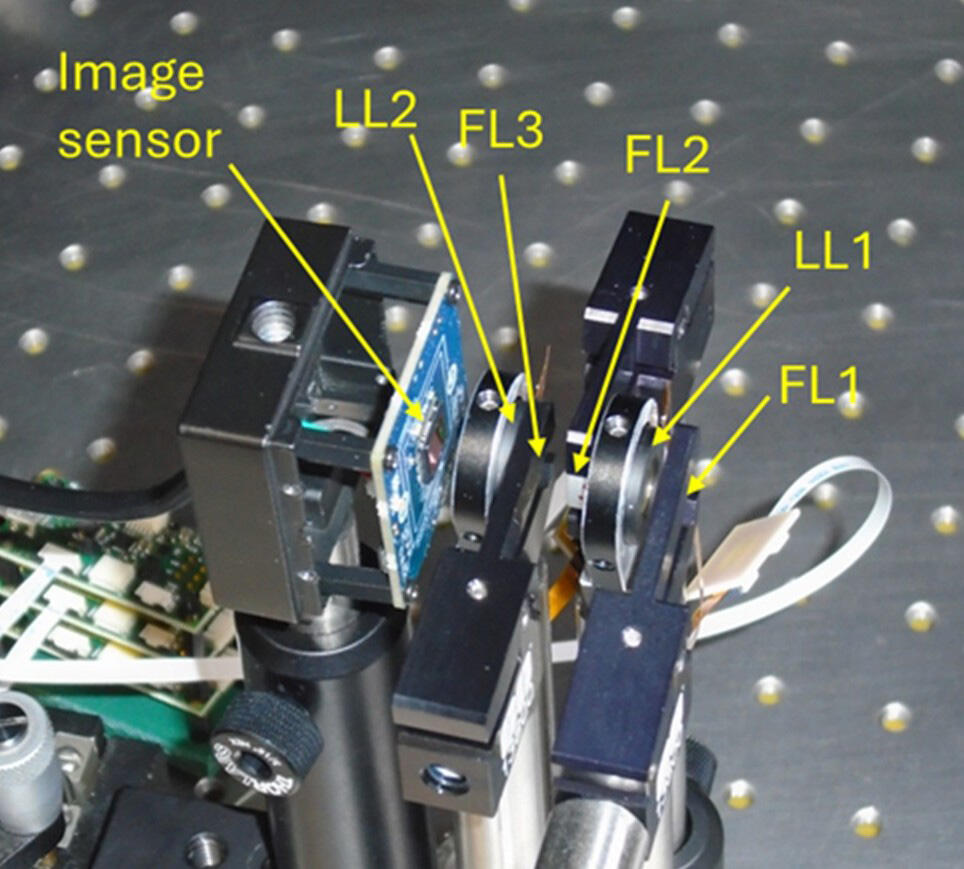
Figure 3. Photo of the test fixture with the different components indicated: LL = liquid lens; FL = fixed lens.
We have found that the 2.9 mm liquid lens-based designs yield superior zoom range. Some of the designs tested have exceeded 2.5x zoom, greatly exceeding our initial goal of 1.5x. An increased zoom is accomplished by increasing the voltage of the front liquid lens while decreasing the voltage of the rear liquid lens. The lens designs are very small, most are less than 20 mm in path length and the diameter only limited by the liquid lens package itself at 8.8 mm. Since the fixed lens options in this size are limited, the designs typically have some level of distortion toward the edges of the field of view but are able to maintain focus toward the center across the entire zoom range. Currently, we are refining a design for a lens that will use custom fixed elements which will greatly reduce the edge aberrations. We are also fabricating an integrated mount that will be used to demonstrate the design to customers.