


Background
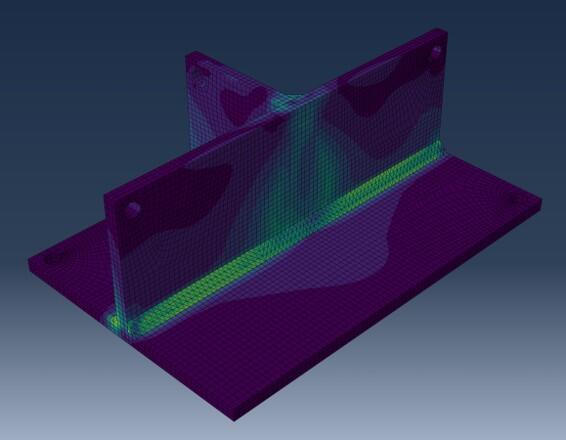
Figure 1: Physics-based modeling result showing residual stress profiles across the test part.
The fabricated structures community has sought to leverage automation to enhance productivity and structural performance by providing consistent heat input and process control. Both the fabricated structures sector and the Department of Defense (DoD) have significantly invested in physics-based simulation modeling, especially for high-strength steels, to understand the effects of thermal-mechanical processes like welding and heat treatment on final material performance; however, these processes tend to be time consuming and divorced from the real-world condition.
Recent advancements in machine learning (ML) and artificial intelligence (AI) enable identification of part variations and update welding plans in near real-time, optimizing sequences for minimizing distortion and residual stress. These techniques allow for process optimization based on real-world conditions, leveraging insights from physics-based modeling at the speed required for production environments.
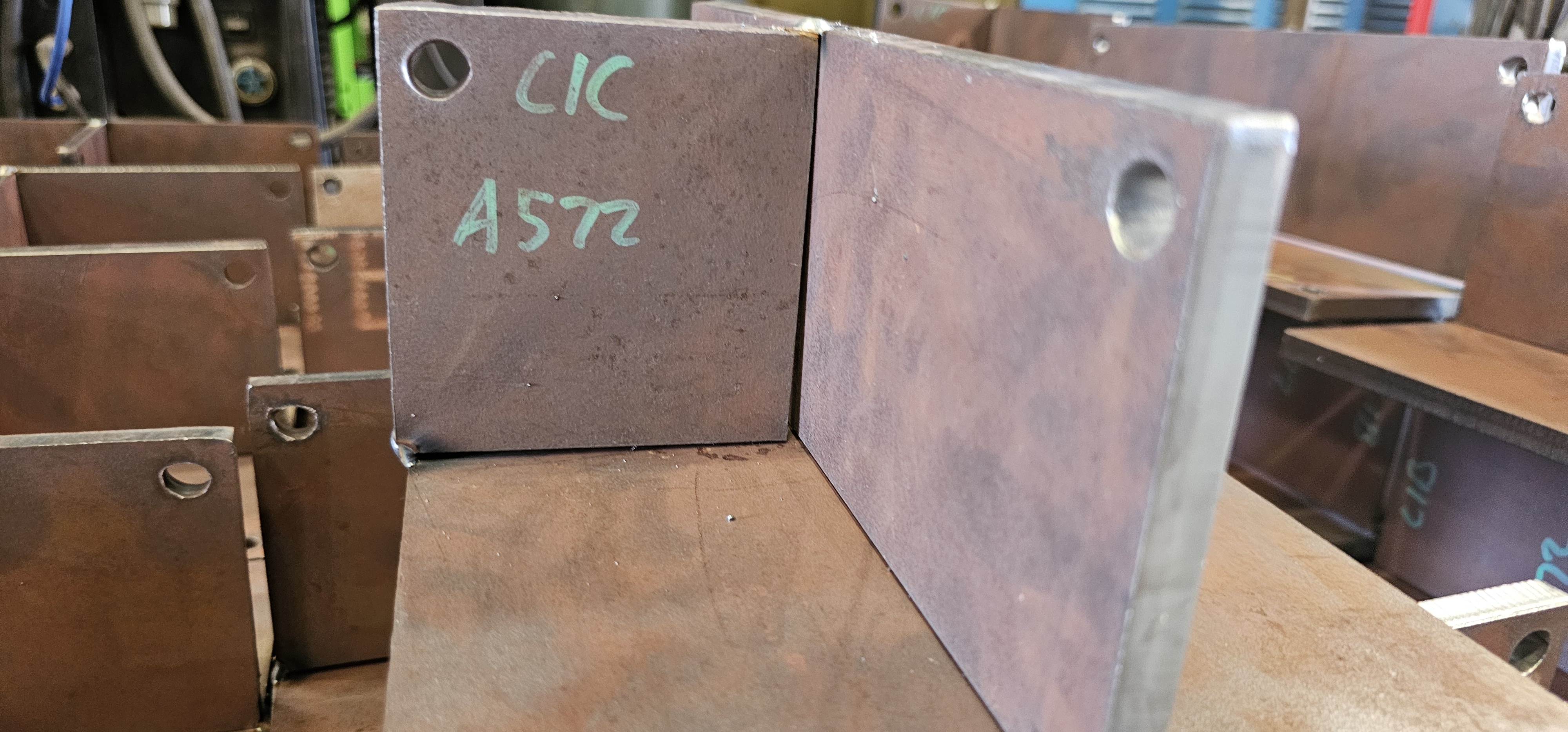
Figure 2: Physical test specimen with randomized input variation in the form of gaps and skew in mating plates.
Approach
This research evaluated the integration of physics-based simulation modeling with a spatiotemporal graph-based ML framework for a U.S. Navy use case. The goal of the research was to recommend welding sequences based on the actual condition of the weldment, minimizing geometrical distortion relative to critical feature tolerances and forecasting residual stress.
Sample test structures were welded and measured to generate deflection data alongside a physics-based simulation Design of Experiment (DOE) to provide residual stress data for model training. The dataset included variations in as-presented weldments, differing from CAD designs. In the final experiment, the system generated sequences for a robotic system to execute on representative naval sub-structures with random assembly variations. The resultant samples were scanned and dimensionally compared to a naïve sequence to document improvements in distortion, while residual stress validation was conducted through physical measurements at an external lab.
Accomplishments
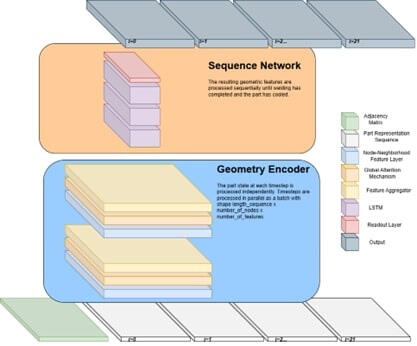
Figure 3: Updated model architecture blending a graph and temporal network.
The program validated physics-based simulations for a range of welding sequences using 56 high-quality training examples, providing detailed data on post-weld deviation and residual stress. Experimental welding samples were also collected and processed through a preprocessing pipeline to train the ML model. The model was trained on both simulated and experimental data, tracking mean absolute error (MAE) and mean average percentage error (MAPE). Training and evaluation on the simulated dataset resulted in a 4.2% error in residual stress predictions and a 5.2% error, a significant improvement over legacy approaches, in displacement predictions.
The model showed strong generalization, maintaining similar error rates on weld sequences generated that were not included in any training and regions with high stress. Training on the combined dataset slightly improved residual stress prediction and accurately predicted deviations. Training techniques were developed to ensure proper optimization and balance between the multiple data sources ensuring consistent performance on the real-world samples.