


Background
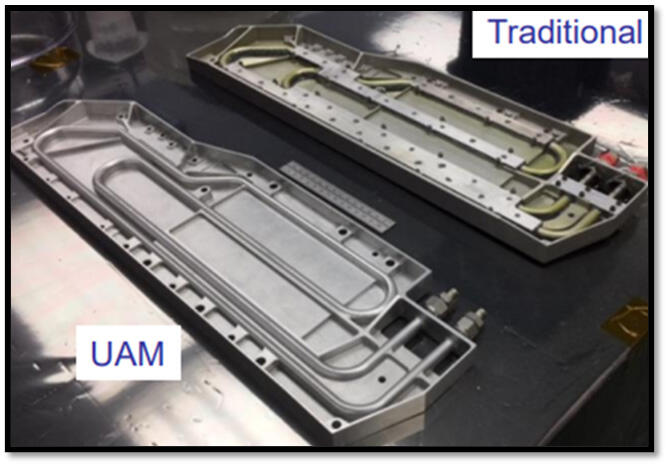
Figure 1: A case study of the process which found application to the mars rover eliminates the complex multi-part assembly of fluid pipes, mechanical members and electrical routing to create a fully integrated part.
Ultrasonic Additive Manufacturing (UAM) is an advanced manufacturing method that creates intricate 3D structures from metal sheets by combining ultrasonic metal welding with layered manufacturing principles. Unlike traditional material bonding methods that rely on heat, UAM uses high-frequency ultrasonic vibrations to bond metal layers at temperatures well below their melting points. UAM works by breaking apart oxide layers on metal surfaces through rapid ultrasonic vibrations. Combined with controlled pressure and deformation, this process ensures strong bonding between the metal layers without altering their structure. This enables joining dissimilar metals and embedding components without changing their properties. A case study of the process which found application to the mars rover eliminates the complex multi-part assembly of fluid pipes, mechanical members and electrical routing to create a fully integrated part. (Figure 1) To produce the components for this research, the team has engaged Fabrisonic LLC, a leading developer and commercializer of UAM technology.
Approach
This research initiative sets out to systematically assess the potential of UAM’s application across three domains. These domains are integrating optical components such as optical fibers, windows and lenses, joining dissimilar metals for improved material characteristics, and integrating electronics such as sensors and power systems within mechanical housings and members. To assess this technology’s applicability to these domains, we have designed three exemplar devices which explore these. The three devices include: a hermetically sealed glass window integrated into a metal part, an inductive coil integrated into a metal substrate, and a small electronic device fully enclosed in a protective metal case. During fabrication of these devices, SwRI will witness the function and operation of the UAM CNC and AM system, and report the design considerations, fabrication process and operation of the system.
Accomplishments
To date, the SwRI team has designed the three hosts, and established requirements for operating principals of these devices. We have worked with Fabrisonic to bring these designs to a manufacturable state, and we have come to an agreement to fabricate these devices. Fabrication of these devices will take place is November 2024.