

The aviation industry is researching sustainable aviation fuels (SAF) to lower global carbon emissions. SAF feedstocks can be sourced from renewable biomass, carbon dioxide and other waste materials. Typically refined in small batches using a variety of processes, SAF is blended with traditional jet fuel for use with existing aircraft engines.
Image
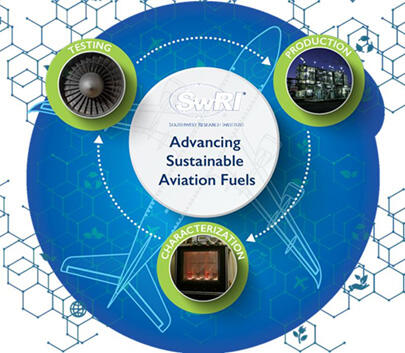
Testing novel SAF is critical to ensure fuel quality and safety as the industry looks to commercialize sustainable aviation fuel research. Southwest Research Institute (SwRI) is proud to support SAF research and technology development, leveraging the Institute’s decades of expertise in aircraft engineering, fuels production process development, emissions science and fuels testing.
SAF Research & Technology Services
SwRI offers multidisciplinary expertise in SAF production and characterization of fuel properties as well as engine performance, emissions, quality and safety. We can help you with a fully integrated SAF R&D program or provide independent testing and evaluation services. Services include, among other capabilities:
|
Chemical Engineering |
Mechanical Engineering |
Internal Combustion |
Fuels & Lubricants |
|
Alternative Fuels |
Machinery Engineering |
Alternative Fuels |
|
|
|
|
|
|
Contact Imad Khalek |
Contact Scott Hutzler |
SAF Production Process Development
Image
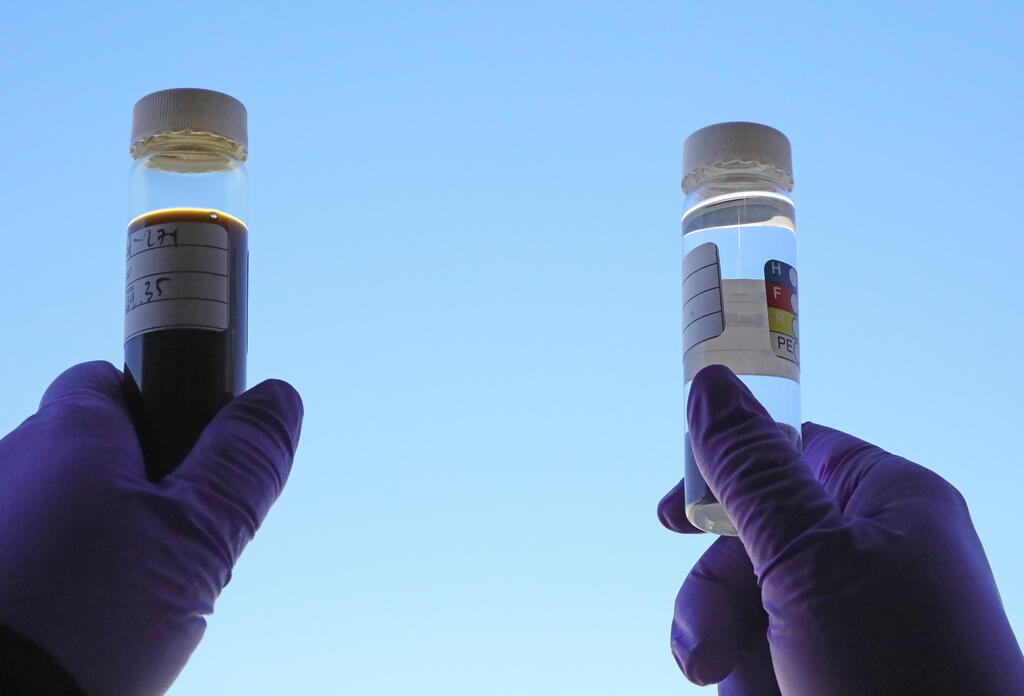
Small-batch distillation of alternative fuels for R&D.
Experienced in all stages of chemical process development, SwRI’s Chemical Engineering Department is an industry leader in developing chemical process technologies to research and produce SAF in our laboratories. SwRI can support clients with the development of lab- and pilot-scale systems to validate new refined products in small batches, and we also help clients scale their operations. SwRI can support clients with the production of drum quantities of various fuels to meet fuel specifications for EPA certification tests.
SAF Testing & Evaluation
Image
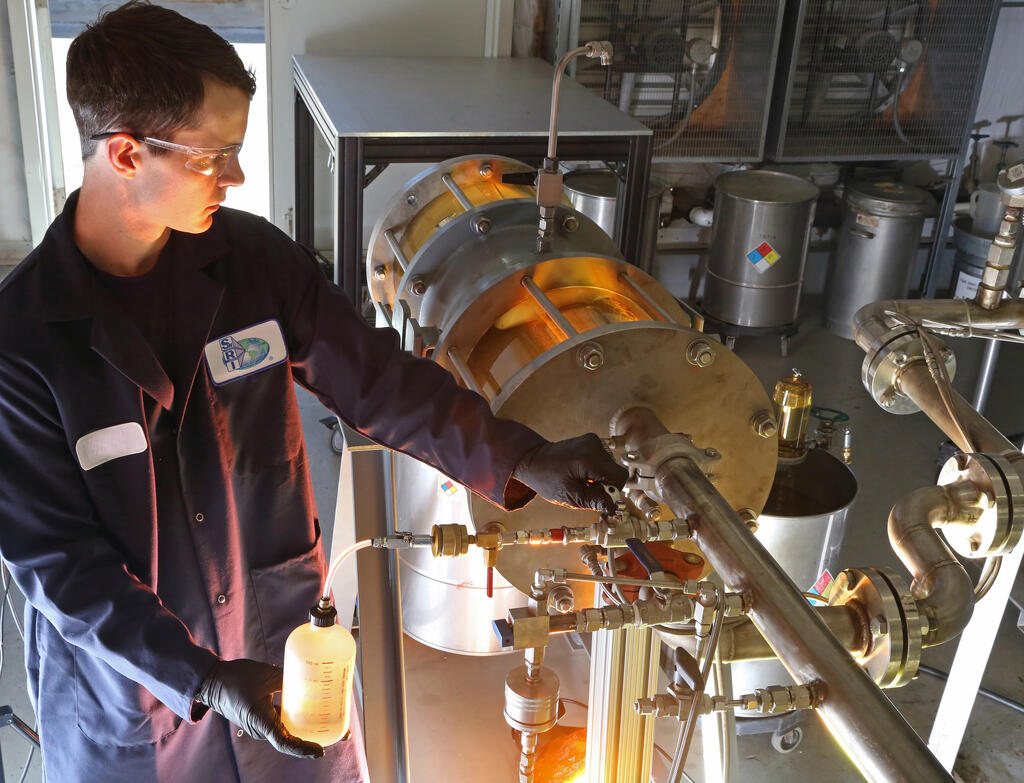
Aviation fuel filtration testing at SwRI.
SwRI has tested and evaluated alternative fuels for over 25 years with a focus on SAF “blend stock” components defined in ASTM D7566. Our Fuels & Lubricants Technology team serves in various capacities such as vice chair of the ASTM Aviation Fuel Subcommittee, which leads the effort to maintain and improve ASTM D1655 and coordinating the meetings of the FAA/OEM Review Panel. The primary job of the FAA funded team is evaluating SAFs and establishing OEM consensus on their suitability for use.
Engine Performance & Emissions Testing
Image
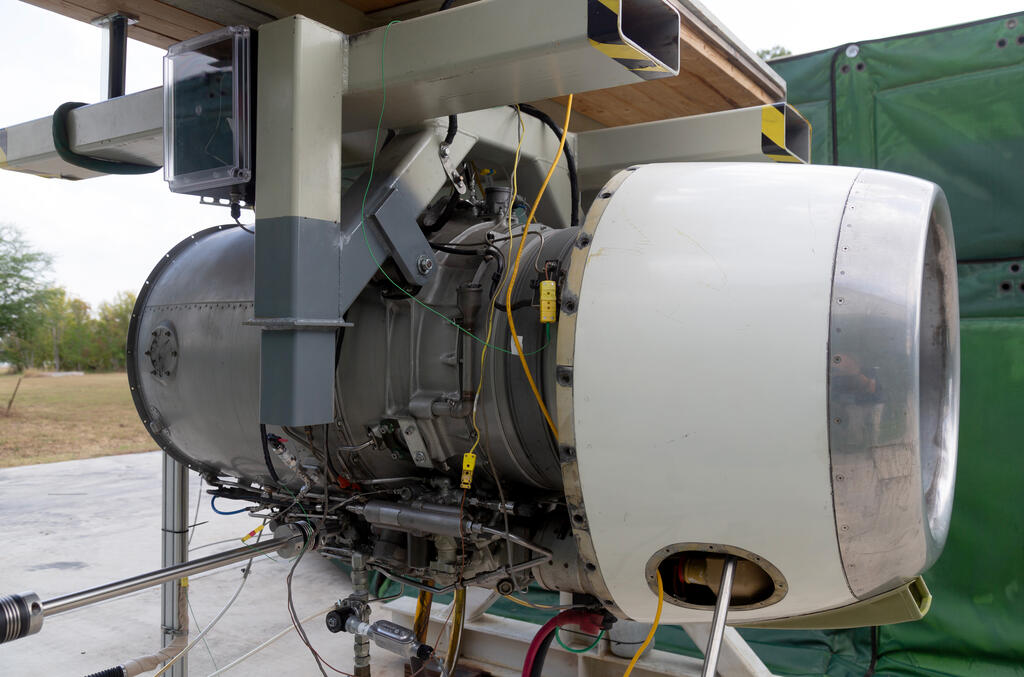
Turbofan jet engine test stand for SAF research at SwRI.
Get more data insights from SAF research through SwRI’s Advanced Combustion for Power and Propulsion (ACP2) group. We test a wide variety of fuels in our state-of-the-art combustion facility. This facility includes both single sector combustors and a fully operational turbofan jet engine, enabling comprehensive analysis and testing. The valuable data collected from these tests can significantly guide and inform the development of new fuels, especially those aiming to achieve ASTM certification.
Particle Science & Characterization
Image
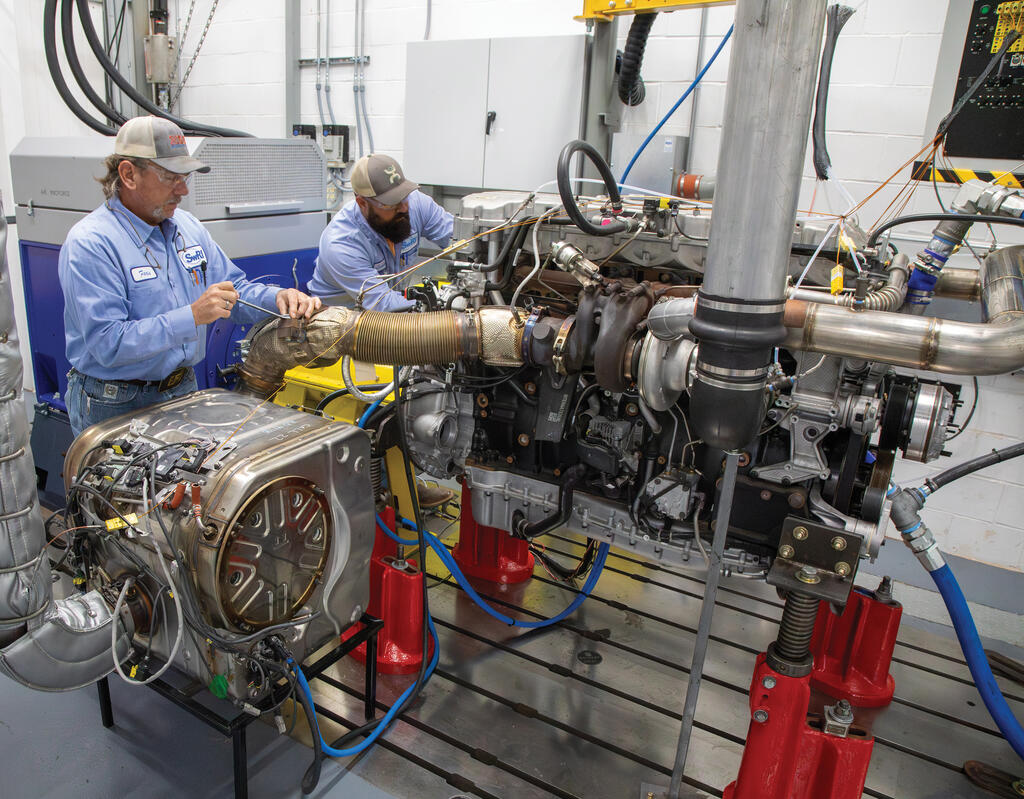
Emissions and particulate testing lab at SwRI.
SwRI’s Particle Science and Technology (PS&T) team accurately characterizes particulate emissions from multiple combustion sources, including turbine engines. PS&T’s suite of instrumentation allows for measurements of particulates down to 5nm and up to 30μm, providing valuable information on combustion exhaust constituents such as particle number, particle mass concentrations, particle size distribution and statistics. This data is primarily collected in real-time, allowing for detailed, second-by-second analysis.
Image
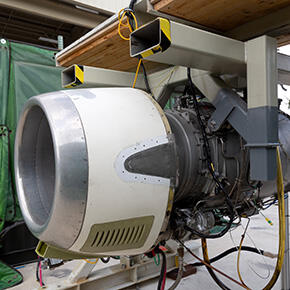
Producing & Evaluating SAF from E-Fuel
Multidisciplinary team compares performance, emission data for three types of jet fuel including in-house SAF.