



From plastics to asphalt, we encounter products derived from heavy crude oil everywhere, every day. Using heavy crude oil begins with moving the oil over long distances from production locations to chemical plants and refineries. The oil is transported through a vast network of pipelines or on tankers, ships or by rail. Current heavy crude transportation methods can be costly. SwRI developed the patented two-part EZ Flow™ process to lower heavy crude oil viscosity, or thickness, by 60% or more, making transportation more efficient. The treated oil maintains reduced viscosity for months or longer.
Listen now as SwRI Principal Scientist James Wood discusses obtaining a patent for the innovative EZ Flow process, how the technology lowers the cost of transporting heavy crude and what that could mean for consumers.
Visit Treating Heavy Crude Oil for Transport to learn more about SwRI’s advanced treatments, methods and techniques to move heavy crude oil.
Transcript
Below is a transcript of the episode, modified for clarity.
Lisa Peña: SwRI is making rich heavy crude oil supplies easier to transport and more accessible. A newly patented process changes oil viscosity or thickness, allowing for smoother pipeline passage. More on this advanced "go with the flow" technology and the potential impact to climbing oil prices. That's next on Technology Today.
[MUSIC PLAYING]
We live with technology, science, engineering, and the results of innovative research every day. Now, let's understand it better. You're listening to the Technology Today Podcast presented by Southwest Research Institute. From deep sea to deep space, we develop solutions to benefit humankind. Transcript and photos for this episode and all episodes are available at podcast.swri.org. Share the podcast and hit that subscribe button on your favorite podcast platform.
Hello, and welcome to Technology Today. I'm Lisa Peña. We use heavy crude oil products every day. Diesel fuel, asphalt for roads, plastics, and more come from heavy crude oil. Current methods of transporting heavy crude reserves can be costly.
SwRI has developed the newly patented EZ Flow process to move oil through existing pipelines over long distances. EZ flow reduces viscosity of heavy crude oil by 60% or more, making it easier to transport. SwRI Principal Scientist James Wood is leading EZ Flow development. He's here to talk about how it works and the potential impact to consumers. Congratulations on the new patent and thank you for being here, James.
Image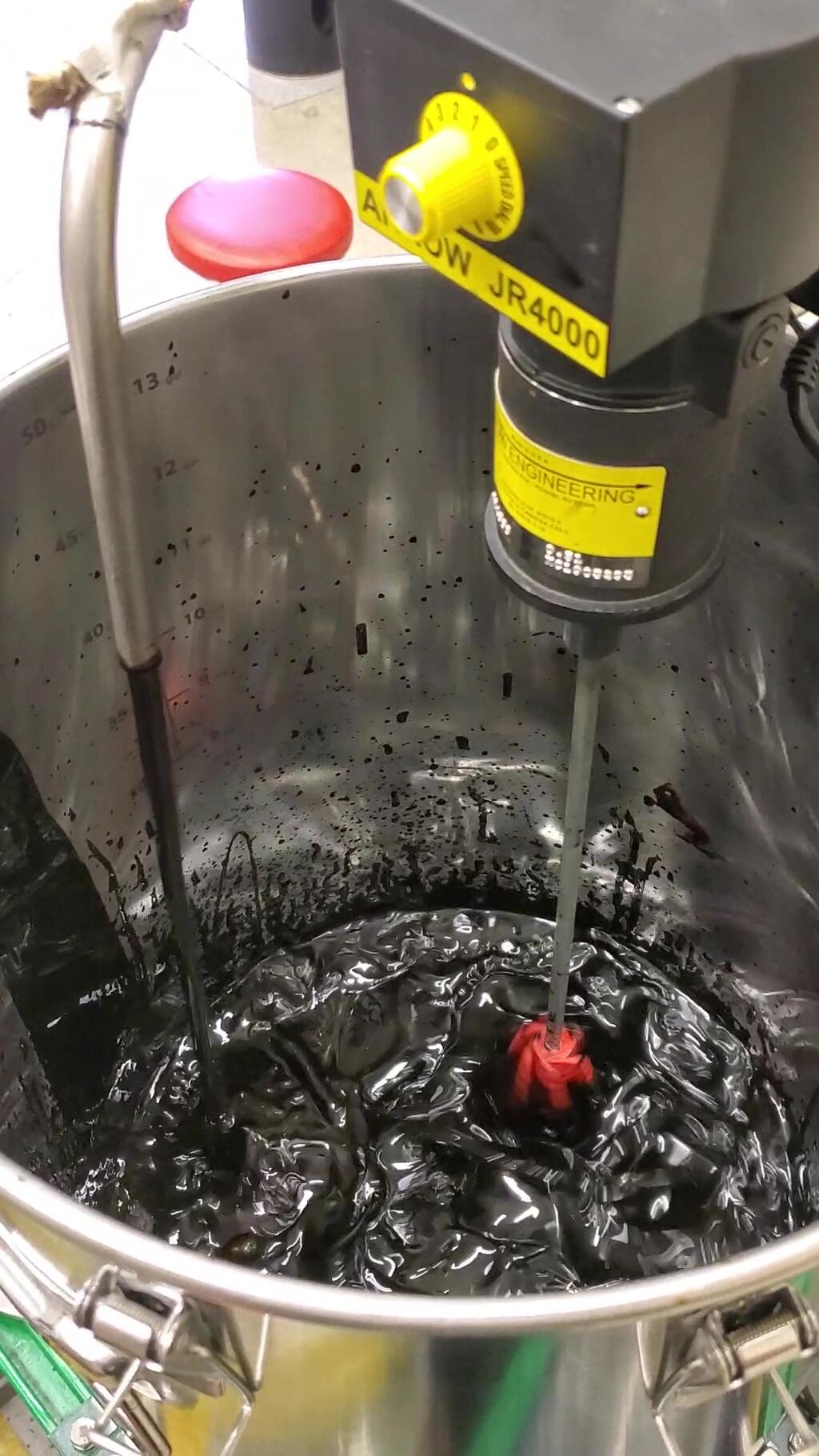
SwRI received a patent for EZ Flow™, which reduces the viscosity of heavy crude oil by 60% or more, making it easier to transport through pipelines over long distances. The two-part EZ Flow process begins with adding chemicals to heavy crude followed by controlled hydrodynamic cavitation, a mixing process that uses a rotor to produce microscopic bubbles. Shockwaves produced when the bubbles collapse heat and mix the additive into the heavy crude oil.
James Wood (JW): Hello, Lisa. I appreciate you having me on your podcast.
LP: All right. So let's get this conversation started with understanding heavy crude oil. How is it different from light crude oil? And how is it used?
JW: Well, Lisa, that is a long and complex question, but I'm going to try to summarize it in some key points. Terms we need to know first that pertain to heavy crude oil, API is a standard from the American Petroleum Institute that is used to measure how heavy or light a petroleum liquid is compared to water. It's the inverse measure of petroleum's liquid density.
Light crude, for example, has an API of greater than 31 whereas heavy crude has an API of less than 22. The heavy crude by this number is more dense. It's harder to refine, extract from the ground, and more costly to transport.
So why the US needs heavy crude. Back in the day, the North American refineries were built decades ago and part of their design was to incorporate the use of heavy crude, heavy crude blends with lighter crudes.
So when the US refineries are operating at full capacity, they often prioritize processing cheaper, heavy crude imports over the lighter oil from domestic wells. The US exports the excess lighter crudes to other countries.
The heavy sour crude is more difficult to refine, but since the US refineries were specifically designed to process heavy crudes to make products such as asphalt, heating oils, and fuels, the US requires their heavy crudes in the refineries. Blending facilities at US refineries blend the condensates, natural gas, liquefied gas, heavy crude oils, and unfinished oils with light and medium crudes to produce different products.
Some of these products are, of course, gasoline, diesel, kerosene-type jet fuels, petroleum cokes, still gas, hydrocarbon gas liquids, asphalt, and petrochem feedstocks. Basically, crude oil export and import, it's a podcast on its own, so I won't take up any more of your time with that.
LP: Yeah, you're really highlighting how heavy crude oil is really everywhere. We drive on it. It powers our way of life in some instances. So yeah, it's really everyone, to some degree, has used a heavy crude oil product.
Let's get into it a little bit more. Viscosity is a fluid's resistance to flow. Thick fluids have higher viscosity. So why does viscosity matter when we're talking about crude oil?
JW: So heavy crude oil's high viscosity affects every aspect of its production life cycle. In general, heavy crudes like bitumen, for example, Canadian oil sands in Alberta, Canada, and Mexican mine crude are more difficult to extract from the ground. They're more difficult to transport, and they're more difficult to process at refineries or chemical plants.
Backing up, I mentioned bitumen. Bitumen's the material in the tar sands, mainly composed of complex hydrocarbons such as asphaltenes, resins, and oils. There are oil sands in Alberta, Canada, tar sands in Utah. And this is the rock deposit that contains the bitumen.
High viscosity leads to the problems in the field, such as energy-intensive pumping; temperature sensitivity, where heavy crews become more solid at lower temperatures; pipeline fouling, and plugging due to wax and asphaltene deposition in the pipe.
It also leads to corrosion risks as well. From the sulfur and the heavy crudes and the water and the salts, they tend to corrode pipes. So all of these cause problems from upstream, midstream, and downstream productions.
LP: OK, SwRI's patented EZ Flow technology addresses viscosity. So tell us more about EZ Flow. What is it? Describe how it works. What does it do?
JW: So the revolutionary patented process combines low-concentration chemical, for example, surfactants, detergents, hydrocarbons, and other chemicals at low concentration, very low concentration with a mechanical mixing, a proprietary mechanical mixing that, when applied together, significantly reduced the viscosity of heavy crude oils without changing its chemical composition, which is key because a lot of the refineries don't want other products produced before it even gets to the refinery. So not changing the chemical composition of the heavy crude oils is an important fact.
So with the EZ Flow technology, we've shown that we've achieved at least 60% viscosity reduction in heavy crudes with APIs of 11 degrees. And we have shown that we can retain this lowered viscosity for at least six months. But we predict that the lowered viscosity would remain for much longer. We just need to do the research, R&D to confirm that.
LP: And why does that timeline matter?
JW: So the timeline would matter for producers because they could treat their heavy crudes, and they could store it at terminals before they pipe it or ship it to other destinations. So they would get to choose when they send their product, instead of being reliant on when the diluent is available for blending with their heavy crudes to send it down the pipeline.
LP: So a longer expiration date works better for everybody.
JW: Exactly, right. That's the short of it. EZ Flow combines chemical with the heavy crude.
The chemicals include surfactants, maybe detergents, hydrocarbons, and other chemicals at low concentration. And there's a mechanical mixing, which is hydrodynamic cavitation that, when combined with the chemicals in the heavy crude, it basically forms micro bubbles that collapse in on themselves and explode — not really explode.
It's a controlled cavitation, but the bubbles burst and release energy. And this enhances the mixing of the heavy crude oil with the surfactants and other chemicals to help form inverse micelles, which reduce the viscosity and keep that reduction in viscosity over time.
LP: All right, so it's really this two-part process where you are adding in the chemicals. And then you have this special mixing process that yields the results that are favorable to transport the heavy crude oil.
JW: Correct, and the way we've designed it is that this would be a single pass. We've already spec'd out the commercial scaling up of the pilot-scale version of EZ Flow. And we've partnered with a company for the hydrodynamic cavitation at the commercial scale.
So this is easily scalable. It's the capital equipment cost initially isn't that expensive as far as petroleum projects go. It's not like building a platform in the Gulf or something, for example. It's much less expensive than that. And it's not as technically demanding as some of the other means for transporting heavy crude oil.
LP: OK, I want to understand that a little bit more, the transportation of heavy crude oil, why that's important. So what motivated the development of the EZ Flow process? Why was this a goal? What big challenge is it addressing?
Image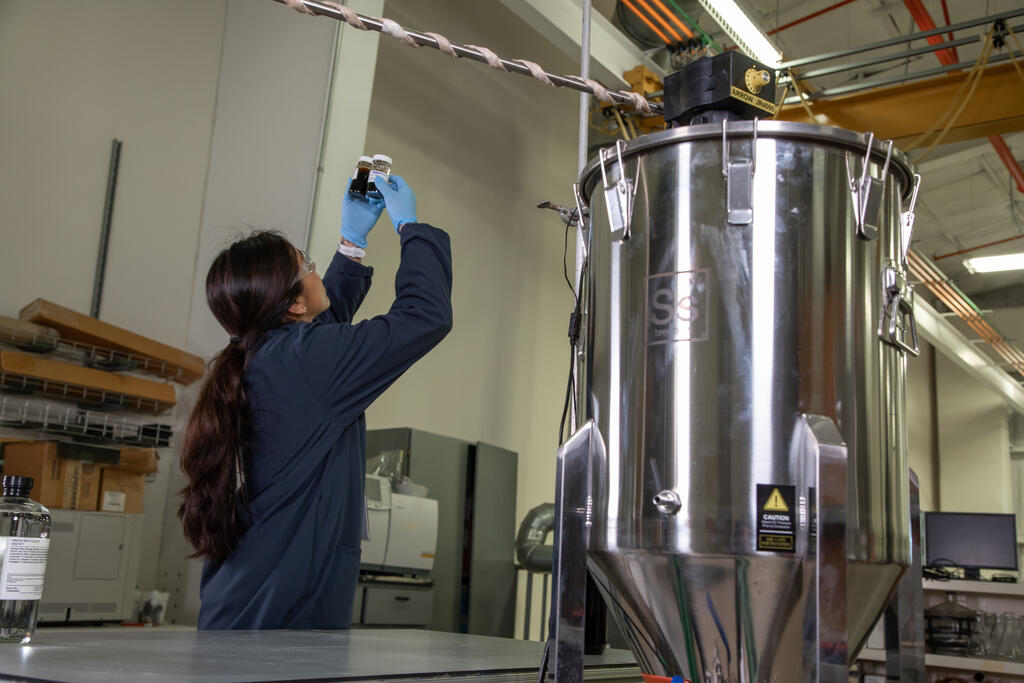
Chemists demonstrated EZ Flow capabilities in SwRI labs. Scientists have found the process offers at least six months of reduced viscosity. The technology is ready for licensing or technology transfer.
JW: So what motivated the development of EZ Flow? I mean, there had been discussions at conferences and with clients about heavy crude oil becoming more important in the world petroleum market as time went on. Eventually, or we've already seen it, some of the medium and light crude reserves are declining whereas the heavy crude reserves hasn't. They haven't really been tapped into yet — not as much.
For example, in Venezuela, it's been widely reported on the news of their heavy crude oil reserves. They have about 513 billion barrels of the \$1.7 trillion oil reserves in the world is of heavy crude oil. So that's an estimated greater than 500 years of remaining reserves as of 2025.
In contrast, the US has an estimated 17 years of crude oil reserves remaining as of 2025. But the US has mostly medium and light crude oils from the shale plays. So 17 years, 500 years, you can see the heavy crude oil reserve. It's not going away.
We're going to need to use heavy crude oil if we want to keep making petrochemical products or producing gasoline or jet fuels from it. So that's the impetus for looking at heavy crudes. Plus, we had clients that had demand for looking at heavy crudes as well.
LP: And moving it from one place where it's plentiful to another place where it's needed is top priority.
JW: Right, so being able to transport from places like Canada or Venezuela is a significant cost to these companies and countries in getting it to where it needs to go.
LP: What are conventional methods of transporting heavy crude oil in North America? And how is the EZ Flow process a better option?
JW: So transporting conventional methods for transporting heavy crude oils in North America, it's the main transportation modes are through pipeline over short distances. Heating is an option. Once you get to piping heavy crudes over long distances, it's not cost effective. It's too expensive to heat the pipeline over 1,000 miles. That just doesn't work.
And then, over longer distances for pipeline, as we talked about earlier, the diluent, there's a dilbit where a lighter hydrocarbon diluent is mixed with the heavy hydrocarbons to reduce the viscosity. And that's what they generally use for transporting heavy crudes over long distances. There's chemical treatments. It depends on the API of the heavy crude oil.
The API, as you recall, describes the viscosity of the heavy crude. If it's a higher API, it's a lighter crude. If it's a lower API, it's a heavier crude.
And then also marine tankers and barges, but they still have the viscosity challenges and need to add water to the heavy crude oil to pump it into the tanker, for example. And it still remain liquid form instead of forming a big clump in the bottom of the tanker. So there's still a treatments that they have to do for the tankers.
There's also rail, which is, of course higher cost than pipeline or a tanker. Railcar transport is quite expensive. And sometimes it's not available at the sites where the heavy crude's extracted. And you still also have to reduce the viscosity of the heavy crude to get it into the railcar.
So then the last way to transport heavy crudes is by truck. And that's usually a short haul. And that's probably the most expensive option for transporting heavy crudes.
But how's EZ Flow a better option? So with that reduction in viscosity that EZ Flow incurs in the heavy crude oil, the need for the transportation modes above, I mean, we could still pipe it in pipeline. We could still transport it through a tanker.
But the heavy crude oil's viscosity remains reduced over time so they don't have to retreat. They don't have to extract 50% diluent from the heavy crude oil and send it back to the producer. There's a lot of cost savings, I guess, in summary, with EZ Flow.
LP: Diluent, can you explain what that is?
JW: So the diluent is like the light hydrocarbons they use to mix with the heavy crude oil to reduce its viscosity. So they combine the heavy crude oil and the lighter hydrocarbons in about a 50/50 ratio sometimes or maybe slightly less 30/70 or something like that.
And that reduces its viscosity because you have the lighter hydrocarbons mixed with the heavy hydrocarbons, but it still requires mixing and extraction of the a diluent at its destination to send back to the producer, or they have to find some other means for diluting their heavy hydrocarbons, either new material or recycled material.
LP: Now, does EZ Flow need to be extracted?
JW: So EZ Flow doesn't. And the chemical components used in it are compatible with refineries. So the chemicals used in EZ Flow do not require removal before it gets to a refinery, for example, or a petrochemical plant or whatever. They're commonly found chemicals in these refineries and plants that are already there.
LP: So EZ Flow simplifies the process and makes it a little more cost effective.
JW: Correct.
LP: OK.
JW: Great summary.
LP: OK, so EZ Flow has been patented, but is it ready for pipelines? Is it already in use? How is it being used right now?
JW: Yeah, that's a good question and pertinent. So it's not really ready for pipelines yet, except in demonstration studies. It's not commercially applied yet or available, really.
I wanted to describe technology readiness level is an R&D term where it is a standard rating system used for commercializing new technologies. And it's on a 9-point scale, 1 being basic research and 9 being it's a full commercial deployment. EZ Flow is at about a TRL 5, which is kind of in between. It's right there to getting ready to demonstrate, at a demonstration plan.
And that's the stage we're at right now. So it is ready for research licensing or commercial licensing. If somebody wanted the technology for themselves, so to speak, to do a little further research or they think they can commercialize it, SwRI is willing to license it to somebody.
LP: OK, so the patent is a recent development, but EZ Flow has been years in the making. Tell us about the patent process and why obtaining the patent was a priority for your team.
Image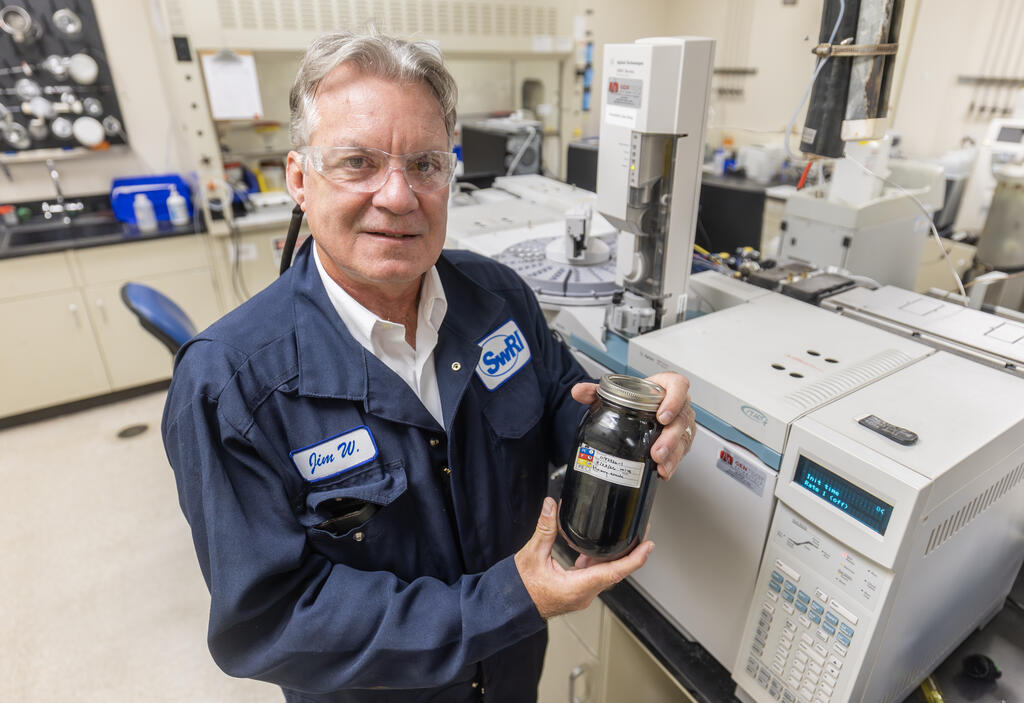
SwRI Principal Scientist James Wood co-invented the patented EZ Flow™ process. With a diverse background in microbiology and chemistry, Wood is an expert in heavy crude oil pipeline transportation, carbon capture, bioprocessing, fermentation, sustainability, alternative fuels and energy, technology development, pilot plant design and safety and more.
JW: So the patent was a priority for the team because a technology is being marketed worldwide in heavy crude oil markets. So you wanted some kind of protection of the technology from intellectual property theft. That's a big problem throughout the world where new technology is stolen, so to speak, from the inventors and used elsewhere.
So we also have a Patent Cooperation Treaty, or PCT, patent that's in the works, and that's the worldwide patent. So we are marketing this in the US, Canada, Mexico, and then the European Union, the Middle East. That's pretty much where we're starting right now, countries like Mexico, Canada, Oman, the United Kingdom, Netherland, and some of the other European countries.
LP: OK, so there's a current disruption in global oil supplies, and that's elevating price per barrel. We're hearing about this almost daily on the news. Could EZ Flow be a solution to potentially replenishing oil supplies?
JW: So yeah, that's a great question. So the short answer to that is somewhat, as it would help reduce costs in the supply chain. And it would make oils easier to pipe to their destination.
It would save in midstream costs. Basically, it would save these production companies in their midstream costs. So in theory, that would reduce the total cost per barrel of heavy crude oil product.
LP: How could consumers, specifically, potentially benefit from the use of the EZ Flow process?
JW: Well, it goes back to the previous question in that it would reduce the overall cost per barrel of the heavy crudes. And it could be significant cost reduction. Back in, these are numbers from 2021, the cost of light-to-medium crude per barrel treatment would be about \$5 per barrel.
As far as EZ Flow treatment, the cost is slightly above that whereas railcar, for example, the treatment costs for heavy crudes that are being transported by rail would be closer to about \$11 per barrel. Of course, these are numbers for a few years ago, and they've changed somewhat, but you could see the cost difference. And the EZ Flow treatment costs are closer to your traditional light and medium crude costs.
LP: So that trickles down?
JW: So it trickles down, basically. Yeah, that wasn't a very short answer, but that's right.
LP: But that's a good news. All right, so what do you envision for the future of EZ Flow? You said right now it's still in development but very close to being put to use. Could this technology extend to other products or other uses?
JW: So the immediate vision for the technology would be to license it to a major player in the petroleum industry, whether it's a producer or one of their service companies or somebody else, maybe an entrepreneur. The long-term vision for the future of EZ Flow would be more investigation.
Possibly look into heavy oil upgrading applications, reducing the viscosity of other types of viscous material that aren't heavy crude but are needed in industry and might need to be transported but are too thick to transport easily, similar to heavy crude oils, but a different application of the technology to a different type of feed. Instead of heavy, crude, something else.
LP: Yeah, do you know what that something else might be.
JW: So the something else might be like polymer plastics production, they use a lot of thick material in polymer plastics production. So one of those components that they use to make polymer plastics, it might have application to that. That's more of almost a basic research type IR&D right now.
LP: All right, so more to discover when it comes to EZ Flow.
JW: Yes.
LP: All right, excited to see what's next and what's ahead. So EZ Flow was developed through internal research funding. That is SwRI's program that funds unproven concepts and really allows scientists and engineers the freedom to explore and test new processes and technology. So explain how this internal, this IR&D program here at SwRI supported EZ Flow creation.
JW: Right, the Institute has a great internal research and development program. It's open to anybody that has a good idea. And ours started with a 75k targeted research proposal that we were awarded.
We did the work in about three months, wrote some reports, and went to the patenting process because upper management thought that this might be a good technology to patent that we could retain at Southwest Research Institute or transfer the technology to a company that they can use to commercialize and improve the world. So that's how it was born, I guess.
But the IR&D program at the Institute, it was instrumental in progressing the technology to a TRL 5 level and attaining the awarded patents that we have today. There's still some work left to do to increase the TRL, that we may revisit the IR&D program here at Southwest Research.
My takeaway is if researchers at the Institute have an idea that they believe in can be a solution to a problem, I encourage them to investigate the internal research program at the Institute. I mean, they could contribute to changing the world.
The IR&D program at Southwest Research is truly a game changer. On the website, Southwest Research in the About US section mentions we push the boundaries of science and technology to develop innovative solutions that advance the state of the art and improve human, health, and safety. The IR&D program at Southwest Research is one way scientists can push the boundaries.
LP: That's so true, and it's amazing every time I hear about these, really, these seeds of ideas that are really allowed to flourish and bloom under the IR&D direction and funding and become these big ideas and become this really bigger technology.
And as you said, that goes out in the world and makes a difference and changes the landscape in different industries. So congratulations on that award too that really got you up and running. And here you are today with a patent.
JW: I appreciate that, Lisa.
LP: So what was most memorable for you about the journey of developing EZ Flow and obtaining the patent? As you said, you started with this seed of idea. You saw the need for this, and it grew from there. So was there a memorable moment for you in all of this?
JW: So to me, the people I've worked with throughout this process have been most memorable, from the directors and chemical engineering scientists. Sergio Trevino, the coinventor, I've worked with him for a long time. He's out of Monterrey, Mexico. He doesn't work for Southwest Research, but he's also a good friend.
The collaboration that occurred within the Institute was important to me. And I learned a lot of things from other people during the process. That was memorable.
And then last, the potential clients that I've talked to after we completed the research and started to market the technology, the feedback I received from them was so important to determine next steps. And so I appreciated those folks as well.
LP: OK, and there is a great web page dedicated to EZ Flow. So we will have a link to that page on our episode 95 page here for the podcast. All right, James, well, great learning about the EZ Flow process today and making heavy crude oil more accessible and the potential impact of EZ Flow on oil and gas that we use every day. As we said, it is ready to license. Thank you so much for being here.
JW: Lisa, I appreciate your great questions and time.
And thank you to our listeners for learning along with us today. You can hear all of our Technology Today episodes, and see photos, and complete transcripts at podcast.swri.org. Remember to share our podcast and subscribe on your favorite podcast platform.
Want to see what else we're up to? Connect with Southwest Research Institute on Facebook, Instagram, X, LinkedIn, and YouTube. Check out the Technology Today Magazine at technologytoday.swri.org. And now is a great time to become an SwRI problem solver. Visit our career page at SwRI.jobs.
Ian McKinney and Bryan Ortiz are the podcast audio engineers and editors. I am producer and host, Lisa Peña.
Thanks for listening.
[MUSIC PLAYING]
SwRI advances transportation solutions for heavy crude oil that’s carried via pipelines, tankers, rail and maritime. Through applied R&D, our chemical engineers develop and identify new treatments, methods and techniques for cost-effective, lower carbon-intensity transportation of heavy crude oil, ensuring supply-chain reliability with mobile pilot unit designs, build-up and operations support.
How to Listen
Listen on Apple Podcasts, or via the SoundCloud media player above.