


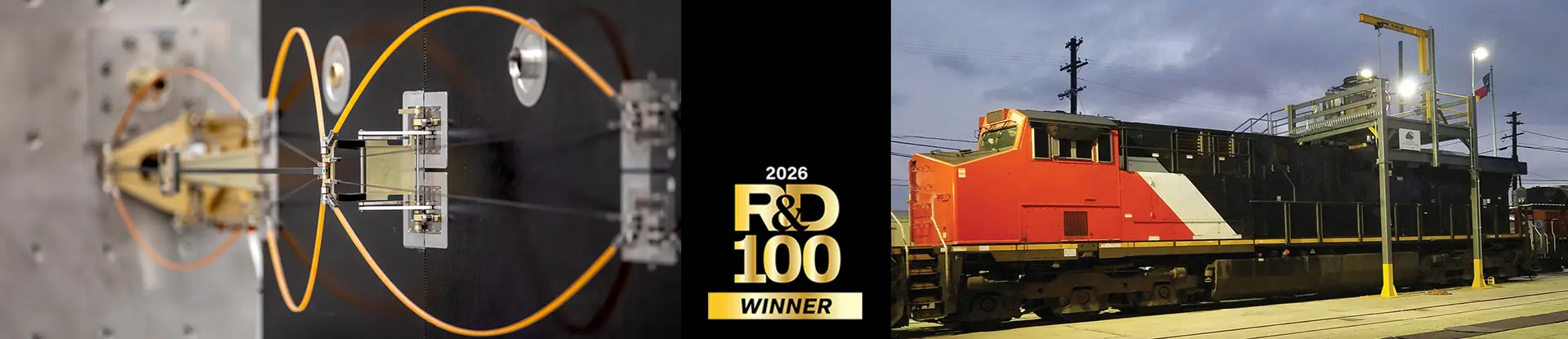

The prestigious R&D 100 Awards program, presented by R&D World, recognizes the top 100 revolutionary technologies of the year. Since 1971, SwRI has won 56 awards in the annual competition with two added in 2026. This year’s winners represent SwRI’s multidisciplinary expertise.
The Parallelogram Synchronized Truss Assembly (PaSTA) enables synchronized, controlled spacecraft docking. The Advanced Locomotive Technology and Rail Infrastructure Optimization System (ALTRIOS), an open-source software tool, allows the railway industry to simulate real-world impacts and expenses of new locomotive energy technologies.
Listen now as SwRI Program Lead Ryan Rickerson and Senior Manager of SwRI’s Locomotive Technology Center Steven Fritz discuss the award-winning advancements.
Visit SwRI Honors and Awards to learn about our R&D 100 history and the winning technologies over five decades.
Transcript
Below is a transcript of the episode, modified for clarity.
Lisa Peña: SwRI picks up two 2026 R&D 100 awards, known in the tech industry as Oscars of Innovation. Today, we're learning about the winning technologies — a spacecraft precision control and docking solar array and rail system Digital Twin software, both developed with SwRI expertise, both changing the technical landscape. That's next on Technology Today.
[MUSIC PLAYING]
We live with technology, science, engineering, and the results of innovative research every day. Now, let's understand it better. You're listening to the Technology Today Podcast presented by Southwest Research Institute. From deep sea to deep space, we develop solutions to benefit humankind. Transcript and photos for this episode and all episodes are available at podcast.swri.org. Share the podcast and hit that subscribe button on your favorite podcast platform.
Hello and welcome to Technology Today. I'm Lisa Peña. The annual R&D 100 awards, known as the Oscars of Innovation, and presented by R&D World, recognize the top innovations of the year. SwRI won two 2026 awards, bringing our total to 56 R&D 100 awards since 1971.
SwRI was recognized as co-developer of ALTRIOS, the Advanced Locomotive Technology and Rail Infrastructure Optimization System. Senior manager of SwRI's Locomotive Technology Center, Steven Fritz will join us in a moment to discuss ALTRIOS software.
But first, SwRI's Parallelogram Synchronized Truss Assembly, or PaSTA, was also named a winner. The system enables autonomous spacecraft docking operations. Program lead Ryan Rickerson is here to discuss the award-winning technology. Thank you for being here, Ryan. And congratulations on your team's R&D 100 award.
The patented, award-winning Parallelogram Synchronized Truss Assembly (PaSTA) technology stabilizes solar arrays for complex docking maneuvers. PaSTA is an integral part of Provisioner®, the Astroscale U.S. refueler funded by the U.S. Space Force. PaSTA was selected by R&D World Magazine as one of the top 100 innovations of 2026.
Ryan Rickerson (RR): Thank you, Lisa. Yeah. We did not expect to ever receive an award for this. So it's fun to get to sit down with you and talk about the technology.
LP: So a welcome and fun surprise. And I want to start with understanding this technology, this award-winning technology that stabilizes spacecraft solar arrays. So let's get into it. What is the Parallelogram Synchronized Truss Assembly, or PaSTA? Love that name. And we're not talking about the delicious carbs. But what challenge does it tackle? What does it do?
RR: Sure. So a normal solar array on a spacecraft is a considerable amount of the spacecraft's mass. And often, they're not very stiff. You could imagine having a first natural frequency of 0.1 hertz. So you went up and hit the array, it would move back and forth every 10 seconds.
And that can really cause a problem for spacecraft that are trying to either precisely point or do things like rendezvous payload or proximity operations. That includes things like docking or meeting up with another spacecraft for some reason. All these types of operations need the spacecraft to have really a good control over its attitude or its pointing.
And so if you have these really large arrays that have a low natural frequency, you get a situation where it's like the tail wagging the dog. And you can imagine a really heavy tail literally wags the dog or it wags the spacecraft body. So the spacecraft body is actually reacting to these large arrays that are moving back and forth every 10 seconds.
We were visiting a customer last week and they had the same problem. They're trying to do docking, but their solar arrays are moving back and forth every 10 seconds. And so their spacecraft is also moving back and forth every 10 seconds. And so they can fight it. But it's really hard to fight it when it's so loose. You end up just wasting a lot of fuel. You never really settle out of your vibrations.
And so GNC, or Guidance, Navigation, and Control, engineers can try to filter out some of these frequencies. But that can be really challenging, and really limit what kind of control algorithms you use. So in our case, we just eliminated that problem entirely by putting a truss mechanism on the back side of the solar arrays. And so this has never been done to my knowledge.
But if you imagine a truss bridge is a tall section of a bridge. And it makes the bridge much more stiff. So if you can think of a truss bridge in your mind, you've got the road on the bottom, and then maybe a big section that comes out 20 feet tall or something like that, and then all these diagonal members that tie the top and bottom sections together. We did the exact same thing on our solar array mechanism.
And we're able to increase that bending mode that really dictates the spacecraft's pointing performance. We can increase that bending mode by about an order of magnitude. So taking this first natural frequency, in our case, all the way up to above 2 hertz on a really big array. So that means twice a second, the array would move back and forth.
So when the spacecraft says, hey, I need to point a little to the left, it can actually do that. And the arrays don't get excited. They move with the spacecraft. And everything moves as a rigid body. Versus a really floppy solar array, the spacecraft might move its bus. And then ten seconds later, you get this reaction where the bus is no longer pointing where it originally was.
And you're just constantly fighting yourself back and forth. And you end up wasting a lot of propellant, which is a pretty scarce resource. You only get a little bit of propellant. So you can really extend a mission life. The spacecraft has much better control over its pointing.
LP: The solar array is kind of like a wing.
RR: Mm-hmm.
LP: And they're foldable. So you're talking about making them rigid, when they fold out — rigid, stiff. And that's going to give you more control over the spacecraft.
RR: Yeah, exactly.
LP: And what kind of spacecraft are we talking about? Because you might think of a shuttle lifting off for a mission. But we're not talking about a big space shuttle. What type of spacecraft are you targeting?
RR: Yeah. I mean, there's all types of spacecraft. There's spacecraft that are the size of your cell phone, all the way up to the size of a school bus. And they all serve different purposes. Most spacecraft wouldn't need to have really stiff solar arrays.
For a lot of applications, though, anything that you need to be able to point your spacecraft in a very precise location without it moving, you may need to look at the stiffness of your deployed structure.
So spacecraft that do refueling, spacecraft that do docking, maybe there's a military spacecraft that needs to quickly look over the horizon and slew 90 degrees to look a different direction at the horizon for whatever, that could excite your arrays. And then you end up with just arrays that are bouncing around for 30 minutes or something.
There's no air to settle out vibrations. So if I ring a desk or ring a bell here on Earth, you hear the ring and it dies down. And a lot of the times, it's dying down from friction it creates with the air. In space, there is no air. So you don't get to have this natural damping effect. And things can ring for a really long time.
So if you can just avoid the ringing altogether, when you do a fast slew or a fast pointing maneuver, you end up with a much higher performing satellite.
LP: So PaSTA allows these spacecraft to have really precise control. Let's talk a little bit about how it was developed. What was that first seed of an idea that grew into what is now PaSTA?
RR: Yeah. I mean, the way a lot of innovation happens is you look at the world around you, and you say, this is what I'm trying to do. Has this problem been solved in another field? And in our case, we looked at the truss bridge. You have a thin bridge on the bottom. And then they end up making a much stiffer bridge by building a truss section.
And so we took those innovations that were truss bridge is not a new thing. But a foldable truss bridge is certainly a new thing. So we took those innovations and applied it over, in our case, on a deployed array.
I come from a background at SpaceX where innovation means you build stuff, and you test it, and you break stuff. And it's OK that you break stuff. And that was the attitude that we took in the development here. And this was internally funded on an IR&D program. Walt Downing and Adam Hamilton signed off on this. And they said, yep, this is a technology that we think could be a disruptor. They identified that pretty early. And they put an investment into it.
That's one of the fun things about working at Southwest Research Institute is we have this internal fund where we go after hard problems and come up with unique solutions. They don't always turn into an R&D 100 Award. But in this case, it was really fun that it did.
So yeah, we took this idea of making a truss bridge foldable into a solar array. And we said, OK, let's see if this works. Let's build something and build it fast. So we did. In about three months, we had built the first prototype for one of our larger satellites. It's about a 20-foot long boom.
We built it. And it didn't exactly do what we thought. But it was really clear why it didn't do that. We broke some things on it. And actually, when we broke things, we realized, oh, man, we're doing this wrong. We need to change the way we're doing this hinge design. We ended up getting another patent out of that for a flexible hinge design that allows the stiffness to travel through the panels.
That one's going to be really hard to explain with words. But breaking something early like that let us solve the problem and address it immediately, versus trying to make a perfect solution in CAD or in the computer that we wouldn't have learned about that issue pretty late in the program.
So build something. Break it. OK. We've got a problem. Now we can build it again. And the second iteration, we solved all these initial problems that we learned in that first build.
LP: I mean, what a great story. It started with our IR&D program. So it really is a testament to that program. And that program, as you mentioned, gives our scientists and engineers the flexibility to explore untested concepts, unproven concepts. So that's what you did.
And yeah, then you ended up with this R&D 100 Award out of that. So a really great journey with PaSTA. So you've talked about this a little bit. We've talked about it's used for refueling, docking. But if you could, walk us through a typical use scenario for the PaSTA solar array.
RR: Yeah. It has to start with the spacecraft requirements. So the spacecraft identifies, hey, we have these really challenging requirements for our operations. And that might be yeah, we have to do this docking operations, or we need to look at a specific point on the ground. Almost always, the need for a PaSTA-like solution will come from what does the spacecraft actually need to do. What is it trying to do?
LP: And how would a refueling scenario work?
RR: Yeah. So for the refueling scenario, think of a fuel truck spacecraft. That's this Provisioner from Astroscale or with Astroscale that we're building. And it has a huge fuel tank. I mean, the fuel tank is way outsized for what a spacecraft of that size would usually have.
And on that spacecraft, there's a pump, a fuel pump. There's a refueling port so it can be refueled. There's also a refueling port so that it can refuel other spacecraft. So this Provisioner spacecraft would identify the satellite that needs to be refueled. It flies up with its own thrusters. It docks with that spacecraft. And it pumps fuel over.
After that, it can go re-dock with a fuel station. That's just a dummy satellite sitting there. Can't really do much. But it has a lot of fuel on board. And it can refuel the Provisioner so they can go back and refuel another satellite.
So in geosynchronous orbit, which is where this is going, there are a bunch of satellites that, over time, need to be refueled. They're trying to point — they're staying above a specific location on Earth. And over time, they can lose their position. And you have all these dishes on Earth that are looking for a satellite in a specific location on the sky. And if it's not there, then it can't talk.
So these are still useful satellites. They're just running out of fuel. And that's what the Provisioner spacecraft is trying to address is, hey, we have all these assets up there that are still functional, but they're running out of fuel. And over time, they may lose their position.
Literally, if you looked up at the Earth's sky, you could say, there should be a satellite right here. And over time, that satellite will drift out of that location. And now, you've got millions of dishes on Earth that are looking for a signal, a specific location. And there just may not be one there.
LP: So let's talk more about Provisioner, PaSTA's first flight on Provisioner. The Astroscale US refueler is scheduled in 2027. How are preparations going for that?
Image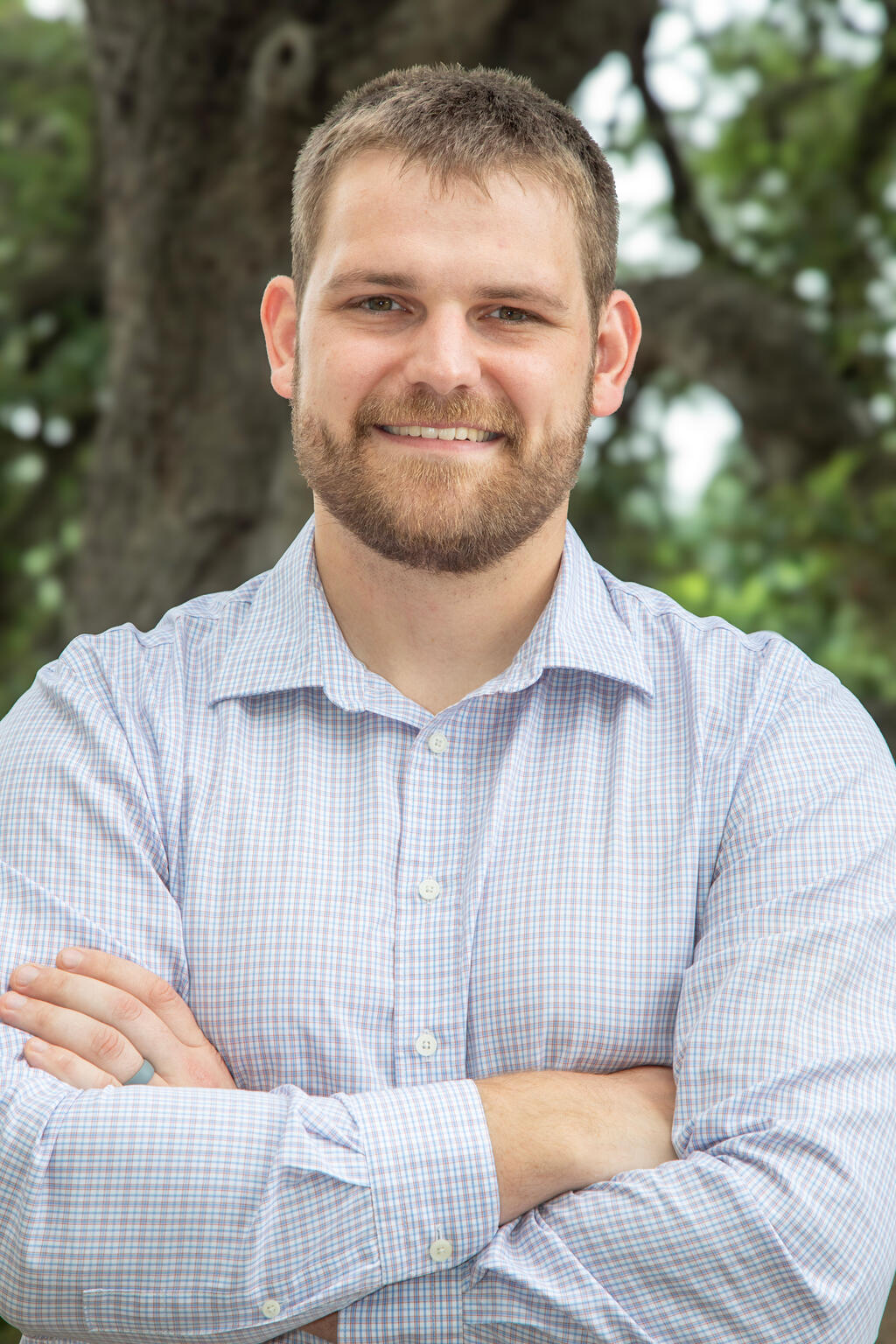
Ryan Rickerson leads the development of PaSTA and manages SwRI’s Mechanical Systems Section that designs spaceflight hardware, including avionics, instrumentation and spacecraft.
RR: Yeah. The test readiness review just occurred last Friday with the Space Force and our client Astroscale. I believe that all went well. It ended early. And that means we're getting ready to go into environmental testing, which usually includes a vibration test, where you put it on a shaker table. And it experiences the launch environment of vibrations and acoustic loads.
It also includes a thermal vacuum test, where you put it in a big chamber, pump all the air out and turn it on. Make sure that things are at the right temperature, that you have thermal control over hardware, that the thermal system's performing as you expect.
And then it's usually an electromagnetic interference test, also, where you can put it in a chamber and listen to what your spacecraft is emitting, what kind of noise the spacecraft is emitting. And then also make sure that it's resilient to incoming noise.
So that test was successful. That test review was successful. And the two PaSTA solar array wings that are on that spacecraft have been built, tested. They are ready to install. They've been installed once already for a preliminary vibration test. But they're on the shelf, waiting to be installed onto the spacecraft later this year.
LP: It sounds like refueling is a job that requires a lot of precision to make sure the right parts are interacting or connecting to make sure the satellite's getting refueled properly. So you really do need that stability that PaSTA provides.
RR: Yeah. For sure. I mean, sometimes, refueling your car is hard enough. You're like I don't know. Imagine.
LP: The hose moving around.
RR: Yeah.
LP: Yeah.
RR: Imagine you try to get a robot to plug the hose into the car or something. OK. Now you do that in space. And the car is moving. And you're moving. And now you're trying to it's a really precise thing that has to happen.
So if your car was rocking back and forth, and maybe you were standing on a skateboard on a hill or something, and you were trying to get the nozzle installed, that's what we're doing. And so the more problems you're fighting, the harder that gets. And so, yeah, having a stable solar array wing is a good platform to build for these types of missions.
LP: And how is PaSTA an improvement over current deployment systems?
RR: Yeah. There's a couple things current deployment systems fail to do or struggle to. Obviously, we've talked a lot about the stiffness that a normal door hinge style array just can't provide because it doesn't have the depth of a truss structure.
So if you have the depth of a truss structure, you can get the stiffness. But a normal deployment mechanism would look like a door hinge, where it's a pin going through a couple lugs and maybe a torsion spring to deploy it.
That's just not going to be stiff. You can get some stiffness out of it if you do a good job on controlling stiffness paths. But it's going to be just really hard to make that a stiff structure. Like I said, you don't have the depth of the PaSTA mechanism or a truss mechanism.
The other thing a normal door hinge style array struggles to do is synchronize panel deployments. So on these spacecraft, we have rigid honeycomb panels that one of them is literally the size of a normal door. It's about 8 foot by 3 feet. And there's four of those panels.
You can imagine, if you deploy them out without some sort of synchronization, and you had normal door hinge style arrays, the first panel might deploy out really far. But then if one of the inner ones gets stuck, that mechanism could actually recontact with the spacecraft.
You could even have it where the outer panels deploy, the inner panels deploy, but the middle two get stuck. And you could swing around back into your spacecraft. And then you would have a serious, serious problem where you've damaged the spacecraft or you've damaged the arrays. So on our mechanism, we have little four bar linkages built in so that everything's synchronized.
If you move the angle between any two panels, all of the panels deploy out. So this is what we call a single degree of freedom mechanism. So you could put a damper, in our case, anywhere on the system. And it controls the deployment. So we have a damper at the root.
If the outer panels try to jump out really far, they are constrained by that damper at the root. All the panels deployed together in its synchronized way. Some of the earlier spacecraft that we built, we didn't have a synchronization method.
We actually almost lost one of the CYGNSS spacecraft from this. It was just a violent deployment of solar array wings. There's no air to slow things down, so a big panel can really move pretty fast when you take air out of it. And it's hard to simulate.
It's hard to simulate, and it's hard to test a vacuum deployment for something this big because I mean, just think of a 20-foot long array built up of a couple door-sized panels. We don't have a chamber that big that can do that deployment.
So we have to simulate it. And that's a pretty big risk going into a mission. So if you just eliminate that risk and synchronize the panels together so that they can't recontact, you can really reduce a lot of risk on a spacecraft.
LP: So we've been talking a lot about how PaSTA makes the solar arrays rigid, stable. But as you've been telling us, synchronization is really the key and a really important part of the PaSTA technology.
And it's really neat to see. So I did want to mention that we will have video of the PaSTA technology in action on the episode 97 web page. So you don't want to miss that. Because I think you really have to see it to understand what it's accomplishing. So what have you most enjoyed about developing this technology?
RR: Oh, man. I think as an engineer, the fun part of the job is getting to be curious, and learning new things, and trying to do things that nobody's ever done before. So in this case, we have to be experts now at composites. And we're buying and specifying composites that are not very typical. So like pultrusions, we use some of the strongest fiberglass that humans make is made in the Netherlands only.
And we've had to specify and buy that type of fiberglass as the deployment springs. We've had to become experts in tribology. We have all sorts of sliding surfaces that see pretty huge temperature swings, a lot of contact stress on things. So we have to make sure that surfaces don't stick together. They still slide. We have a good feel for what the friction is going to be.
The worst thing that could happen is that you have an array stick, and it doesn't deploy. It could just be a mission ender or yeah, it would just not be good. So we design all sorts of redundancy into there.
So there's things like redundant sliding surfaces. So if you grab any two surfaces that are moving and freeze them together or weld them together, the array should still deploy because there's another surface on the other side of that that can still move. So we have all of these lessons that are integrated into the hardware. We've had to adapt, and learn, and try to solve problems before they're real problems.
LP: Yeah. An enlightening process, for sure.
RR: Yes. Very fast.
LP: All right. So what does this R&D 100 Award mean for you and your team?
RR: Yeah. It's not something that we even thought about as an option when we set out for this. So it's fun to have an outside evaluator look at your technology and say, yeah, this is actually pretty important. This could change some things. It gives the team just a second to step back and reflect on the design and say, oh, man, this was something really special we made.
And to have that outside party look at it and agree is a fun little extra reward that it's not why we did it. We didn't say, oh, yeah, we could win an R&D 100 with this technology. But it's certainly an extra fun bonus for the team. And we were all surprised and pretty elated to receive that award. And the team's getting to travel out to the award ceremony. So that'll be a fun, little excursion.
LP: Yeah. For anyone in a technical field, this is really a big deal. There are hundreds of submissions every year. And the panel chooses only 100, the top 100 innovations of the year. So that's a big deal.
RR: Yeah.
LP: And a big deal for the Institute. Ryan, well, congratulations again on your Oscar of Innovation. Incredible honor for an incredible system. Thank you for telling us about PaSTA today.
RR: No problem. Thank you, Lisa.
[MUSIC PLAYING]
Image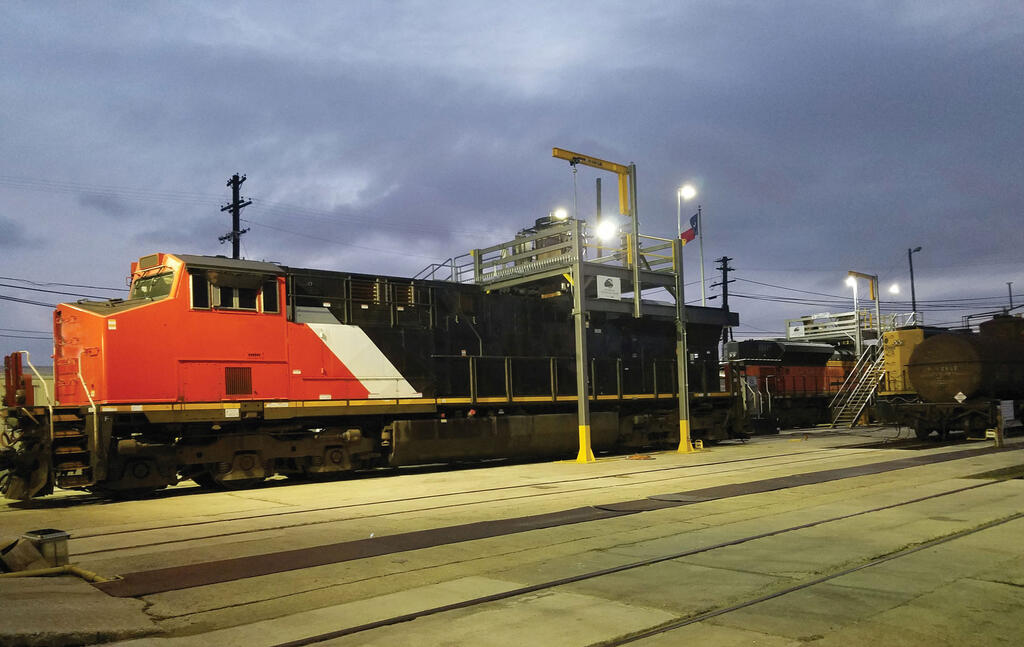
The SwRI Locomotive Technology Center provided extensive locomotive and railway data and locomotive battery testing expertise to support the ALTRIOS project. ALTRIOS, developed by the U.S. Department of Energy’s National Laboratory of the Rockies in collaboration with SwRI, BNSF Railway, The University of Texas at Austin, and the University of Illinois Urbana-Champaign, is the first fully integrated open-source tool that simulates real-world impacts and expenses of adopting new locomotive propulsion technologies.
LP: From spacecraft technology to locomotive software, ALTRIOS, the Advanced Locomotive Technology and Rail Infrastructure Optimization System, simulates real-world impacts and expenses of adopting new locomotive energy technologies. Senior manager of SwRI's Locomotive Technology Center, Steven Fritz, joins us now to tell us about this 2026 R&D 100 Award winner. Congratulations to your team, Steven.
Steven Fritz (SF): Thanks, Lisa.
LP: So before we talk about ALTRIOS, let's start with an overview of the SwRI Locomotive Technology Center. Tell us about the grounds and the work conducted there.
SF: All right. All right. So the elevator pitch I use is that I lead a team of 12 engineers and scientists, where we do our small part to improve public health by reducing air pollution from locomotives. So how do we do that?
So since 1992, we've leased an old diesel mechanical shop in San Antonio that the Southern Pacific Railroad owned. And then in the mid '90s, they merged with the Union Pacific Railroad. And so we leased that facility since 1992 from the Union Pacific Railroad. And so we bring revenue service locomotives in for testing, predominantly fuel consumption and exhaust emissions testing. And we validate technologies. And we ensure compliance with EPA standards.
LP: And it really is a full-scale train rail system testing facility. Let's talk about the grounds out there. It's almost like its own campus. You've got tracks and trains. Tell us more about the equipment and what visitors see out there.
SF: So it is an old diesel mechanical shop. It actually goes back to the late 1800s during the Steam Era. And so in the rail consolidation that took place in the 1980s and 1990s, when I started with Southwest Research in 1986, there were about 30 Class I railroads, large railroads. There's now 6. And so they've consolidated and merged considerably along all those times.
Each one of those mergers, there was often a facility closed, people laid off, and whatnot. And so the diesel shop at Southern Pacific Railroad was one of those that was consolidated and mothballed. And that was done in the mid '80s.
So in 1992, we began leasing that facility from the Southern Pacific Railroad and brought it back to life. And so today, we bring in revenue service locomotives, which are typically 4,500 horsepower, right from the main line that goes right by us for various testing programs, for industry, and government, and the railroads themselves.
LP: OK. Getting to the award-winning technology, now, the Advanced Locomotive Technology and Rail Infrastructure Optimization System, or for short, ALTRIOS. What does it do?
SF: So it's a tool that was developed to explore various what if scenarios. So as the rail industry is encouraged to reduce their carbon footprint predominantly from their customers. So if you have an Amazon, if you have a Walmart, and you're handling all kinds of what's called intermodal containers, the shipping containers you see on trucks and on rail, those companies are interested in reducing their carbon footprint.
And the one way they do that is they rely on their transportation partners to do their share to reduce their carbon footprint. So how do you do that if you're a railroad? One is you scratch, and claw, and you try and improve fuel efficiency in every aspect. But that's only going to get you so far.
You need to look at other decarbonization technologies, such as battery electric locomotives, and net zero carbon fuels like hydrogen, and the whole suite of technologies that the trucking industry is looking at as well to decarbonize.
To develop that technology or multiple paths to explore what's going to work is very expensive. And so there was a need for a modeling and simulation tool to explore how these technologies might fit in a railroad operation. And that's the genesis of the ALTRIOS program.
It was one of several programs that was funded by the Department of Energy's ARPA-E program. And so ALTRIOS was a collaboration that Southwest Research was part of. And it was led by, at the time, the National Renewable Energy Lab, which is now the National Laboratory of the Rockies, in partnership with the RailTEC program at the University of Illinois Urbana-Champaign (UIUC), and the University of Texas, and BNSF Railway.
LP: A lot of collaborators on this really important software that allows the rail industry to discover what decarbonization method works best without actually having to put it into practice, but rather modeling it. All right, so who is ALTRIOS designed for? We're saying the rail industry. But who's using it?
SF: So the railroads themselves are using it to explore these various options. And they're doing it often in partnership with the locomotive Original Equipment Manufacturers, the OEMs. Let's use a battery locomotive as an example. Before the availability of this tool, the OEM would work with the railroad, understand their use case, where they're going to apply the locomotive.
And they had different simulation tools available to them to see how it would work. How big does the battery need to be? How long is the battery going to last? How long of a train can it pull? And most importantly, how much energy can be recovered when it goes down the hill? That's a key part of it.
And the railroad had to take the answer to those questions at face value from the OEM. They had really no way, no tools to challenge them, to cross check. Now ALTRIOS, which, importantly, it's an open-source software, paid for with tax dollars and available open-source through GitHub.
And so the railroad and the OEM can use the same modeling tool to explore together the use case study for alternate transportation locomotives. One of the key things we did in the rollout of the ALTRIOS model was, we included a sample data set that modeled a battery electric locomotive system from the mines in Northern Minnesota.
There's iron ore mines in Northern Minnesota on the Mesabi Range. And they bring loaded trains down a very steep hill, about 800 feet to Lake Superior. So I grew up in Duluth, Minnesota. And this is where the train ends, is in Superior, Wisconsin, specifically the Allouez Ore Docks.
And so when you think about available energy, if you have an iron ore train full of iron ore going down a big hill, there's tremendous energy available to you, which to date has just been dissipated as heat through braking. What if we could capture that energy stored in the battery, and use it to bring the train back up the hill when it's done?
And so how do you determine how big of a battery you need? How much energy is really available to you? And so that's what ALTRIOS is intended to model. And that is the specific use case that we included in the model rollout.
LP: And is ALTRIOS already in use?
Image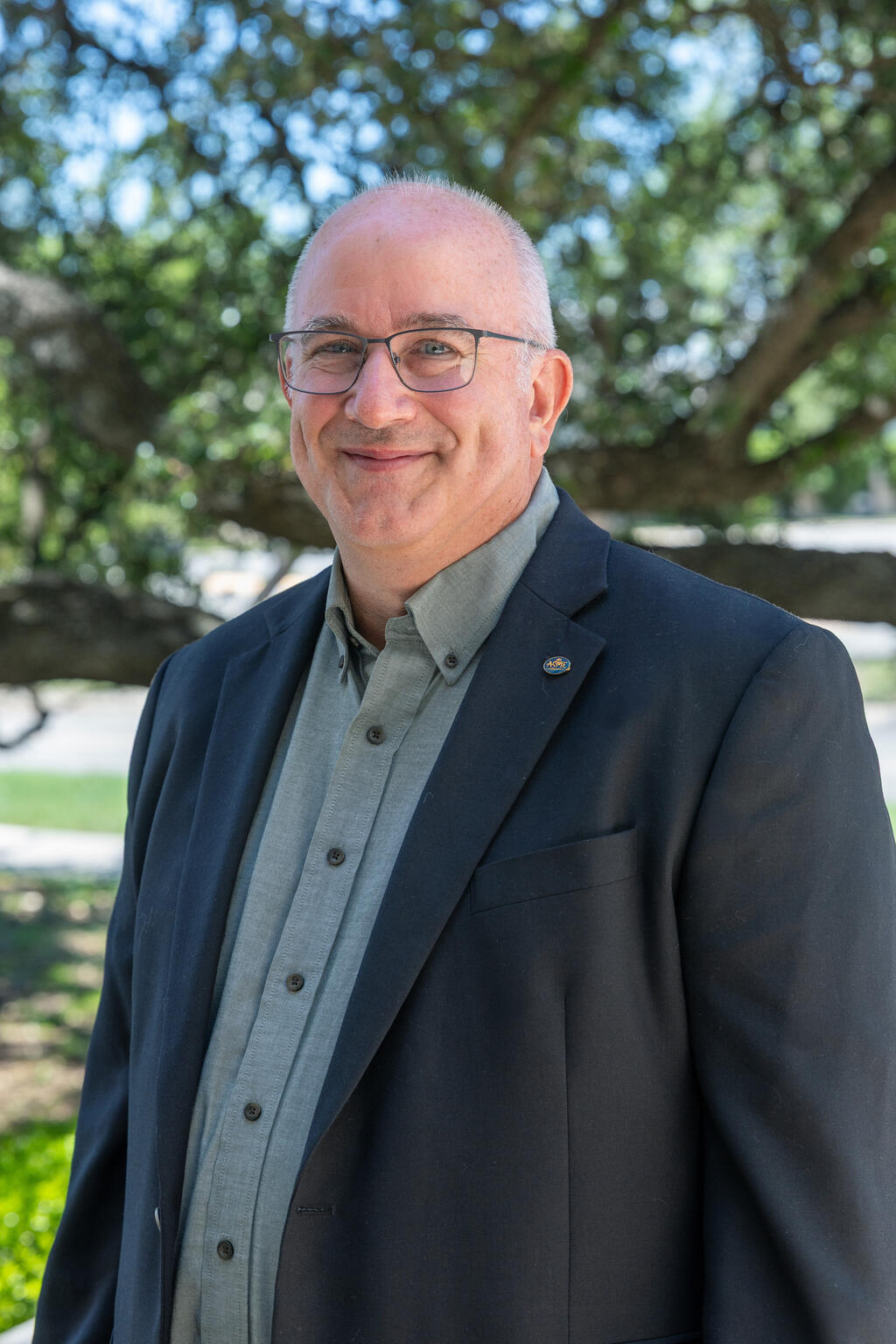
Senior Manager of SwRI’s Locomotive Technology Center Steven Fritz is an expert in locomotive fuel consumption, efficiency improvements and exhaust emissions characterization. He established the SwRI Locomotive Exhaust Emissions Test Center in 1992.
SF: Yes. Yeah. As soon as it was rolled out and publicly available on GitHub, people started using it, predominantly graduate students at UIUC and University of Texas whose professors helped develop it, and former students helped develop. They are working on various projects to explore further.
We know one of the locomotive OEMs is also using it extensively, where they're looking at battery-electric locomotives and ethanol-fueled locomotives in certain markets on fuel requirements and battery charging requirements.
LP: So you've mentioned the rail industry using it, OEMs using it, and even students using it. Can you explain a little bit about how it works as an open-source tool? What that means, that it's open source?
SF: Two things — one, you don't have to buy it. You can just download it. There's a tutorial. There's the sample case studies that I mentioned earlier with the taconite train. And so you can run the model and convince yourself you're getting the same data set. And then you can start to turn the knobs as the inputs to the model.
The other key aspect is as being open source, you can publish enhancements to the model. So it's not static. It's not one and done. It continues to evolve. And contributors make notes in GitHub as far as what they've modified. And you can choose to use those modifications or not. So it's truly open source.
LP: OK. So SwRI I brought in a multidisciplinary team, to contribute to ALTRIOS. So what was SwRI's role in ALTRIOS' development?
SF: So it was really two groups. So I'm in Division 3, a powertrain engineering division and then Division 10, which is the automation and data systems division. And so the Division 10 folks really did contribute a lot to the hardcore programming on the development of the ALTRIOS software tool.
What our team at the Locomotive Technology Center brought was an understanding of the locomotive systems. And really key in that is the efficiency of the different systems, and more importantly, the inefficiency of the different systems.
So as you develop and model new propulsion systems like a battery, where do you draw the box in your boundary conditions of OK, this used to be the engine and now it's a battery? But we still have conversion of DC power to AC power to drive the AC traction motors on a locomotive.
The other thing we brought how do you validate a model like this? So one of the old sayings in modeling is, nobody believes a model except the people that wrote it, but everybody will believe an experiment except the people that conducted it. And so if you roll out a model like this, you have to be able to tell people, how did you validate it. And that is a key aspect.
And we happen to have a tremendous opportunity to incorporate a validation into the project itself. And we did that on a previous project we did with our partner BNSF Railway and the state of California. There was a project called ZANZEFF, which is a big, long acronym for Zero- and Near Zero-Emission Freight Facilities.
And so there was an early demonstrator of a battery-electric locomotive produced by Wabtec Corporation, formerly GE Transportation. And we had the opportunity to partner with the Air Resources Board in California, and BNSF Railway, and Wabtec to do a detailed data monitoring of that battery-electric locomotive as it ran in a three-month demonstration in California.
So we did the data logging and all the data analysis to come up with the energy savings associated with battery locomotive in the mix. In doing that, we could leverage that publicly available data to validate the model.
So we didn't have a make-believe battery-electric locomotive. We had a real one. And so the ALTRIOS model was validated against the ZANZEFF data set, which built confidence for everybody developing and then subsequently using the model.
LP: OK. And that data, again, as you mentioned, key to developing the ALTRIOS software. So with your knowledge of the locomotive industry, what makes ALTRIOS, in your opinion, one of the top 100 innovations of the year?
SF: So the rail industry is a fundamental barometer of the US economy. They move a lot of stuff, often kind of unseen.
LP: And we forget that.
SF: It's a huge part of the economy. As we look to reduce the carbon footprint, improve transportation system efficiencies, locomotives, the railroads start at about four times more efficient than trucks today.
And so how can the railroads do their part to further improve efficiency, use resources wisely? And then as we move into a reduced carbon footprint world, what are the options there? And so the railroads are a necessary part of moving the needle on sustainability and carbon footprint reduction.
LP: What does this R&D 100 Award represent for the SwRI team that collaborated on ALTRIOS?
Image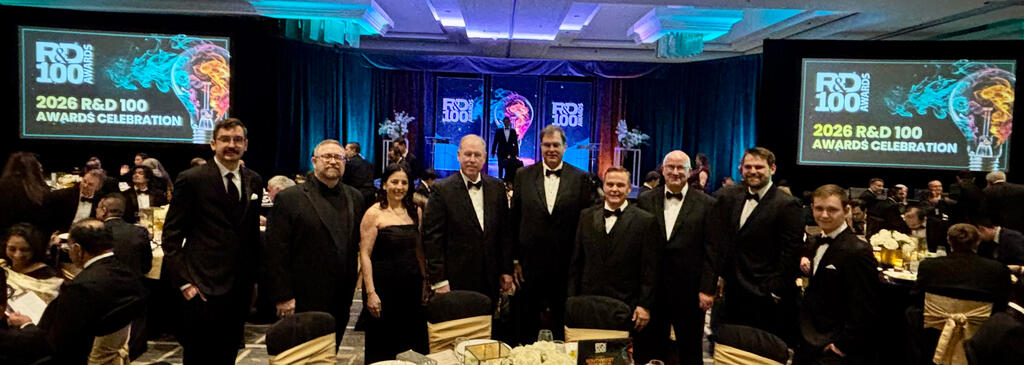
SwRI teams representing PaSTA and ALTRIOS attended the R&D 100 Awards Banquet, November 19, in Scottsdale, Arizona.
SF: So for the Institute, obviously it is one of a long history of R&D 100 Awards for the Institute, demonstrating the technology, leadership, and the innovation of things that happen all over the campus. There's two awards this year. Space Sciences led a program, and we were partnered to a program for two R&D Awards.
The interesting thing to me is the collaboration within the Institute, where we partnered with mechanical engineers, electrical engineers, and programmers in Division 10 to take this very complicated scenario of modeling a rail system, and working together and educating each other on the various aspects of the challenge, how we're going to approach it and roll it out for general use.
Another key aspect of it is I mentioned earlier that this project was funded by the Department of Energy and ARPA-E program. And so winning an R&D 100 Award for this collaborative effort to me emphasizes that, in this case, maybe our tax dollars were spent wisely.
So we don't get to say that on everything that's funded. But in this case, from the peer recognition for the R&D 100, it was taxpayer funded. And we were recognized for it. And people are using it as a tool. So I think from an investment from the taxpayer, it was well funded.
LP: So I've had the Steven Fritz gold star tour of the Locomotive Technology Center. It's really a fascinating place. And I know that you're enthusiastic about working there. So what is a highlight for you of working on locomotive technology?
SF: It's really the framework of the Institute providing the opportunity to build a team, to lead a team, to develop a unique testing capability that benefits the public. Again, going back to the core activity of improving public health by reducing exhaust emissions from locomotives.
I resist the temptation when we talk to our railroads and our OEM customers that they really need to acknowledge that the products that they produce and locomotives that they operate are contributing to air pollution and negatively impacting public health. So there is a imperative to do your best to reduce the emissions and improve public health. So in all that we do down there, that's the core of the mission is working on behalf of the public.
LP: Developing technology to benefit humanity. And that is the mission of Southwest Research Institute.
SF: Plugs right in.
LP: Yeah. All right, Steven, thank you for telling us about ALTRIOS, the open-source tool supporting the rail industry. And congratulations, again, for contributing to this R&D 100 Top Innovation of the Year.
SF: All right. Thanks again.
And thank you to our listeners for joining us today as we learned about SwRI's two 2026 R&D 100 Award winners. You can hear all of our Technology Today episodes, and see photos, and complete transcripts at podcast.swri.org. Remember to share our podcast and subscribe on your favorite podcast platform.
Want to see what else we're up to? Connect with Southwest Research Institute on Facebook, Instagram, X, LinkedIn, and YouTube. Check out the Technology Today Magazine at technologytoday.swri.org. And now is a great time to become an SwRI problem solver. Visit our career page at SwRI.jobs.
Ian McKinney and Bryan Ortiz are the podcast audio engineers and editors. I am producer and host, Lisa Peña.
Thanks for listening.
[MUSIC PLAYING]
Southwest Research Institute has earned 56 R&D 100 awards since 1971. Each year, R&D World Magazine recognizes the 100 most significant technical accomplishments.
How to Listen
Listen on Apple Podcasts, Spotify, or via the SoundCloud media player above.